


Engineering Tomorrow. Part two: Can we move around the world without emissions?
26/11/2026

Moving people and goods around the world is essential to modern life. But every journey has an environmental cost, and reducing the emissions associated with transport is one of the major engineering challenges of our time.
Could future transport run without emissions? The answer is not as simple as replacing petrol and diesel with electricity or hydrogen. Different forms of transport have different energy demands, operating conditions and technical challenges. And reducing emissions means looking beyond the vehicle itself to the fuels, infrastructure and systems that make each journey possible.
There is no single solution
The transition to lower-carbon transport will need a range of technologies and energy sources. Electricity, hydrogen, sustainable aviation fuel (SAF), ammonia and other alternative fuels all have potential applications, but none offers a universal answer.
The challenge is understanding where each technology can make a meaningful difference, how it can be produced and supplied, and what needs to change before it can be adopted at scale.
The Aviation sector illustrates just how complex this can be. Sustainable aviation fuel is one route towards reducing lifecycle carbon emissions compared with conventional jet fuel. However, as explored in Cranfield’s January 2026 blog, Cleared for the future: Why aviation leaders must embrace environmental sustainability, supply remains limited, production is commercially challenging, and different fuel pathways bring their own trade-offs.
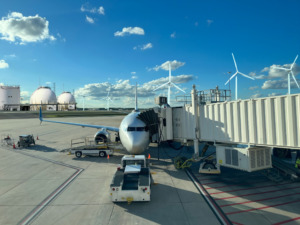
A future hydrogen powered commercial airline parked at a gate.
There are also climate impacts beyond carbon dioxide to consider. Cranfield is co-ordinating a £30 million UK research programme investigating aviation’s non-CO₂ impacts, including contrails and nitrogen oxides, and identifying ways to reduce them. This is important because making transport more sustainable means understanding its wider environmental footprint, not just one measure of emissions.
Putting hydrogen to the test
Hydrogen is another potential part of the transition, and progress is being made, but its practical application needs to be tested in real operating conditions.
In September 2026, we published the results of the Winter Operations HyGPU project at Exeter Airport. Led by Cranfield University, Exeter Airport and ULEMCo, the trial tested a converted ground power unit running on a mixture of hydrogen and diesel.
Over eight operational days, the equipment completed 15 tests, using 7.41kg of green hydrogen. This displaced an estimated 24.23 litres of diesel and avoided approximately 63.9kg of carbon dioxide emissions.
The results offer evidence of what can be achieved by adapting existing airport equipment, rather than waiting for entirely new systems to be introduced.
Dr Thomas Budd, Associate Professor of Airport Decarbonisation at Cranfield, said:
“This trial has taken us another step beyond a one-off demonstration and given us valuable operational evidence about how dual-fuel hydrogen equipment performs in winter conditions.”
The trial is a practical example of why testing matters. Technologies need to work safely and reliably in the environments where they will be used, and their performance needs to be understood before wider adoption can be considered.
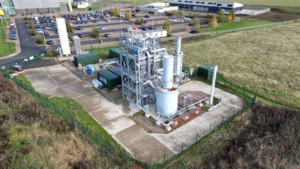
Aerial drone shot of the HyPER bulk hydrogen production facility on Cranfield campus.
Developing the energy systems behind tomorrow’s transport
In order to make a real difference, new fuels need more than promising technology. They need the facilities, expertise and supply chains to develop, test and produce them.
Cranfield’s Future Energy programme brings together research and industry to address challenges across the energy supply chain, from production and storage through to distribution, deployment and environmental impact.
In October 2026, we opened the Cranfield Future Energy Laboratories. This facility is designed to create, analyse and test materials for new fuel products and processes, with capabilities covering hydrogen, ammonia, biofuels and other alternative fuels.
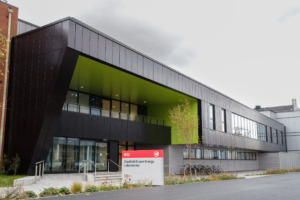
Cranfield Future Energy Laboratories.
The work is intended to help develop and scale solutions for lower-carbon energy across sectors including aviation and transport.
Dr Kim Hackett, Director for System Health and Sustainability at Research England, described the potential of the new facilities:
“The Cranfield Future Energy Laboratories is a high-impact facility that will turn theoretical science into scalable technologies.”
The programme also demonstrates the importance of industry collaboration. Flemtec, a sustainable technology company, joined Cranfield Future Energy in September 2026 to develop its approach to decentralised ammonia production. Producing ammonia closer to where it is needed could reduce reliance on centralised production and long-distance transport, while improving resilience across agricultural and industrial supply chains.
It is one example of how rethinking energy production and distribution can contribute to wider decarbonisation.
So, can we travel without emissions?
The ambition is clear, but achieving it will take more than one breakthrough. Lower-carbon transport depends on progress across fuels, materials, infrastructure, engineering and the systems that connect them.
Cranfield’s work shows how that progress is being approached: testing technologies in real-world conditions, developing the facilities needed to advance new fuels, and bringing researchers and industry together to tackle complex challenges.
Completely eliminating emissions from every journey remains a significant challenge. But by developing and applying solutions that reduce environmental impact, the engineering behind how people and goods move can help shape a more sustainable future.
Interested in developing the engineering expertise to shape cleaner transport?
Explore Cranfield’s Aerospace Vehicle Design MSc, Automotive Engineering MSc, Automotive Mechatronics MSc and Thermal Power and Propulsion MSc, and help engineer the technologies that will power tomorrow’s journeys.


Categories & Tags:
Leave a comment on this post:
You might also like…
Engineering Tomorrow. Part two: Can we move around the world without emissions?
Moving people and goods around the world is essential to modern life. But every journey has an environmental cost, and reducing the emissions associated with transport is one of the major engineering challenges of ...
Following in the footsteps of aerospace pioneers
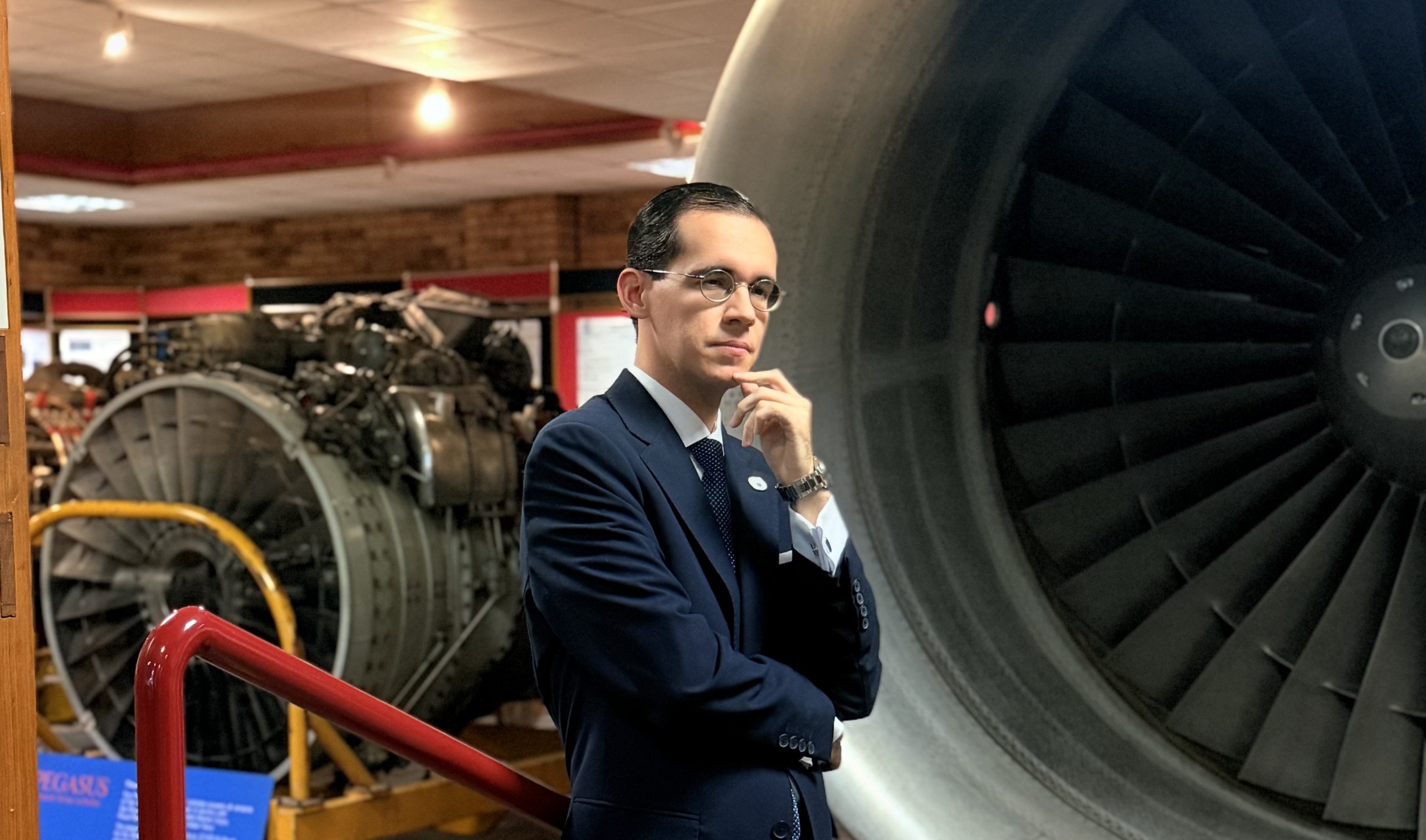
I came to Cranfield to understand how aircraft stay in the sky. Months later, I was measuring the performance of aircraft engines in flight aboard the National Flying Laboratory Centre's Saab 340B. My ...
From looking up at jet engines to powering the future of flight
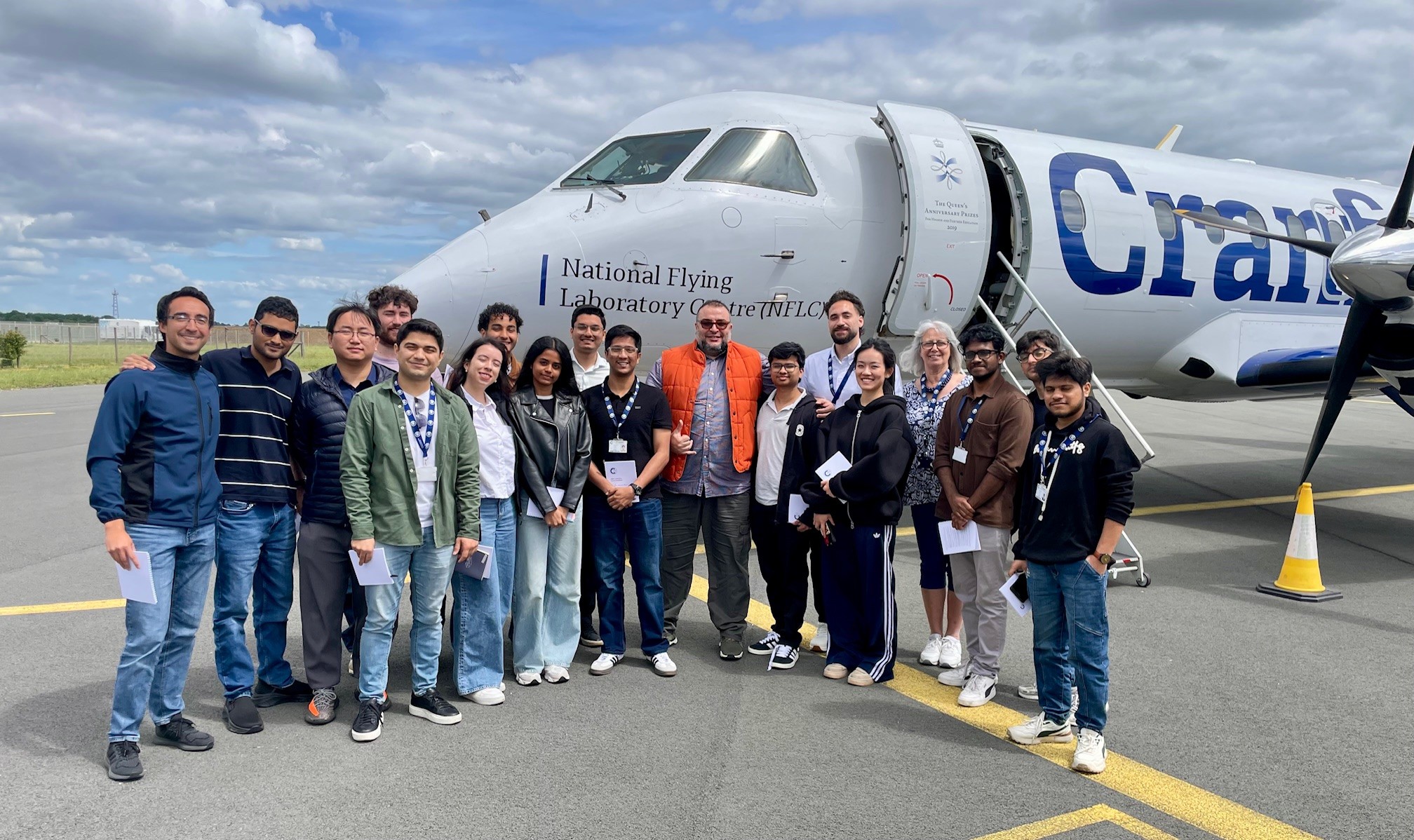
From flying aboard Cranfield's Saab 340B flying classroom to rebuilding a gas turbine component by component, Jouni Kailouh's journey shows how specialist, hands-on experience can turn a fascination with propulsion into a future career ...
Engineering Tomorrow. Part one: Can we power the future without costing the Earth?
The world needs energy. To power homes, industries, transport and the technologies shaping our future. But as demand grows and the pressure to reduce emissions increases, how do we generate the energy we need ...
Looking ahead: Building foresight skills for a more sustainable future
As sustainability challenges become more complex and uncertain, organisations need people who can look beyond today's pressures and think strategically about the future. From changing regulations and emerging technologies to supply chain disruption and ...

Brazil to Cambridge: How Cranfield helped me build a career in data analytics
I was hungry for something bigger. Before Cranfield, I was living in São Paulo, Brazil, working as a Data and Market Intelligence Analyst in the trading division of Raízen. My background is actually ...