

Commonwealth Scholarships play a critical role in developing sustainability and leadership in Africa
02/03/2026
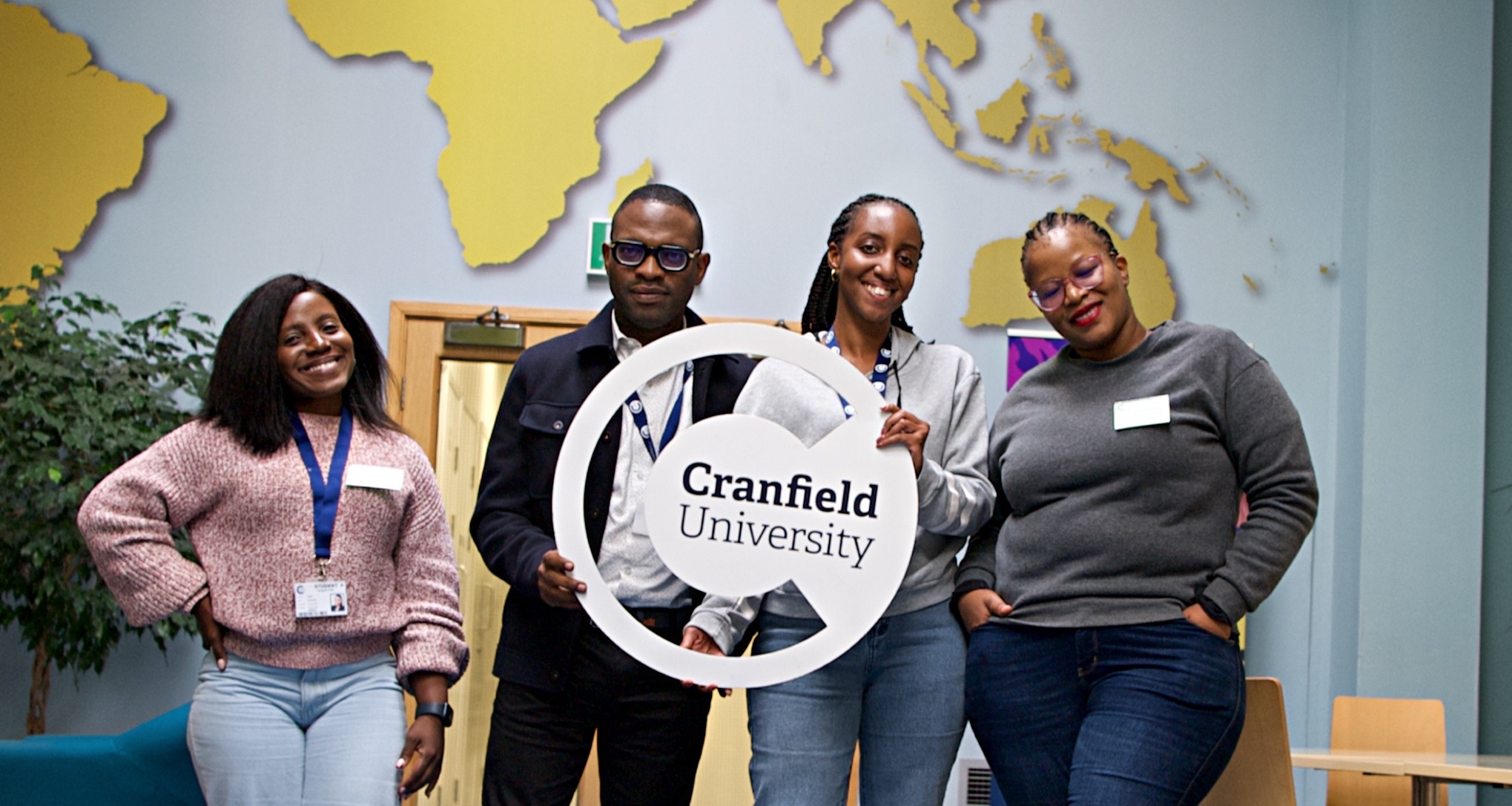
Q&A with Evah Mosetlhane, Sustainability MSc, Commonwealth Distance Learning Scholar
What inspired you to pursue the Sustainability MSc at Cranfield?
I was inspired to pursue the Sustainability MSc at Cranfield because of the university’s strong reputation for applied, industry-relevant teaching and its systems-thinking approach to sustainability. With my background in entrepreneurship and enterprise development, I was drawn to Cranfield’s focus on real-world impact and its ability to bridge academic learning with practical, cross-sector solutions for sustainable growth.
What was the application process like for you?
The application process was smooth and well-organised. I didn’t face any challenges, and I appreciated how clear and accessible the instructions were throughout.
How did it feel when you found out you were awarded the scholarship?
Finding out I had been awarded the scholarship was incredibly affirming. It felt like a door opening not just to further education, but to a deeper purpose. It was both humbling and motivating to know that someone believed in my vision and potential enough to invest in it.
What roles do scholarships like the Commonwealth play in developing sustainability and leadership in Africa?
Scholarships like the Commonwealth play a critical role in developing sustainability and leadership in Africa by removing financial barriers to high-quality education while enabling access to global knowledge networks. More importantly, they empower local changemakers to bring world-class insight back to their communities, translating global frameworks into solutions that work in African contexts.
The scholarship plays a vital role by creating space for contextual realities to be heard and reconciled. In many African countries, sustainability conversations are inseparable from urgent development challenges such as poverty, unemployment, access to infrastructure, whereas in more developed settings, sustainability is often approached as an extension of existing privilege. What the Commonwealth platform offers is a rare and critical convergence point, where these contrasting perspectives can sit at the same table. It enables emerging leaders from different parts of the world to interrogate the global sustainability agenda through both lenses, and to co-create solutions that are more inclusive, balanced, and applicable across contexts. That, to me, is its greatest contribution: ensuring that Africa doesn’t just participate in global sustainability conversations but helps shape them.
How was your first Sustainability Residential?
My first Sustainability Residential at Cranfield was both grounding and expansive. It brought together people from diverse professional and cultural backgrounds, yet we were all united by a shared urgency to reimagine how we think about sustainability.
The sessions struck a good balance between academic insight and practical application, and being on campus allowed for deeper connection with peers, lecturers, and the broader sustainability conversation. It made sustainability feel less like an abstract goal and more like a real, complex, and collaborative journey; one I’m now fully immersed in.
Who or what inspires you to keep pushing for sustainable change?
What keeps me going is knowing that SMEs, who make up the backbone of many economies are often left out of sustainability conversations, even though they’re the most vulnerable to its impacts. As someone working directly with this segment, I’m driven to make sustainability more inclusive and accessible, so it reaches the businesses and communities that need it most.

Categories & Tags:
Leave a comment on this post:
You might also like…

Cranfield: an environment where innovation thrives
The latest Knowledge Exchange Framework rankings from UK Research and Innovation (UKRI) gives an insight into the real and meaningful impact that UK universities have. The seven categories that make up KEF6 cover everything ...
How Cranfield accelerated my career in Logistics and Supply Chain Management
After graduating from the MSc in Logistics and Supply Chain Management at Cranfield University, I've been reflecting on the experiences that made my journey so valuable and the impact it has had on my ...

Mendeley: a powerful tool to organise and manage your references
Are you looking for a way to manage your references, create in-text citations and reference lists for your assignments or thesis? If so, you may wish to consider using Mendeley. What is it? Mendeley is ...

Keen to develop your study skills?
Alongside the technical skills and academic knowledge that you will gain on your course, as a Cranfield student you have the opportunity to develop a range of other skills that can enhance your learning experience. ...

The V-conomy: powering the sixth wave of global economic growth
The world could be on the verge of a major surge in economic growth and development, driven by the convergence of AI and clean energy technology. Waiting to ride the K-wave The Russian ...

Need help using the Python programming language?
We know some of our students are currently trying to learn Python, so we wanted to make you aware of some great LinkedIn Learning videos that can help. But don't you have to pay for ...