

Zotero: a powerful free tool for managing your references
19/06/2025
Are you working on an assignment, research paper, thesis, or group project and need a way to stay on top of your references? Maybe you have tried using Mendeley to manage your references, but it wasn’t for you. If so, Zotero might be the right tool for you..
What is it?
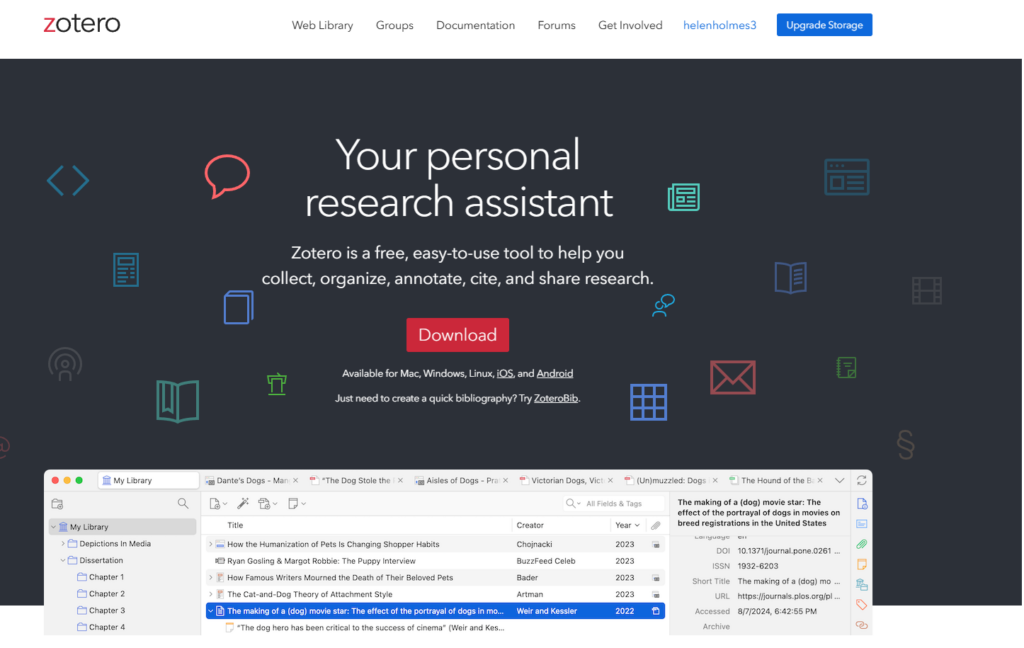
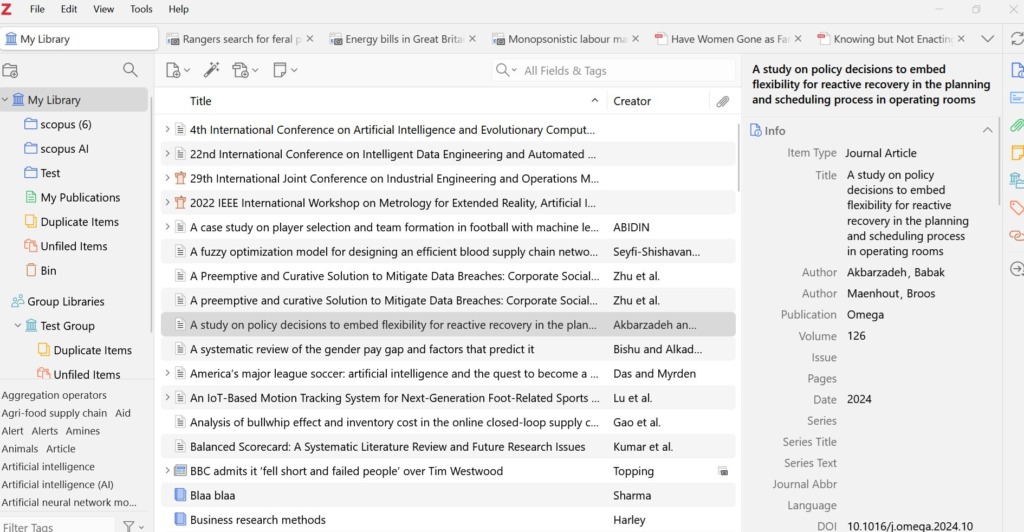
Zotero is a free, open-source reference manager that helps you collect, organise, and cite your sources. It can work with your browser to capture citation details from websites, databases, and library catalogues. Zotero also integrates with Word (though not Word 365), Google Docs, and LibreOffice to help you create in-text citations and formatted reference lists quickly and easily.
How can it help me?
Zotero can support your academic work in many ways:
- Collect references with one click from your browser using the Zotero Connector
- Organise your sources into folders, or add tags and notes for easy retrieval
- Store PDFs, which you can then highlight and annotate within the Zotero PDF reader
- Cite as you write using the Zotero plug-in for Word or Google Docs
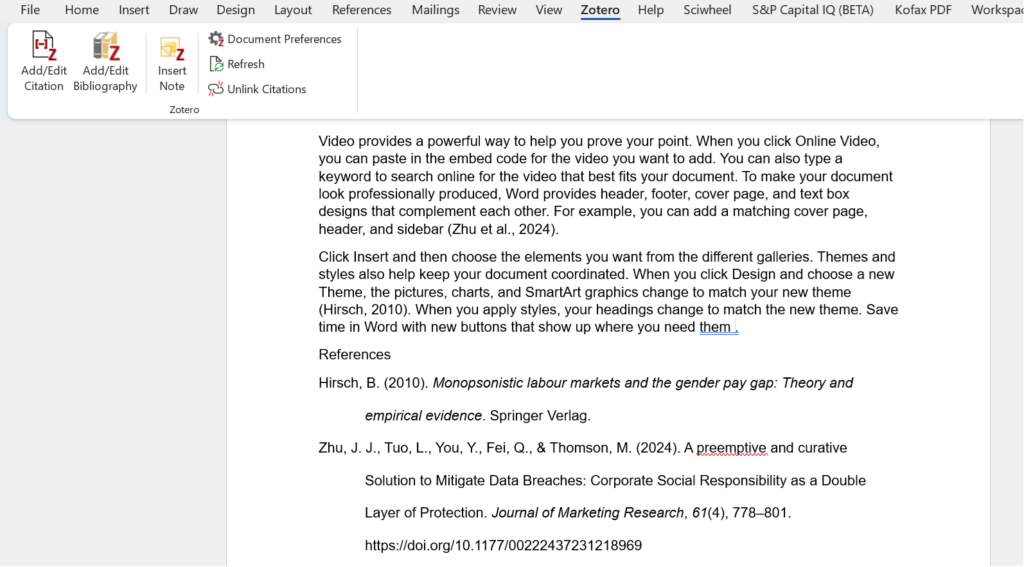
- Automatically generate reference lists in styles like APA7 author-date style and NLM numbered referencing style.
- Collaborate with others by creating shared libraries (perfect for group projects!)
What makes it stand out?
Zotero is especially valued for its flexibility and transparency:
- Save PDFs, snapshots, and notes alongside your references
- Automatically extract metadata from PDFs
- Import and export citations in a wide range of formats
- Seamlessly sync your library across multiple devices
- Work offline and sync later – no internet needed to get started
- Strong user community – active forums
It’s ideal for students, researchers, and academics who want more control over their referencing workflow.
Good to know
Zotero makes referencing easier, but it won’t catch every error. Always review your references to ensure they match the requirements of your course or publication. You’ll also benefit from understanding the citation style you’re using – tools like Zotero are most powerful when paired with good referencing knowledge. Further information about referencing and avoiding plagiarism can be found on the library website and if you are a current student, look for your Referencing and Avoiding Plagiarism course on Canvas.
Want to learn more and get started?
- Visit https://www.zotero.org to download Zotero.
- Check out our Zotero Workbook for tips to get you started.
- Check DATES to see when the next Getting started with Zotero webinar is. You can always ‘Register interest’ if there’s nothing scheduled at the moment.
- Still not sure? Contact us with any queries at library@cranfield.ac.uk
Feature images courtesy of Zotero.

Categories & Tags:
Leave a comment on this post:
You might also like…

Keen to develop your study skills?
Alongside the technical skills and academic knowledge that you will gain on your course, as a Cranfield student you have the opportunity to develop a range of other skills that can enhance your learning experience. ...

The V-conomy: powering the sixth wave of global economic growth
The world could be on the verge of a major surge in economic growth and development, driven by the convergence of AI and clean energy technology. Waiting to ride the K-wave The Russian ...

Need help using the Python programming language?
We know some of our students are currently trying to learn Python, so we wanted to make you aware of some great LinkedIn Learning videos that can help. But don't you have to pay for ...

What does it really take to become a Chevening Scholar?
Say “Turkmenistan” to most people and you’ll get a blank look. That was true when I left Ashgabat for the UK to study an MSc in Logistics and Supply Chain Management at Cranfield University ...

Get a head start on referencing and plagiarism
We offer a module on Referencing And Avoiding Plagiarism which you can find on your Canvas dashboard. It explains the role and importance of citing references and how to incorporate the work of other authors ...

How Cranfield shaped my journey as an Aerospace Engineer
If I'm being specific about the moment it clicked, it was reading a paper called "On the Role and Challenges of Computational Fluid Dynamics (CFD) in the Aerospace Industry" by two Boeing engineers, P. ...
Comments are closed.