


Ceramic Matrix Composites at Cranfield is in good hands
22/05/2025
It’s been a couple months since we got going on the ACCORD project, led by myself (Dr Geoff Neale) and Dr Alex Skordos, which aims to kickstart a fruitful collaboration between the Composites and Advanced Materials Centre at Cranfield University (CU) and the Centre for Future Materials at the University of Southern Queensland (UniSQ). ACCORD (Acceleration of Ceramic Matrix Composite Research Developments) is all about the development of mutually beneficial research relationships between the two institutions around the topic of ceramic matrix composites (CMCs).
These materials are incredibly important in the context of the UK-Australia aerospace, defence and space exploration relationship, especially considering the recent developments in the AUKUS partnership (trilateral security partnership between Australia, the United Kingdom and the United States). CMCs are high-temperature resistant (up to 3000℃) fibre reinforced composite materials that have the capability to replace heavier metallic alloys in advanced engineering structures, like hypersonic vehicles, rockets, missiles, nuclear reactors and automotive breaking discs. So what’s wrong with the materials that we’ve been using for decades? – In short, metallic alloys in structures exposed to extreme temperatures are reaching their limits in terms of temperature envelopes and are quite heavy, which reduces weight efficiency. For example, lighter CMC components in hypersonic or space vehicles significantly improve manoeuvrability and allow for greater payloads.
What are the challenges to greater adoption of Ceramic Matrix Composites
The key continuing challenges to adoption of CMCs are mainly prohibitive costs, suitable material supply, more automated/sustainable manufacturing methodologies, and scale up. These amazing materials, although currently expensive and time/resource consuming to manufacture, are gaining traction across the composites sector with both UK and Australian institutions focusing in on addressing the issues. We are ramping up usage of and innovations in these materials as a means of growing sovereign capability and bolstering domestic supply chains in the face of global volatility. Cranfield is taking a leading role in this with ongoing projects (like ACCORD and LC3) adding real value to the UK market.
What is our ambition?
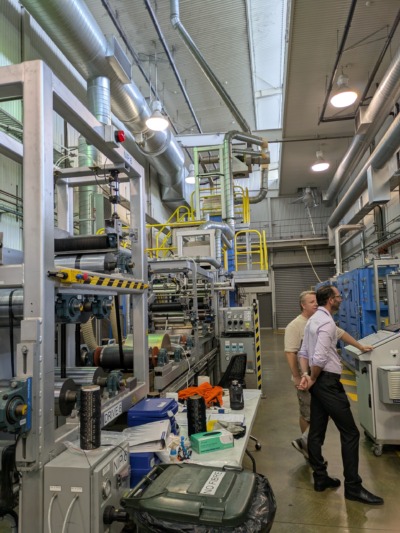
One of the key goals of the ACCORD project is two-way international exchange and networking between academics and researchers from both institutions, incorporating our existing research and industry networks. In March/April 2025, I had the opportunity to visit Australia, hosted by Prof Peter Schubel and Dr Tristan Shelley at UniSQ. On a visit to their lab in Toowoomba QLD, I had the opportunity to see first hand the facilities at the Centre for Future Materials and gain insight into research synergies between our two centres. What’s interesting is that our two centres seem to be a match made in “composites heaven.”
At Cranfield, we focus a lot more on materials development, process science and characterisation, whereas at UniSQ the focus is more on preforming and industrial scale-up. From a technology development route perspective, there is a clear pathway for innovations that can be initiated, developed and then matured by our combined efforts, with access to both UK and Australian supply chains and end users.
International exchange
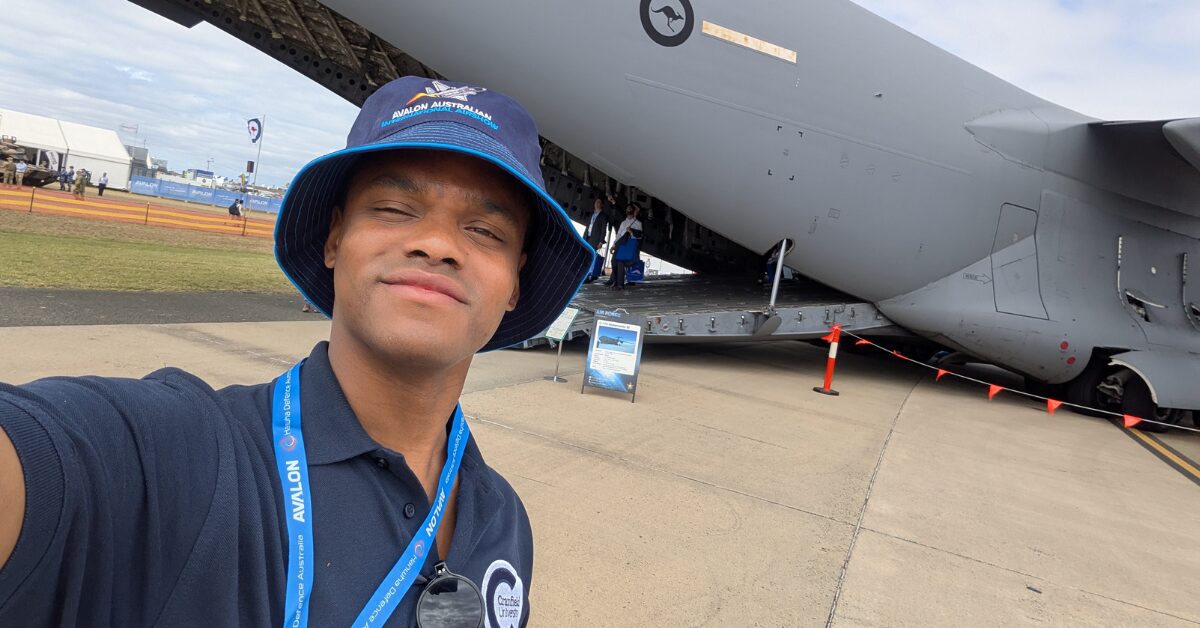
We timed my visit to coincide with the 21st Australian International Aerospace Congress and Avalon Australian International Airshow, which were both a real treat. There is a great breadth of composites related research and innovation going on in Australia, that is ripe for collaboration with UK institutions with a secure industry commitment to sustained growth. This is especially encouraging with the ramping up of AUKUS pledges, which have significantly slashed export controls between our two countries. The list of additional site visits or introductions to collaborators was also extensive and included Carbon Nexus (Deakin University), Hypersonix Launch Systems, MEMKO Australia, Gravitas Technologies, the Australian Nuclear Science and Technology Organisation (ANSTO) and the University of Queensland. All of whom facilitated an open and transparent discussion around ways that CU and UniSQ can work alongside them for our mutual benefit. I must also mention CU’s amazing network of alumni in Australia, who hosted me at a meet up in Melbourne VIC, which facilitated a visit to the world leading Microscopy Australia facility at the University of Sydney in Sydney NSW.
Next steps
I’m so grateful to Prof Pete Schubel, Dr Tristan Shelley and Dr Molly Hall at UniSQ for their Australian hospitality and am excited to return the favour when they visit Cranfield in June 2025 for our ACCORD Collaboration Day. This will be an exciting event that will bring together CU’s relevant UK CMC collaborators including High Temperature Materials Systems Ltd, MBDA Missile Systems, the Advanced Manufacturing Research Centre, the National Composites Centre, M Wright and Sons Ltd, the Henry Royce Institute, AMRICC/Lucideon, the UK Atomic Energy Authority and Imperial College London, with the hope of expanding the way that we all work together to advance CMC innovations.
This activity is funded through the Cranfield Global Research Fund (block grant from Research England) and through my Royal Academy of Engineering Research Fellowship.


Categories & Tags:
Leave a comment on this post:
You might also like…

Keen to develop your study skills?
Alongside the technical skills and academic knowledge that you will gain on your course, as a Cranfield student you have the opportunity to develop a range of other skills that can enhance your learning experience. ...

The V-conomy: powering the sixth wave of global economic growth
The world could be on the verge of a major surge in economic growth and development, driven by the convergence of AI and clean energy technology. Waiting to ride the K-wave The Russian ...

Need help using the Python programming language?
We know some of our students are currently trying to learn Python, so we wanted to make you aware of some great LinkedIn Learning videos that can help. But don't you have to pay for ...

What does it really take to become a Chevening Scholar?
Say “Turkmenistan” to most people and you’ll get a blank look. That was true when I left Ashgabat for the UK to study an MSc in Logistics and Supply Chain Management at Cranfield University ...

Get a head start on referencing and plagiarism
We offer a module on Referencing And Avoiding Plagiarism which you can find on your Canvas dashboard. It explains the role and importance of citing references and how to incorporate the work of other authors ...

How Cranfield shaped my journey as an Aerospace Engineer
If I'm being specific about the moment it clicked, it was reading a paper called "On the Role and Challenges of Computational Fluid Dynamics (CFD) in the Aerospace Industry" by two Boeing engineers, P. ...
Comments are closed.