


From taxidermy to forensic investigation: My journey at Cranfield
13/03/2025
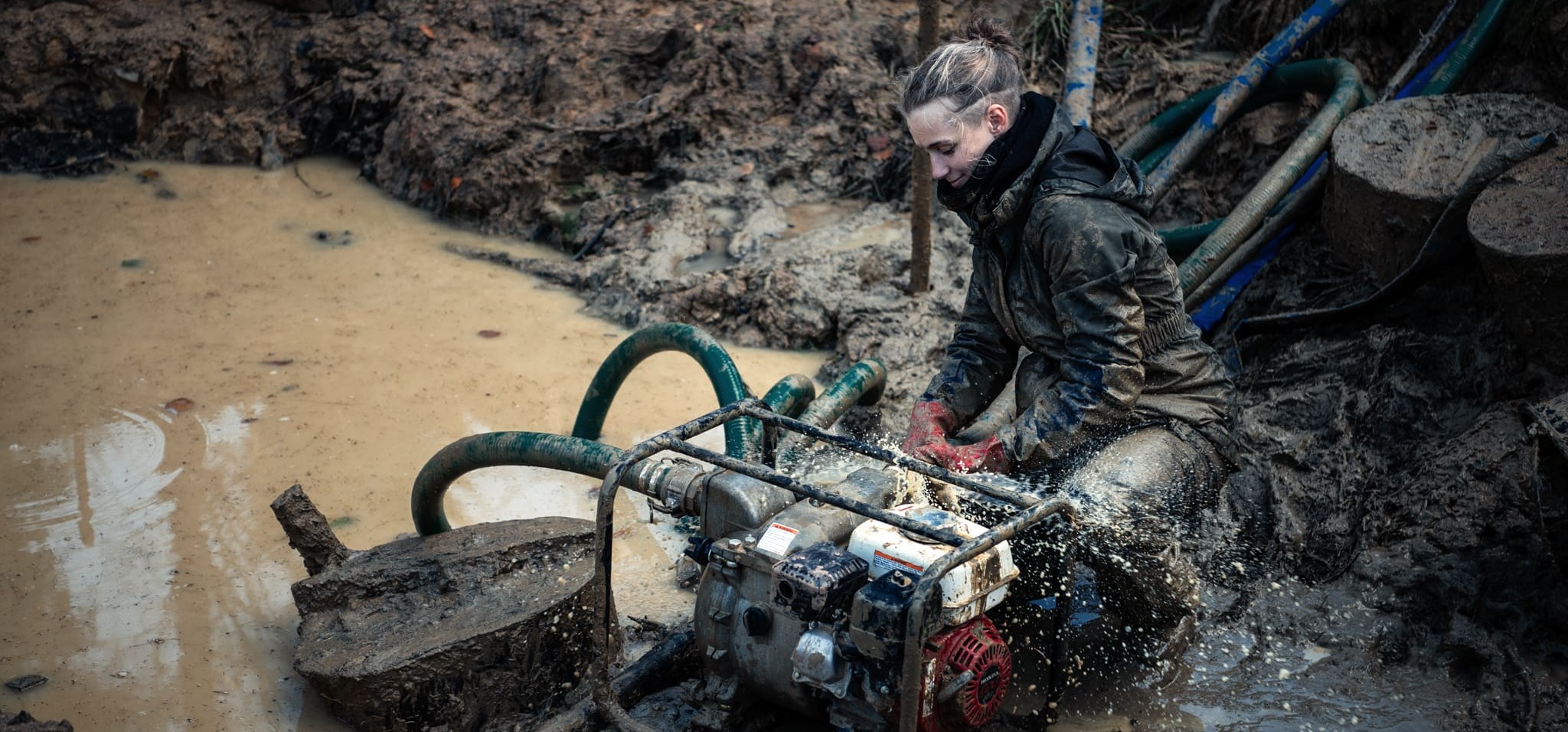
Christina Recheis completed her MSc in Forensic Investigation at Cranfield University in 2021 and specialised in forensic archaeology and anthropology. Her master’s thesis focused on developing an algorithm to facilitate the identification of human remains, reflecting her commitment to advancing forensic methodologies.
Here Christina shares her student journey at Cranfield to her career now working as a Terrestrial Project Archaeologist and what advice she’d give to new students.
Before starting my postgraduate journey at Cranfield University, I completed my undergraduate degree in Biology at the University of Innsbruck. Alongside my studies, I worked at a taxidermist, helping to curate a zoological and osteological collection. This hands-on experience sparked my interest in human remains and forensic science, ultimately leading me to pursue a career in forensic anthropology and archaeology.
I knew that gaining practical experience would be essential if I wanted to work in the field or secure a role in a forensic laboratory. That’s when I started looking into postgraduate study and found Cranfield University’s Forensic Investigation MSc. It offered exactly what I was looking for — a perfect blend of laboratory-based and fieldwork experiences.
Relocating to the UK for full-time study was a big step, but Cranfield’s course structure made the decision easy. The programme covers both forensic anthropology and archaeology, allowing students to shape their learning around their career goals. The brand-new Cranfield Forensic Institute (CFI) at the Bedford campus was also a huge selling point. Visiting the campus and meeting the lecturers confirmed my choice — their passion and expertise were exactly what I was hoping to learn from.
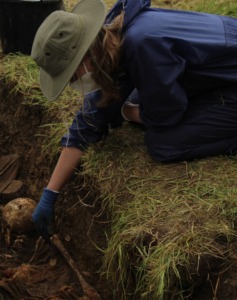
The Mass Fatality Incidents module at Cranfield was incredible and really opened my eyes to possible study areas, careers and networks of expert professionals.
The course itself exceeded my expectations. One of the standout modules was the mass fatality module — something I hadn’t considered before but turned out to be incredibly impactful. We heard from professionals with extensive field experience, which brought the learning to life. Additionally, having lecturers who have worked directly in forensic cases added a level of practical knowledge you just can’t get from textbooks.
Cranfield also offered plenty of hands-on learning. I particularly valued the practical modules, which allowed me to apply theoretical knowledge in real-world scenarios. Beyond that, I was fortunate to join with the CRICC group (Cranfield Recovery and Identification of Conflict Casualties), giving me the chance to continue fieldwork even after submitting my thesis. This experience was invaluable in shaping my career path.
Since graduating in 2021, I’ve gone on to work in a forensic laboratory and continue to collaborate with CRICC. My experiences and the network I built at Cranfield have opened doors I never imagined possible. Recently, I started working as a Terrestrial Project Archaeologist for the HJF, assisting the DPAA (Defense POW/MIA Accounting Agency) in recovering missing-in-action American soldiers from past conflicts. This role was a career goal of mine, and I genuinely believe my time at Cranfield played a major role in getting me here.
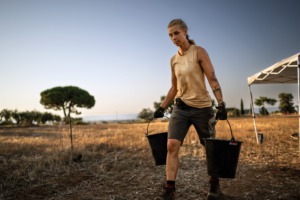
Getting to work in the field is exhausting, but an amazing experience Image © Harvey Mills
For anyone considering a career in forensic science, I can’t recommend this course enough. It’s ideal for those who want a practical, hands-on learning experience and aren’t quite sure which forensic path they want to follow. The broad range of modules helps you find your niche and build the skills you’ll need to succeed.
If you’re thinking about postgraduate study — do it. It’s hard work, but it pays off. Push yourself, say yes to every opportunity, and stay determined. The connections you make and the experience you gain could lead you to incredible career opportunities, just like it did for me.
Images courtesy of Cranfield University and Harvey Mills ©


Categories & Tags:
Leave a comment on this post:
You might also like…

Moving to the UK to study? How to plan for banking, exchange rates and transfers
Currency and banking are two of the most practical parts of financial planning for international students. They are also often the most overlooked. We asked Dr Lakshmy Subramanian, Course Director for Cranfield University's Banking, ...

Cranfield: an environment where innovation thrives
The latest Knowledge Exchange Framework rankings from UK Research and Innovation (UKRI) gives an insight into the real and meaningful impact that UK universities have. The seven categories that make up KEF6 cover everything ...
How Cranfield accelerated my career in Logistics and Supply Chain Management
After graduating from the MSc in Logistics and Supply Chain Management at Cranfield University, I've been reflecting on the experiences that made my journey so valuable and the impact it has had on my ...

Mendeley: a powerful tool to organise and manage your references
Are you looking for a way to manage your references, create in-text citations and reference lists for your assignments or thesis? If so, you may wish to consider using Mendeley. What is it? Mendeley is ...

Keen to develop your study skills?
Alongside the technical skills and academic knowledge that you will gain on your course, as a Cranfield student you have the opportunity to develop a range of other skills that can enhance your learning experience. ...

The V-conomy: powering the sixth wave of global economic growth
The world could be on the verge of a major surge in economic growth and development, driven by the convergence of AI and clean energy technology. Waiting to ride the K-wave The Russian ...
Comments are closed.