


3D Metal Manufacturing in space: A look into the future
26/07/2024
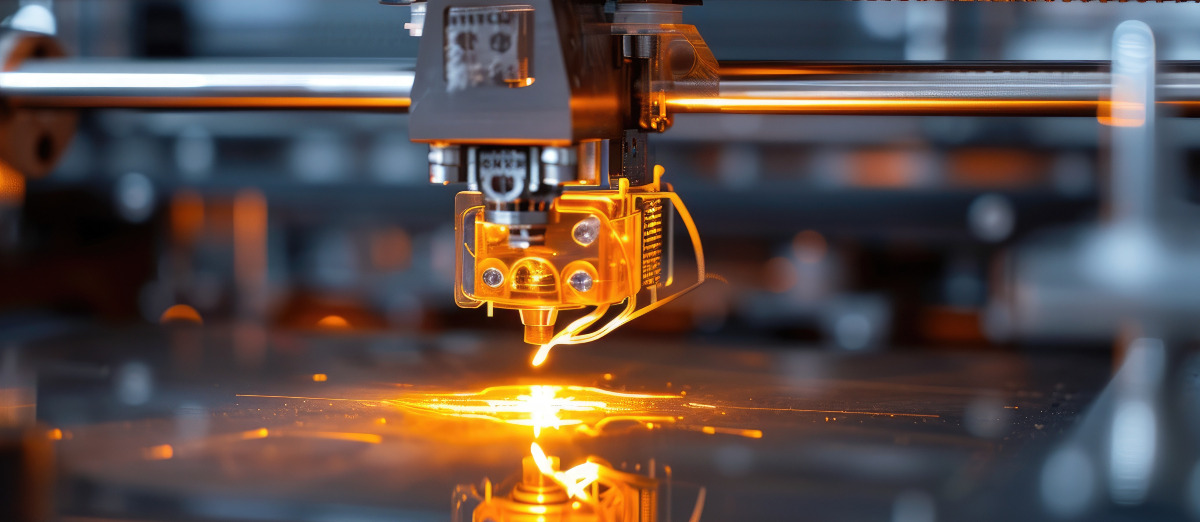
David Rico Sierra, Research Fellow in Additive Manufacturing, was recently involved in an exciting project to manufacture parts using 3D printers in space. Here he reflects on his time working with Airbus in Toulouse…
When you are offered the chance to work on a project at Airbus, one of the biggest companies in the aerospace industry, you don’t say “I’ll think about it.” So when I was fortunate enough to be offered work on a short-term, interdisciplinary project at Airbus HQ in Toulouse, France, I jumped at the chance! I was there to contribute my expertise in additive manufacturing to a team made up of people from all over Europe. It was rewarding and challenging in equal measure.
Creating an automated ‘space factory’
The goal of the project was to show that it was possible to create a fully automated ‘space factory’ for spare parts as part of the Star Tiger Initiative from the European Space Agency. We wanted to find out how to integrate two different printers – a Carbon Fibre Reinforced Plastics (CFRP) 3D printer and a metal 3D printer – in conjunction with robotic arms that assemble the parts after they’ve been printed. The project was a feasibility study to show that it was possible to produce, verify and assemble CFRP and metallic parts produced in the two printers, creating a modular part of a satellite antenna.
My role was to help find a solution for one of the main challenges in using a metal printer – finding the correct set of parameters and techniques to remotely remove a small, printed metallic part from the printer, and the separation of that part without additional tooling and little-to-no human interaction.
That meant first fully understanding the capabilities of the newly produced 3D metal printer, which was a replica of the one sent to the International Space Station (ISS) in January 2024. This was key, because we needed to be able to reliably produce metallic parts from it, modifying methods and parameters to meet our objectives.
The second challenge was to produce a small, metallic part which would be easily detachable from the base layer inside the printer in an automated process. Although it sounds a simple thing, this was a seriously complex task and presented a few headaches and frustrations!
In most 3D printers the part being built is secured to the substrate to provide a stable and reliable base for adding the next layer of material. This is why the metallic parts produced in 3D printers require additional tooling to separate the part from the substrate – in this case some kind of metal cutting equipment. However, additional equipment and resources are limited on the ISS, and this would also increase the complexity of the system. Given that one of the goals was to make the process fully automated, this was a real challenge for the team.
Collaboration, diversity and innovation made it unforgettable
The team was made up of people with vastly different backgrounds and experiences. Early on that meant a learning curve in terms of finding ways to work together, but ultimately that diversity of experience was an invaluable asset, with varied backgrounds and approaches uniting to address the complexity of the goals.
One of the most important takeaways from this project was to understand what it’s like to work with the support of a huge company like Airbus. They’re one of the leading players in the aerospace sector and have a broad range of knowledge about working with space-focussed projects.
On a personal level, my part of the project was filled with challenges and sometimes even frustrations, but the continuous support from the whole team at Airbus, and my supervisor at Cranfield, helped me succeed. At the end of the project we gave a demonstration of the process in front of ESA representatives. It was well received and a proud moment not only for me but for the whole team, who worked tirelessly to make sure that the project was a success.
I’m very grateful to have had the opportunity to work with Airbus. I was rewarded with wonderful experiences but also complex challenges and the enthusiasm for collaboration, desire for excellence and innovation made this project unforgettable.

Categories & Tags:
Leave a comment on this post:
You might also like…
Cranfield: an environment where innovation thrives
The latest Knowledge Exchange Framework rankings from UK Research and Innovation (UKRI) gives an insight into the real and meaningful impact that UK universities have. The seven categories that make up KEF6 cover everything ...
How Cranfield accelerated my career in Logistics and Supply Chain Management
After graduating from the MSc in Logistics and Supply Chain Management at Cranfield University, I've been reflecting on the experiences that made my journey so valuable and the impact it has had on my ...
Mendeley: a powerful tool to organise and manage your references
Are you looking for a way to manage your references, create in-text citations and reference lists for your assignments or thesis? If so, you may wish to consider using Mendeley. What is it? Mendeley is ...
Keen to develop your study skills?
Alongside the technical skills and academic knowledge that you will gain on your course, as a Cranfield student you have the opportunity to develop a range of other skills that can enhance your learning experience. ...

The V-conomy: powering the sixth wave of global economic growth
The world could be on the verge of a major surge in economic growth and development, driven by the convergence of AI and clean energy technology. Waiting to ride the K-wave The Russian ...

Need help using the Python programming language?
We know some of our students are currently trying to learn Python, so we wanted to make you aware of some great LinkedIn Learning videos that can help. But don't you have to pay for ...
Comments are closed.