


Supermarkets need to examine supply chain to avoid fresh produce shortages
21/02/2023
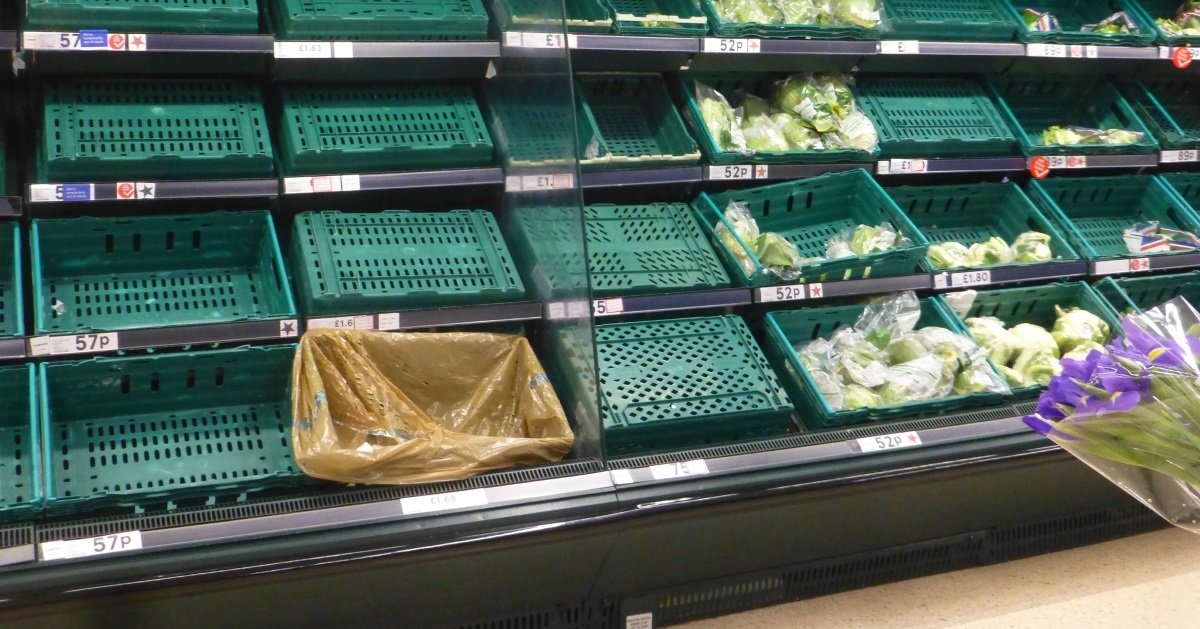
Strawberries at Christmas? Mangoes in March? We’ve all got used to having any product, at any time of the year available in our supermarkets, ready to satisfy any food trend or surge in consumer demand.
But in the past few weeks photos have been emerging of empty shelves as food shortages have hit the fresh produce sector.
I'm sorry, @tesco this is not good enough in your Dalmarnock store on a Friday afternoon 😔 Lots more shelves with empty boxes throughout the store. Rising prices are bad enough but lack of basic foodstuffs is unacceptable. pic.twitter.com/udetX5ufUw
— Cllr Andrea Cowan (@AndreaCowanSNP) February 18, 2023
It’s not what you’d expect of a well-oiled global supply chain system that’s been operating for decades – so what’s going wrong?
With rising energy costs, climate change, labour cost increases and Brexit – there’s no shortage of challenges for today’s grocers. Add weather problems into the mix and you have the scenario we’ve seen recently with shelves empty of tomatoes.
“Consumers forget that agricultural production is always subject to weather conditions and seasonality is one of the ‘toughest nuts to crack’ in fresh produce supply chains,” says Aris Matopoulous, Professor of Supply Chain Design.
“Tomato and tomato products are the most consumed vegetables worldwide. In the UK we import tomatoes mainly from the Netherlands, Spain and Morocco. However, the high costs of electricity have affected Dutch greenhouse producers and benefited tomato-producer countries such as Morocco.”
Abhi Ghadge, Associate Professor of Supply Chain Management, says that shoppers might continue to see problems: “Fresh salad including cucumbers, cabbages and cauliflowers will all be hit by shortages in the coming weeks. But we can’t just blame Brexit. A range of issues are having an impact on supply chains. With the rising cost of heating greenhouses, and labour costs increasing, British and European farmers have scaled back on producing certain goods.”
With a seemingly perfect storm disrupting our shopping baskets, what can be done to address the problems?
Professor Matopoulos says that supermarkets need to start looking further into the future: “In the short-term, supermarkets have not got a lot of aces to pull out from their sleeves, but the in the medium to long- term they can try and balance better their supply base, reducing over reliance on specific suppliers and countries.”
Being agile and flexible in the supply chain is something Professor Ghadge also believes will help: “What supermarkets must do is think about innovative solutions. Local sourcing, and alternate suppliers are some commonly used supply chain strategies which can help manage such issues. The UK government also needs to play a part, building resilience around these recurring supply chain issues with food shortages.”
Find out more about Cranfield’s expertise and programmes in logistics, procurement and supply chain management.
Featured image by citytransportinfo on Flikr

Categories & Tags:
Leave a comment on this post:
You might also like…

Keen to develop your study skills?
Alongside the technical skills and academic knowledge that you will gain on your course, as a Cranfield student you have the opportunity to develop a range of other skills that can enhance your learning experience. ...

The V-conomy: powering the sixth wave of global economic growth
The world could be on the verge of a major surge in economic growth and development, driven by the convergence of AI and clean energy technology. Waiting to ride the K-wave The Russian ...

Need help using the Python programming language?
We know some of our students are currently trying to learn Python, so we wanted to make you aware of some great LinkedIn Learning videos that can help. But don't you have to pay for ...

What does it really take to become a Chevening Scholar?
Say “Turkmenistan” to most people and you’ll get a blank look. That was true when I left Ashgabat for the UK to study an MSc in Logistics and Supply Chain Management at Cranfield University ...

Get a head start on referencing and plagiarism
We offer a module on Referencing And Avoiding Plagiarism which you can find on your Canvas dashboard. It explains the role and importance of citing references and how to incorporate the work of other authors ...

How Cranfield shaped my journey as an Aerospace Engineer
If I'm being specific about the moment it clicked, it was reading a paper called "On the Role and Challenges of Computational Fluid Dynamics (CFD) in the Aerospace Industry" by two Boeing engineers, P. ...
Comments are closed.