

How can we accelerate the transition to sustainable liquid fuels?
07/07/2022

Hydrogen and renewable electricity (e.g. solar and wind) have no doubt taken the centre stage at present on the pathway to our global ‘Net-Zero’ ambition. However, for some industries, there are still some tough challenges when it comes to meeting their decarbonisation targets due to the specific fuel requirements.
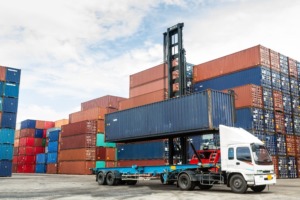
Air transport and shipping industries are good case studies. Combined, these two industries are responsible for ~5-6% of global CO2 emissions (2-3% for air transport and ~3% for shipping). Although a relatively small fraction of global GHG emissions, the transition to sustainable low-carbon operation for these sectors has proved to be extremely difficult.
Take the aviation industry for example, although potentially short-haul and reginal flights can be decarbonised by new propulsion technologies including electric and hydrogen, medium and long-haul flights (which responsible for most of the GHG emissions in the industry) will most likely continue to rely on liquid fuels.
Sustainable low-carbon liquid fuels entered the vernacular decades ago as the solution to the decarbonisation of shipping and air transport. So, one might wonder about the industries’ uptake of sustainable fuels – the answer to the question is rather disappointing. Of course, some progress has been made but it is nowhere near fast enough, despite a significant amount of research to develop low-carbon fuel production technologies over the years.

Although we have already made tremendous efforts in developing new technologies which can meet the stringent aviation fuel criteria. There are seven technology pathways that have already been certified under the ASTM standard (D7566 Annexes A1-7) and six more are currently in the qualification process; although we have seen the first commercial flight successfully demonstrated to fly on 100% sustainable aviation fuel (SAF) in one of the two engines with full passengers in 2021. Current production rates of approved SAF technologies only meet a small fraction (<1%) of fuel demand from commercial airlines. For the shipping industry, sustainability strategies remain focused on improving the efficiency of their current fleets. The transition to sustainable fuels just seems to happen all too slowly and the technologies are underdelivering their potentials once promised.
So what has gone wrong?
Fundamentally, the conventional fossil-based fuels are too cheap compared with sustainable fuels. The dual exigencies faced by the industries are: recovery from the from the COVID-19 pandemic to return a healthy profit, and the urgent need to decarbonise. In a free-market system one of the top priorities of a corporation is to profit its shareholders – you have to pitch really hard for the acceptance of low-carbon fuels by the industries. However, as a researcher and environmental scientist, I can see no other alternative than to continue to improve the production efficiency of low-carbon fuels and reduce unit costs. Using waste resources as feedstock is one solution to address both waste management and low-carbon energy demand, and the integrated processes will reduce processing costs. A recent project FIREFLY[1] (funded by Department for Transport) I was working on in collaboration with industry aims to produce SAF from sewage sludge, was a very good example of such approach.

However, realistically speaking, unless there is a serious problem with the crude oil supply (depletion of reserve or perhaps, a major military conflict?), the cost of low-carbon fuel is unlikely to be as competitive as fossil fuels. In addition to technology development, a much stronger government mandate similar to ‘Renewable Obligation’ scheme across the oil industry and transport industries can be a pivotal point to accelerate the transition to sustainable liquid fuels.
[1] Sustainable aviation fuel from sewage sludge – Green Fuels shortlisted as finalist in Department for Transport “Green Fuels, Green Skies” competition · Green Fuels


Categories & Tags:
Leave a comment on this post:
You might also like…

Moving to the UK to study? How to plan for banking, exchange rates and transfers
Currency and banking are two of the most practical parts of financial planning for international students. They are also often the most overlooked. We asked Dr Lakshmy Subramanian, Course Director for Cranfield University's Banking, ...

Cranfield: an environment where innovation thrives
The latest Knowledge Exchange Framework rankings from UK Research and Innovation (UKRI) gives an insight into the real and meaningful impact that UK universities have. The seven categories that make up KEF6 cover everything ...

How Cranfield accelerated my career in Logistics and Supply Chain Management
After graduating from the MSc in Logistics and Supply Chain Management at Cranfield University, I've been reflecting on the experiences that made my journey so valuable and the impact it has had on my ...
Mendeley: a powerful tool to organise and manage your references
Are you looking for a way to manage your references, create in-text citations and reference lists for your assignments or thesis? If so, you may wish to consider using Mendeley. What is it? Mendeley is ...

Keen to develop your study skills?
Alongside the technical skills and academic knowledge that you will gain on your course, as a Cranfield student you have the opportunity to develop a range of other skills that can enhance your learning experience. ...
The V-conomy: powering the sixth wave of global economic growth
The world could be on the verge of a major surge in economic growth and development, driven by the convergence of AI and clean energy technology. Waiting to ride the K-wave The Russian ...
Comments are closed.