

My odyssey from being a Research Scholar to an Admissions Tutor for Advanced Mechanical Engineering at Cranfield
25/03/2022
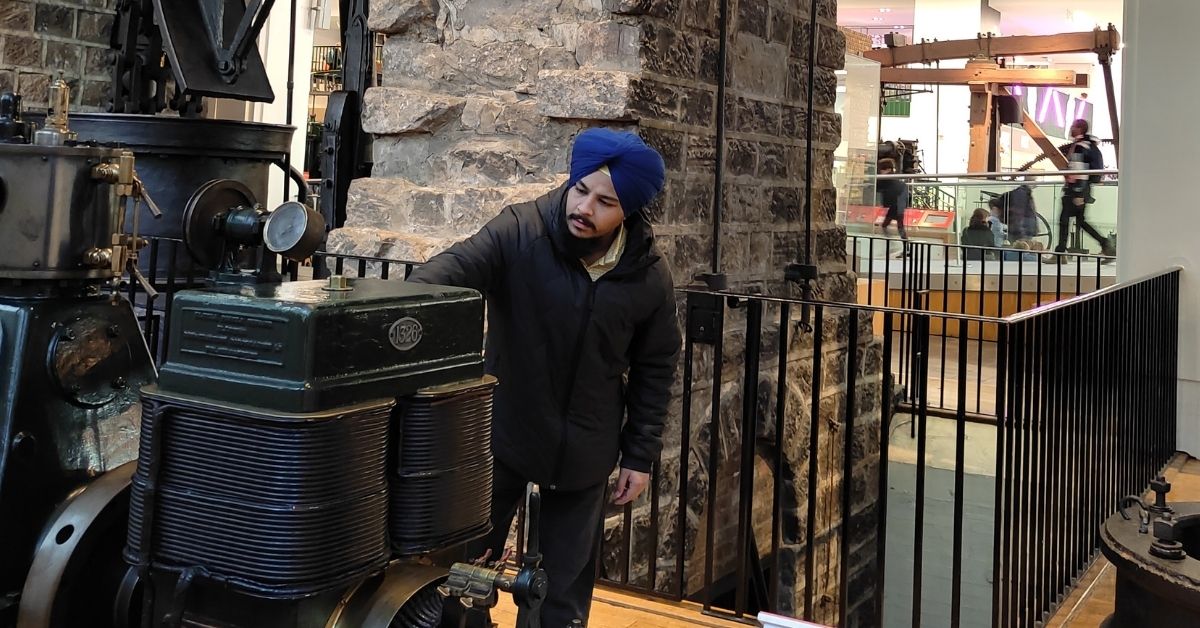
I still remember my first step at the Indian Institute of Technology Guwahati (IITG) as a PhD research scholar in 2015, where I started my research career in Fluid and Thermal Sciences at the mechanical engineering department. I was determined to bring a change, especially in overcoming the side effects of energy systems but was nervous at the same time about what a research career would look like. Nevertheless, I took Thermal Energy Storage (TES) as my research domain. TES systems have become a vital asset for all energy applications as they can store thermal energy as a buffer – to capture and store the unwanted energy from thermal systems and bring it to use when needed. Working on this topic, I developed a TES test facility at IITG, which was one-of-a-kind in India and serves as a means of knowledge dissemination to the new individuals in my laboratory.
I also earned fellowship rewards such as the MITACS Graduate Fellow and Queen Elizabeth Advanced Scholar for visiting Simon Fraser University in Canada and excelling further in my research area. These fellowships improved my research methodological skills exponentially and I learned that exposure at internationally renowned laboratories is a must for excelling in a career I also explored interesting bits of electronic thermal management systems and advanced materials.
From leaps of faith to rewarding benefits, finishing a PhD has been challenging, but ultimately rewarding, and I completed my PhD in June 2021 with good research publications in esteemed international journals.
I am extremely passionate about my research area because of its contribution to decarbonisation. TES systems are typically installed in solar thermal applications where they capture solar energy. In modern-day power plants, TES using concentrated solar power has become a crucial component to cater to the electricity demand throughout the day. This not only reduces energy bills but also promotes the utilisation of renewable resources. Another factor that excites me about this research area is the ability of TES systems to assist thermal applications ranging from cryogenic systems to high-temperature heating systems.
 I have always found Mechanical Engineering as a bridge between various engineering streams. In my bachelor’s degree, I completed a project working on the production and emission analysis of biodiesel fuels. My experience was a perfect mix of chemical engineering, automobile engineering, and thermal engineering. During my PhD, my fundamental research basis was the study of materials useful for my research. After making choices of materials, the research moved on to fundamentals of mathematics as I worked on computational fluid dynamics (CFD), heat transfer, and thermodynamic analysis of fluid flow and heat transfer. My research work was accomplished only after performing experimentation of TES systems which involved thought-provoking component design, rigorous testing, data post-processing, and calculations thereafter. The different engineering domains compelled me to coin a term ‘M4’, that is – Man, Materials, Machines, and Mathematics. I am fortunate that from exploring opportunities in this sector, I consider myself well placed to help identify and select candidates to excel in this field. The most interesting fact about the Admissions Tutor role is that I get to explore some of the forgotten bits of mechanical engineering. I love to read about the interests of applicants which are related to the course which allows me to dust off some of the engineering concepts I have forgotten.
After accomplishing my doctoral degree, I was looking for research fellow positions based on my understanding of the role of mechanical engineering in renewable energy. I wanted to pursue a research experience following my passion for environmental health, hoping to make a positive impact on society while pushing on decarbonisation pathways. I found that Cranfield University is extremely active in the drive towards reaching net zero emissions by 2050. The quality of research, industry engagement and societal impact of the research made me inclined to explore the research fellow position at Cranfield.
The plight of the future is driven by the intent in the present, which is to contribute towards a sustainable society. I strongly believe that pursuing a career in renewable energy technologies holds a bright future. Presently, hydrogen, carbon capture technologies, added with energy from waste is seen to have immense potential to satisfy energy demands in the UK and worldwide, and will possibly lead to developing carbon-neutral economies. I hope to successfully be a part of projects and receive rewards and funding to fulfil the research. I see myself as a perfect fit for carrying out this research at Cranfield in collaborations with institutions from my home country (India) and throughout the world. “Sustainability of the future generations thrives on actions and not just wishful thinking”.

Categories & Tags:
Leave a comment on this post:
You might also like…

Keen to develop your study skills?
Alongside the technical skills and academic knowledge that you will gain on your course, as a Cranfield student you have the opportunity to develop a range of other skills that can enhance your learning experience. ...
The V-conomy: powering the sixth wave of global economic growth
The world could be on the verge of a major surge in economic growth and development, driven by the convergence of AI and clean energy technology. Waiting to ride the K-wave The Russian ...

Need help using the Python programming language?
We know some of our students are currently trying to learn Python, so we wanted to make you aware of some great LinkedIn Learning videos that can help. But don't you have to pay for ...
What does it really take to become a Chevening Scholar?
Say “Turkmenistan” to most people and you’ll get a blank look. That was true when I left Ashgabat for the UK to study an MSc in Logistics and Supply Chain Management at Cranfield University ...

Get a head start on referencing and plagiarism
We offer a module on Referencing And Avoiding Plagiarism which you can find on your Canvas dashboard. It explains the role and importance of citing references and how to incorporate the work of other authors ...
How Cranfield shaped my journey as an Aerospace Engineer
If I'm being specific about the moment it clicked, it was reading a paper called "On the Role and Challenges of Computational Fluid Dynamics (CFD) in the Aerospace Industry" by two Boeing engineers, P. ...
Comments are closed.