


Eye in the sky – using drones for environmental monitoring
09/09/2016
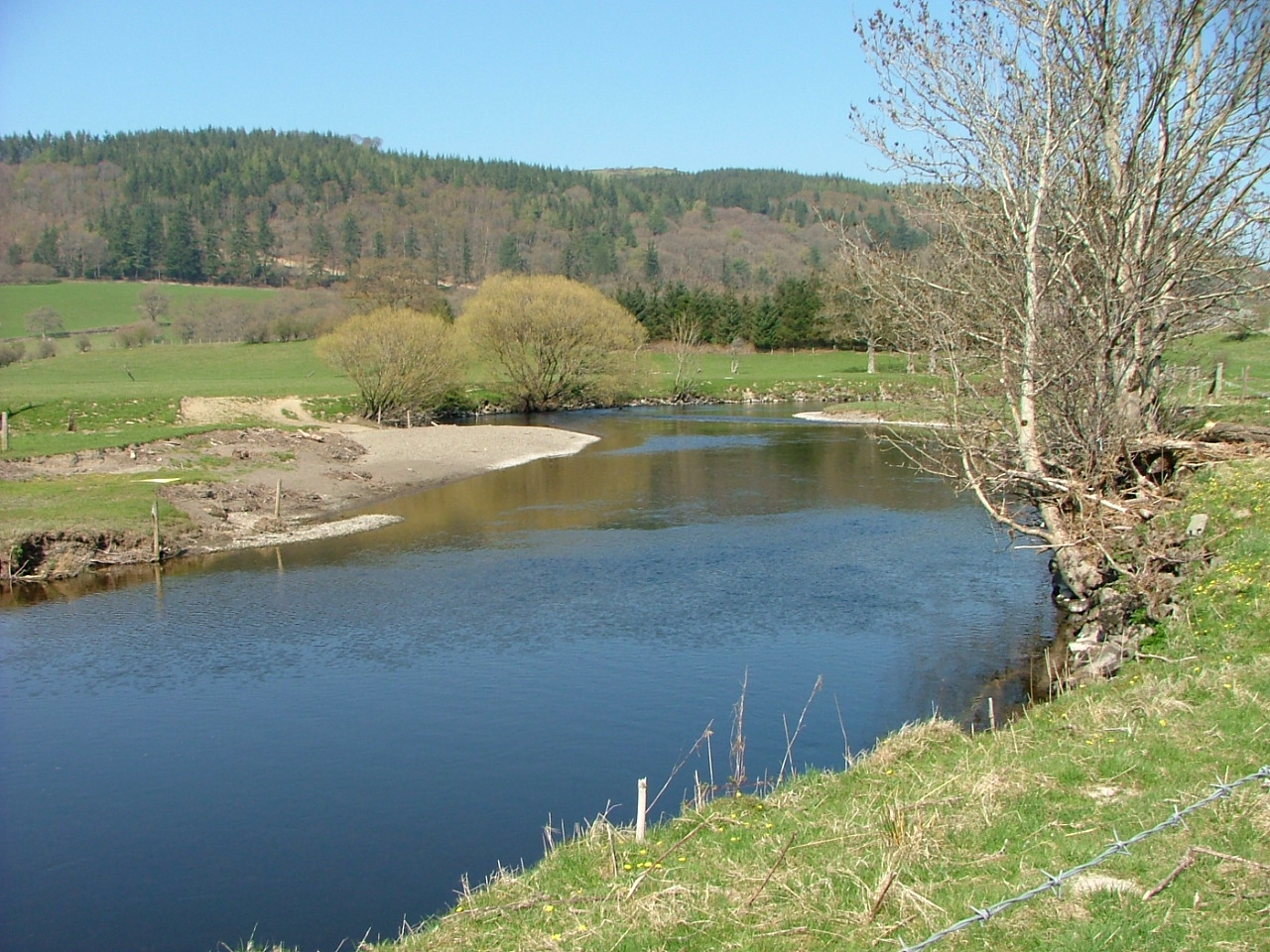
Adopted in 2000, the Water Framework Directive requires all EU member states to protect and improve the water quality in rivers, lakes, groundwater, transitional and coastal waters, and to protect against pollution and deterioration. But in order to protect and improve the water quality, we first need to assess and understand the current conditions of our rivers and waterways – which is a difficult task. Traditionally this mapping exercise would be done ‘manually’ – by someone literally walking alongside the body of water and making a visual assessment. It was clear this work needed development and the implementation of the Water Framework Directive has seen the emergence over 73 different methodologies used across EU member states. Although promising in terms of much improved ways to manage and protect our waterways, this proliferation of methods indicates a need for a more standardised approach.
Image pattern recognition techniques – taking images via Unmanned Aerial Vehicles (UAVs) – have been successfully used to map the waterways and identify certain physical features. But the accuracy and reliability of this method depends on both the quality of the aerial images and the pattern recognition technique used. Recent studies have proved the potential of UAVs to increase the quality of the imagery by capturing high resolution photography. Combine those high resolution images with Artificial Neural Networks (ANN), which are computers, designed to work like the human brain, and you have a high precision tool that can be used to automatically recognise environmental patterns.
This kind of method enables us to obtain aerial images to a resolution as small as 2.5cm, and we recently tested this along a stretch of the River Dee in Wales. This is a significant step forward as previous imagery was at a resolution of generally 12.5 cm or 25 cm. This study that I’m involved in is one of the first of this kind, looking at the development of a framework for the automated classification of all features within a river. Our initial testing proved to be accurate at 81% and enabled the identification of features at a higher level of detail than that provided by the ground truth data. For example, it allowed the separation of trees from the grass or water underneath, as well as the recognition of hydraulic units (e.g. a rippled water surface).
It’s obvious that we need to protect our rivers and waterways for the benefit of landowners, local authorities and the general population. Better ways of understanding those waterways are just a part of the process – but an important part.
If you’d like to find out more about the use of new technologies for environmental management, you might be interested in my two week UAVs for Environmental Monitoring course, or the Cranfield MSc in Environmental Risk Management.
Read also: Drones in the Cumbria skies: the floods of Christmas 2015

Categories & Tags:
Leave a comment on this post:
You might also like…
Keen to develop your study skills?
Alongside the technical skills and academic knowledge that you will gain on your course, as a Cranfield student you have the opportunity to develop a range of other skills that can enhance your learning experience. ...
The V-conomy: powering the sixth wave of global economic growth
The world could be on the verge of a major surge in economic growth and development, driven by the convergence of AI and clean energy technology. Waiting to ride the K-wave The Russian ...
Need help using the Python programming language?
We know some of our students are currently trying to learn Python, so we wanted to make you aware of some great LinkedIn Learning videos that can help. But don't you have to pay for ...
What does it really take to become a Chevening Scholar?
Say “Turkmenistan” to most people and you’ll get a blank look. That was true when I left Ashgabat for the UK to study an MSc in Logistics and Supply Chain Management at Cranfield University ...

Get a head start on referencing and plagiarism
We offer a module on Referencing And Avoiding Plagiarism which you can find on your Canvas dashboard. It explains the role and importance of citing references and how to incorporate the work of other authors ...
How Cranfield shaped my journey as an Aerospace Engineer
If I'm being specific about the moment it clicked, it was reading a paper called "On the Role and Challenges of Computational Fluid Dynamics (CFD) in the Aerospace Industry" by two Boeing engineers, P. ...