

5 steps to completing a postgraduate application
20/07/2016
On completing my Bachelor’s degree in Aerospace Engineering here in the UK, the obvious question was, what’s next? Should I look for a job or continue pursuing my career in academia? If the latter, then which university should I opt for?
On seeking advice from my undergraduate lecturers at the University of Hertfordshire, I found they were all of the same opinion which was that, “If you want to opt for a career in the Aerospace sector, then Cranfield is the best option.” Not only is it the most reputed university in the UK for aerospace, but also globally for its research and innovation in the sector.
Furthermore, I was surprised to find out that most of my lecturers in the Aerospace Department at the University of Hertfordshire are, in actual fact, alumni of Cranfield University. And all of them are leading experts globally in their domain.
Upon visiting the University on one of the open days, what surprised me even more was the industrial collaboration which the University has. For my course, MSc Aerospace Propulsion, we have collaborations with Airbus, Rolls Royce, Snecma, AVIC and many other aircraft companies and aircraft engine manufacturers. For my research thesis I had options to choose from a wide range of Industrially Sponsored Research Projects. This is a unique opportunity for us to directly interact with the aerospace industry and understand how the research and development activities are carried out in the real world.
Apart from having many other unique test facilities here at Cranfield, we are soon due to have an Aerospace Integration Research Centre (co-funded by Rolls Royce and Airbus) where the companies and academia can develop and test current and future aircraft and airspace concepts.
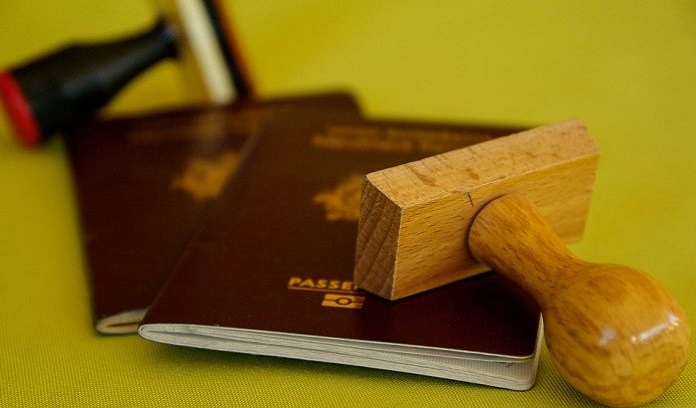
After choosing the University and successfully completing the admissions procedure, the next hurdle was the visa application process. Cranfield University’s admissions team were very supportive in helping me sort through what was required. Although the process differs per course, and depending on where in the world you are travelling from, it’s not as daunting as it might seem at first. Here is a breakdown of the steps I was required to take from initial application to walking into the uni on the first day of my course:
- I applied through the university’s website, and received a CAS (Certificate of Acceptance) letter from the uni within a week of submitting my academic transcripts.
- The next step was to apply for ATAS (Academic Technology Approval Scheme). This document is required for all international students applying for postgraduate qualification in subjects which are classified as being “sensitive” by the Higher Education Administration in the UK. If this is required for your course, the CAS letter issued by the University clearly states it. The process for applying for this certificate is relatively simple. You have to provide your personal info, previous study details, and selected course details. The application also requires your JACS code which is provided on your CAS letter. The only difficulty I found was getting two people to be my personal references – these have to be someone from your home country who has known you for more than three years but is not a family member. After successful completion of the application it requires approximately a month to be processed.
- The next step before applying for my visa was to get proof of finances documents ready. The requirement for the proof of finances changes from time to time, hence it is important to be updated with the correct information during the visa application process. This information is updated on the UK government website.
- You may also have to undergo a TB test. The list of the nationals required to undergo this test is also stated on the UK visa guidelines document.
- Once these documents were ready, I completed my visa application form and submitted it to a corresponding British Embassy or Consulate. I was successfully able to receive my visa within three working days of application.
So there you have it – a fair bit of paperwork, but worth the effort for the Cranfield experience!
For help and advice with your application, please get in touch with our Admissions department on admissions@cranfield.ac.uk. Or find out more about the Aerospace Propulsion option of the MSc in Thermal Power at Cranfield.

Categories & Tags:
Leave a comment on this post:
You might also like…

Moving to the UK to study? How to plan for banking, exchange rates and transfers
Currency and banking are two of the most practical parts of financial planning for international students. They are also often the most overlooked. We asked Dr Lakshmy Subramanian, Course Director for Cranfield University's Banking, ...

Cranfield: an environment where innovation thrives
The latest Knowledge Exchange Framework rankings from UK Research and Innovation (UKRI) gives an insight into the real and meaningful impact that UK universities have. The seven categories that make up KEF6 cover everything ...

How Cranfield accelerated my career in Logistics and Supply Chain Management
After graduating from the MSc in Logistics and Supply Chain Management at Cranfield University, I've been reflecting on the experiences that made my journey so valuable and the impact it has had on my ...

Mendeley: a powerful tool to organise and manage your references
Are you looking for a way to manage your references, create in-text citations and reference lists for your assignments or thesis? If so, you may wish to consider using Mendeley. What is it? Mendeley is ...

Keen to develop your study skills?
Alongside the technical skills and academic knowledge that you will gain on your course, as a Cranfield student you have the opportunity to develop a range of other skills that can enhance your learning experience. ...

The V-conomy: powering the sixth wave of global economic growth
The world could be on the verge of a major surge in economic growth and development, driven by the convergence of AI and clean energy technology. Waiting to ride the K-wave The Russian ...