


My work experience and career plans
01/07/2021
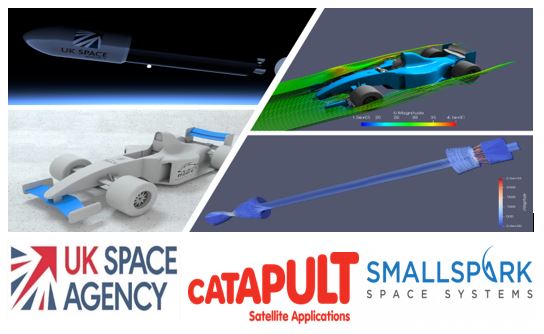
Luckily, I managed to find relevant work experience within the field. It was thanks to Ray Stott from SpaceSpecialists and SpaceMates online that I managed to be introduced to Joseph Ward who is the CEO and director of propulsion at Smallspark Space Systems. This gave me the chance to build initial contact with him, ask him questions about the companies aims and objectives, as well as the technology they were building. I later applied to one of the SPIN internships that his company was offering, in association with the UK Space Agency, and fortunately, the application process went well, and I was accepted onto the programme last Summer for around three months.
Smallspark is a UK based Aerospace and Artificial Intelligence research company based in Cardiff, who are developing low cost rocket propulsion systems. They have also created a software called MooreAI, which allows for the development of high performance, situation specific aerostructures that can be implemented for a variety of applications for aerodynamic optimisation. My main responsibilities were to investigate the effects of various Hybrid Rocket Engine injector designs and develop a method that computationally analysed their performance for optimising the atomisation, combustion properties and mixing of the propellants within OpenFOAM.
Also, I managed to secure a part-time role during my master’s studies at Asteria: Space and Satellites as an Orbital Engineer. Asteria are a student group at the University of Edinburgh dedicated to the development of Oracle 1; a 3U CubeSat designed for remote sensing of the Earth using hyperspectral imaging which will be pursuing a scientific mission to help track mosquito-borne diseases. My role as an orbital engineer is to model the trajectory of the satellite using simulation software like GMAT. I also try and get involved with various other projects within the space sector, for example, the work I am doing with 4WardFutures and the Constructing a Life on Mars (CaLoM) project.
Personally, I just want space to be a part of my daily routine. Hopefully, I am lucky enough to be able to find a job where I can put the skills I have learnt and developed throughout university into practice and help work towards the future of space flight. A personal goal of mine would be working for an organisation such as the UK Space Agency or ESA, I think that would be the pinnacle of my space journey! But in the meantime, I think I will just have to be patient and continue to work on the opportunities that I am involved with now.
Follow my postgraduate journey in my next blog where you will learn about my experience of the Astronautics and Space Engineering MSc

Categories & Tags:
Leave a comment on this post:
You might also like…

Bank holiday hours for Library Services: Monday 31 August
Library Services staff will be taking a break on Monday 31 August for the bank holiday. You will still be able to access all the resources and help you need via our library website. The 24/7 ...

The real cost of studying in the UK – what international students need to budget for
Moving overseas to pursue a postgraduate degree is one of the most exciting investments you can make in your future. It's also one of the most significant financial commitments you and your family will ...

Seven things you should definitely prepare for before studying at Cranfield University
You're thinking about Cranfield. Maybe you've done the virtual tour, read through the course pages, spoken to the course director or attended a webinar. Now, you're trying to figure out what life here is actually ...

From insurance to aerospace: why I chose to study a PhD with Cranfield
My path to studying for a PhD wasn't exactly a straight line. I had just graduated with an MEng in Aerospace Engineering from the University of Surrey and, like a lot of people, wasn't ...

How to build a business that keeps growing
Ask any business owner about their ambitions and "growth" will almost certainly feature near the top of the list. More customers, higher revenues, larger teams and new markets are often seen as signs of ...

Three practical ways SMEs can build resilience in a challenging business environment
Economic uncertainty, shifting customer expectations and rapid technological change have become part of everyday business. While no organisation can predict every challenge, small and medium-sized enterprises (SMEs) can improve their resilience by focusing on ...