

Something I had never considered…
05/05/2021
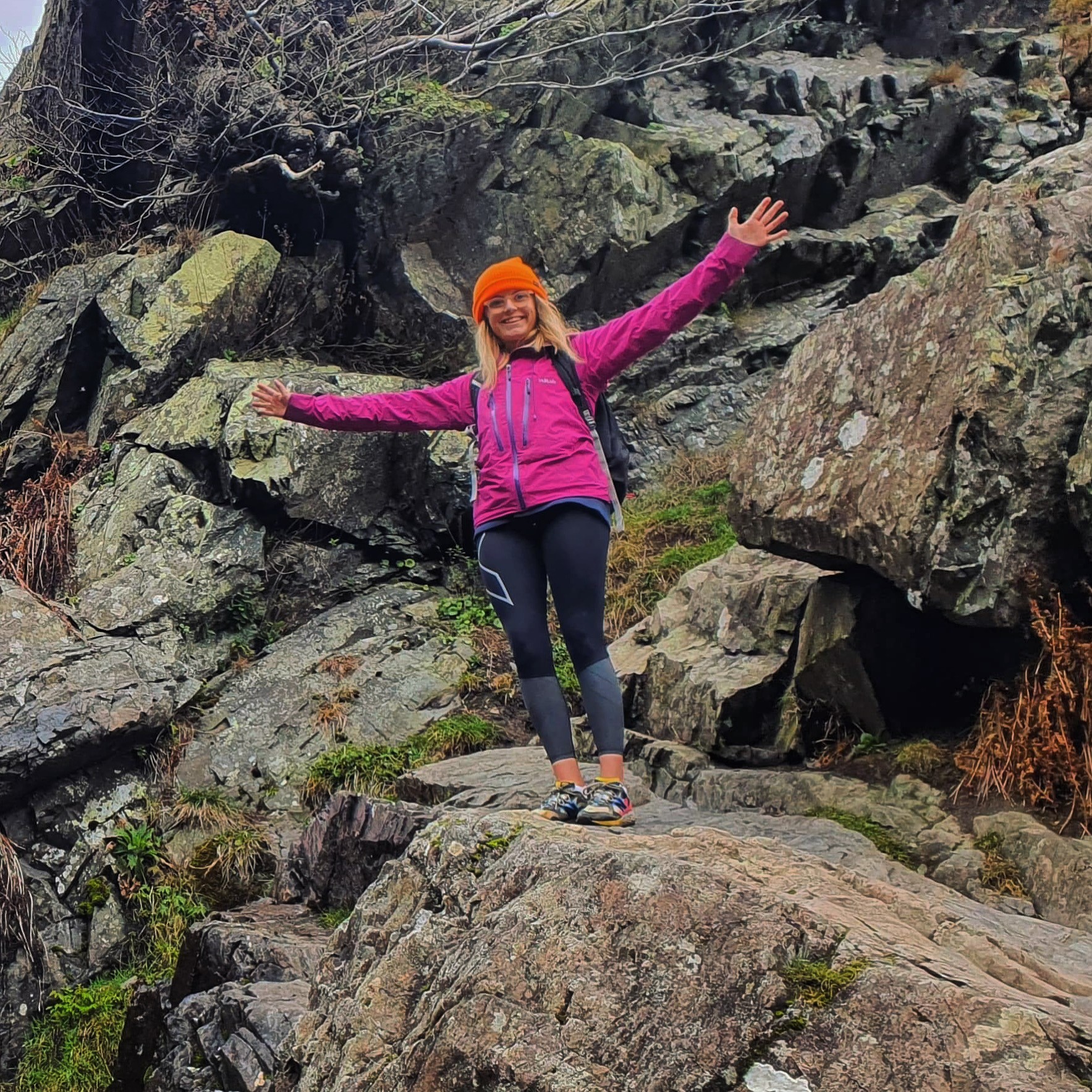
Waking up at six, working seven to five, surrounded by suits, in a city where I was alone was not what I expected my early 20’s to be like. I worked for myself, earned money, and spent money on myself. I thought to myself – surely there is more I can be doing with time and money?
When Covid-19 hit, construction was halted. When I was placed on furlough, I realised working in construction just wasn’t cutting it. Knowing full well I was not happy with my current job and didn’t see my construction career progressing past the 3-year grad scheme I was currently undertaking, I decided to look elsewhere.
I graduated in 2019 with a MEnvSci in Environmental Science. My research was focused on fluvial pollution pathways from a disused mine situated on Anglesey (Parys Mountain).
My father is a lecturer and when I mentioned I wasn’t happy he suggested furthering my studies and continuing with a Ph.D. The thought of going back to university for a minimum of three years hadn’t even crossed my mind!
After applying for numerous jobs, looking at various career pathways I decided to investigate the possibility of going back to studying. Looking at all diverse titles of research projects I thought to myself – am I smart enough to apply, or will I just embarrass myself? Continuing, I read the title; “REGENERATIS – Regeneration of past metallurgical sites and deposits through innovative circularity for raw materials”. And like a shining beacon I knew this was the one. This was the project that was going to get me away from the monotony of working at a desk. This was the project that will enable me to utilise my degree, to actually make a difference, ultimately to help the world. Knowingly doubting my intelligence, I applied. I had never heard of Cranfield University, didn’t know I wanted to commence a Ph.D. but I did it. After I applied, I knew I was doing the right thing. I knew that this was the path I had to head down.
I had a zoom interview (classic 2020) on a Wednesday. I was nervous but the sun was shining so I knew it was going to be a good day. As soon as the interview was done, I thought I had embarrassed myself by even thinking I could apply for a Ph.D. How could I – currently working as a quantity surveyor, think about applying for an environmental engineering Ph.D.? Not but 4 hours later I had a phone call offering me the position. I am smart enough to apply. I am intelligent and I will do this Ph.D. Nearly a year later, now with two jobs, my life is now in a city where I’m not alone, no suit in sight, and I’m happy!

Categories & Tags:
Leave a comment on this post:
Comments are closed.
You might also like…
Introducing Kings Norton Library
Welcome to all our new students! We are looking forward to meeting you soon. You will find Kings Norton Library in the centre of the Cranfield campus, and it is open 24/7 to all staff ...

Setting your research on the right course: Four questions every researcher should ask
Whether you are just beginning your doctoral journey or are already well into your research career, successful research rarely happens by accident. Like any successful mission, it depends on good planning, informed decisions, and getting ...

5 budgeting mistakes students make (and how to avoid them)
Good financial planning isn't about how much money you have. It's about the habits you build. We asked Dr Lakshmy Subramanian, Course Director for the Banking, Economics and Finance MSc, about the budgeting mistakes ...

Finding your reading materials
Use Library Search Library Search is the first place to start when you are trying to find academic sources for your work. This is the search box on the library website homepage. It allows you ...

Formula 1 was the dream and Cranfield was the conduit
I still remember the exact moment Formula 1 (F1) got its hooks into me. I was in my first year of an aerospace undergraduate engineering degree when I watched a video about the sport ...
Introducing Barrington Library
Welcome to all our new students! Barrington Library supports all the students and staff at Cranfield Defence and Security on the Shrivenham site. We are looking forward to meeting you all soon, in person or ...
What a great feedback