

Understanding Group Project TIPs (Theory into Practice)
31/03/2020
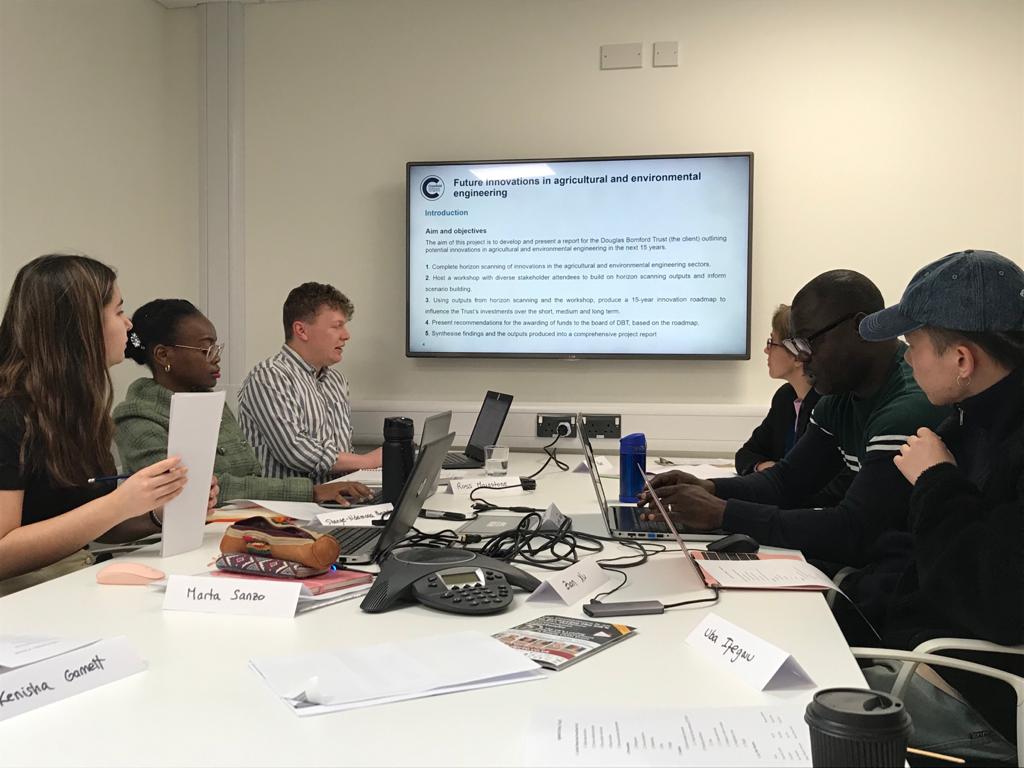
The time for modules and contact lessons has come to an end and now it’s time to work on group projects. As part of the MSc course, we are not only exposed to post-graduate modules but a group project and finally an individual module.
A survey has been conducted by the Confederation of British Industry and the UK government which stated the challenges faces by employers when they hire graduates. It was found that 80% of employers have had a displeasing experience in how they apply theoretical knowledge. This is in the areas of problem solving, teamwork and time-management. It was also found that 50% of graduates lacked business acumen and consumer awareness. Which defeats the purpose of decision making, especially since there is a global risk of the depletion of resources and knowing science with a lack of corporate management can negatively impact firms and consultancy agencies.
The first weeks of the group projects in February have been tentative but the University has prepared support material in project management and organisational behaviour. I have already been involved in group projects in Food Technology but I still had a lot more to learn and every project brings new challenges and opportunities. This degree has a more defined approach in ensuring we, as students have individual self-assessed or self-reflected before the project or further employment. We were tasked to have Specific Measurable Achievable Relevant and Time-bound (SMART) goals. My focus is on Teamwork, Project Management, and Time Management.
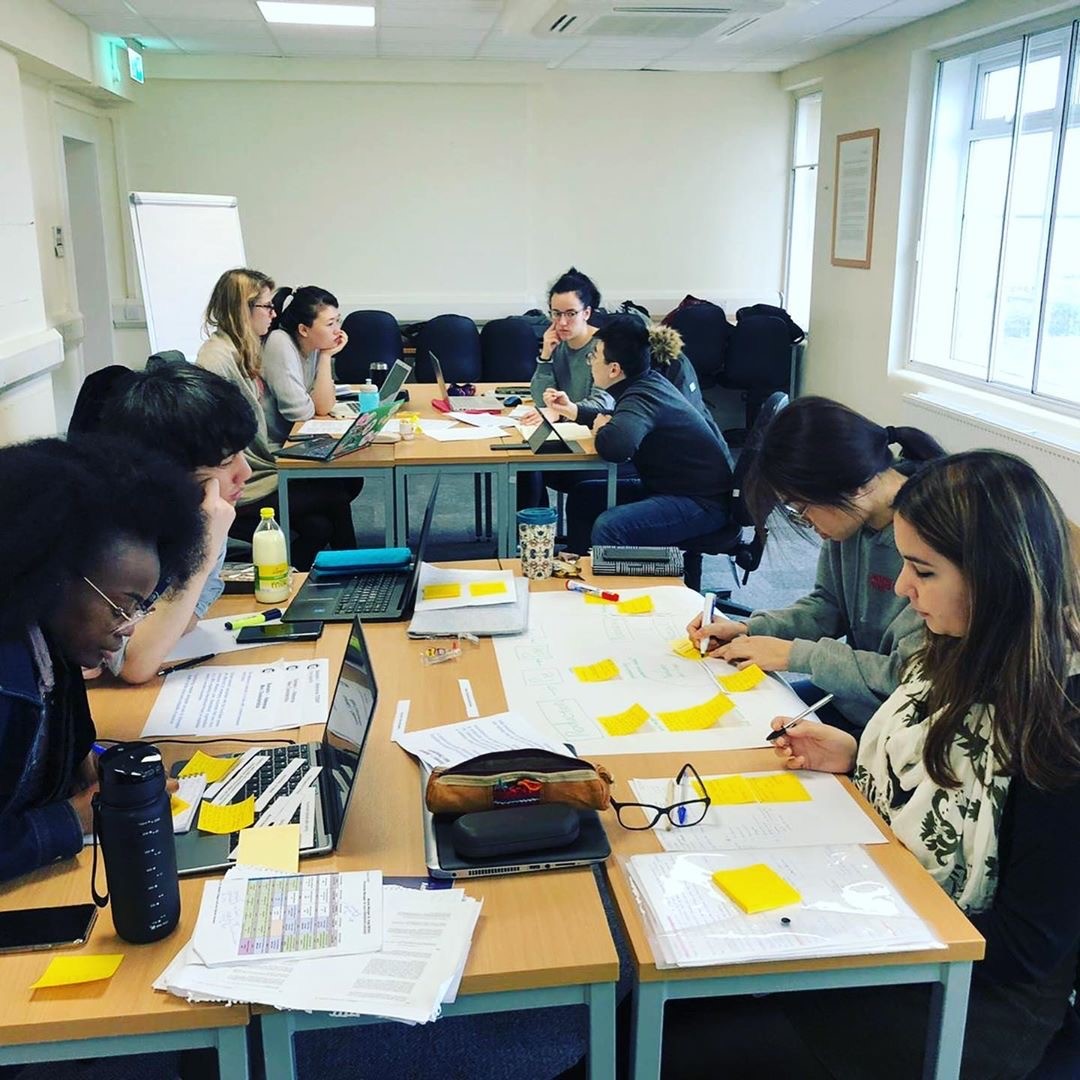
I have already seen my progress in understanding how to make use of emerging technology and software in assigning tasks amongst teammates and setting deadlines. I got to understand the importance of data protection and the value of the intellectual property from both parties such as clients and the people involved. I have taken training on General Data Protection Regulation (GDPR) which is a crucial part of harnessing European Union data privacy laws. I share the group project responsibility with a diverse team from different ethnic and cultural groups and most importantly professional disciplines. This is exciting because it reflects the real-world workplace, which is important, to make sure I am a pleasure to work with. I took up training in Equality, Diversity, and Inclusion to ease work and this experience. This sharpened my knowledge in “knowing how to treat people differently” to accommodate them, yet treating them fairly with how much each background demanded. Emotional intelligence should not be taken for granted, it is not something that is commonly taught and real-life experiences are unique to the nature of business and location.
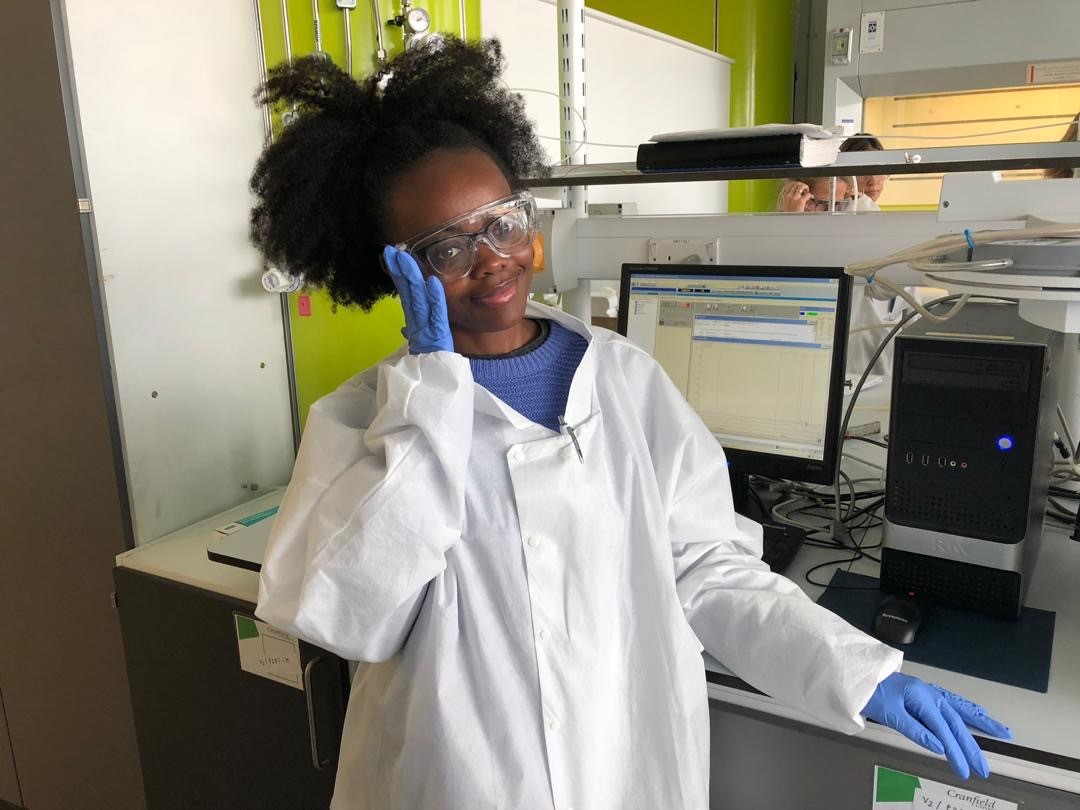
The overall field in Food Systems gives an overview of the food network. Food process engineering, however, is only limited to a certain part of the supply chain. This means that I get a thrilling experience to fill the gap in practical knowledge from the initial part of the food supply chain which is Agriculture as well as the medium, the environment.
The project at hand is in ‘The Future Innovations in Agricultural and Environmental Engineering’. This is in collaboration with the Douglas Bomford Trust (DBT), a UK based charity that has been registered and operating since 1972. DBT was founded in commemoration of an Agricultural Engineer Douglas Bomford who was once the President of the Institute of Agricultural Engineers. The mission of DBT is to invest and create opportunities in research, training, and education in topics related to agricultural engineering and mechanisation.
Cranfield University has already worked on futuristic projects such as drone technology but since there are no limits to science and research, continuous improvement and new solutions are required. Innovation will be sought for taking into account the ever-changing system in terms of Political, Environmental, Social, Technological, Legal and Economical (PESTLE) concerns. Hence, I hope to apply more of my theoretical knowledge and discover possible talent(s).
The journey in food solutions continues…

Categories & Tags:
Leave a comment on this post:
You might also like…

Get a head start on referencing and plagiarism
We offer a module on Referencing And Avoiding Plagiarism which you can find on your Canvas dashboard. It explains the role and importance of citing references and how to incorporate the work of other authors ...

How Cranfield shaped my journey as an Aerospace Engineer
If I'm being specific about the moment it clicked, it was reading a paper called "On the Role and Challenges of Computational Fluid Dynamics (CFD) in the Aerospace Industry" by two Boeing engineers, P. ...
Introducing Kings Norton Library
Welcome to all our new students! We are looking forward to meeting you soon. You will find Kings Norton Library in the centre of the Cranfield campus, and it is open 24/7 to all staff ...

Setting your research on the right course: Four questions every researcher should ask
Whether you are just beginning your doctoral journey or are already well into your research career, successful research rarely happens by accident. Like any successful mission, it depends on good planning, informed decisions, and getting ...

5 budgeting mistakes students make (and how to avoid them)
Good financial planning isn't about how much money you have. It's about the habits you build. We asked Dr Lakshmy Subramanian, Course Director for the Banking, Economics and Finance MSc, about the budgeting mistakes ...

Finding your reading materials
Use Library Search Library Search is the first place to start when you are trying to find academic sources for your work. This is the search box on the library website homepage. It allows you ...