


Why we need business to boom after COP21
10/12/2015
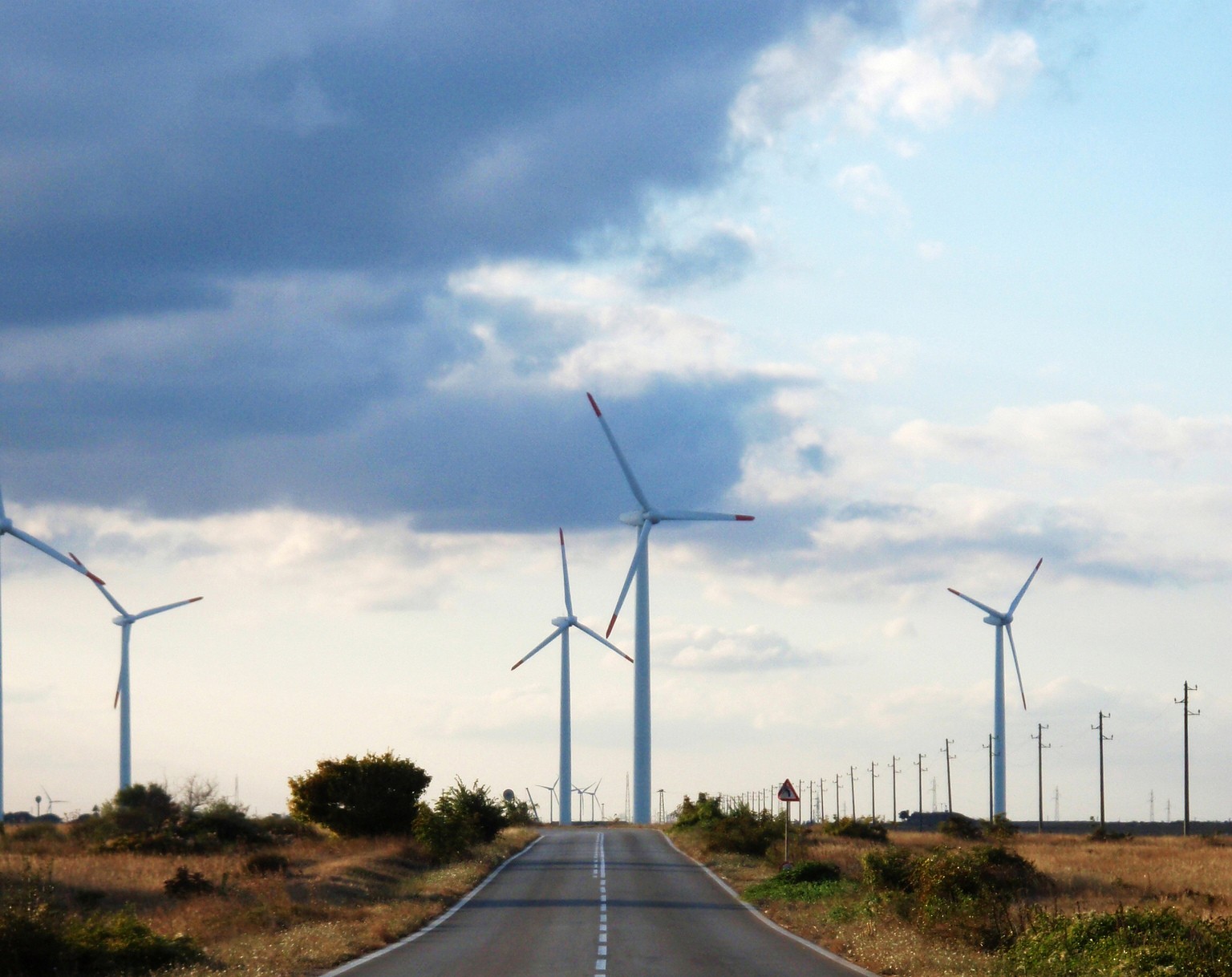
Business has long been considered to have a problematic relationship with the environment. Since the industrial revolution, the side effect of growing business has been a growing impact on the environment around us. As the governments of the world inch towards a potential agreement in Paris this week for the much anticipated 21st Annual Conference of Parties (COP21), the governments and attendant lobby groups have been fighting for their part of the discussion. While the headline is the working out of a mutually agreeable greenhouse gas emissions deal that can limit global warming to below 2°C, the economic needs must also be considered carefully to ensure a stable future after COP21. The truth is, in order to get agreement, the deal has to be demonstrably good for economies and investors as well as the planet.
In the coming days we may well see the old hat debates played out: pro-business will have a fist fight with pro-environment. The ‘suits’ will face off with the ‘tree-huggers’. These arguments are old hat for a reason: they don’t solve anything and they don’t represent the reality of the modern world. If the debate is polarised in this way, we place a fundamental stumbling block in the way of the only viable solution. The solution has to be a way forward which solves the tension between how we use resources for economic activity and our need to protect the environment and our natural capital.
Past business models have seen economic growth related to the amount of resources we can extract and utilise. However, this growth was always going to be ultimately constrained by the diminishing amount of resources we could use. Our needs are already exceeding the resources available, so in order to continue as functional societies and economies we need to reduce our impact on the environment – and to also fuel economic growth somehow. The focus needs to be balanced as such. As the European Commission puts it in their Environmental Action Plan, we need to ‘live well within the limits of our planet’. The focus is on living as much as on limits.
A low carbon future is vital, but it is simply unachievable without mainstreaming a global green economy. This will require a whole new system, an economy purposefully restorative, supported by new technologies, new investments, and staffed by newly skilled professionals. This won’t be easy to achieve, but the pressure to do more for less with our resources is a once in a generation opportunity for innovation and business. This can’t happen overnight, but the journey can be expedited with regulatory and governmental leadership, and the transition and transformation could change the foundations of international business forever.
In the UK, the green economy is already estimated to be worth £3.4 trillion and growing at 4% per year. Here it is already delivering economic growth, new jobs, new exports, and scale-up opportunities for clean technologies. In 2012, data from the Office for National Statistics showed steady growth and an economic contribution of £26 billion to the UK. There is great interest and impetus for circular economy models which explore how materials can be kept within the system. And, there is much more to be done to turn ideas and intentions into working solutions.
No-one can be left behind. To make the green economy work worldwide after COP21 we need to take as much care with what divides us as what we share, and we need to be pragmatic about solutions and turnaround. What works for a highly developed technological leader will not necessarily work for a developing economy. More importantly, why should developing economies have their long-awaited growth stalled by the hangover from our years of excess? The green economy has the possibility for a fairer, cleaner, leaner and better model for global business. Instead of simply rehashing the same old stand-offs, this is what COP21 needs to catalyse.

Categories & Tags:
Leave a comment on this post:
You might also like…

Moving to the UK to study? How to plan for banking, exchange rates and transfers
Currency and banking are two of the most practical parts of financial planning for international students. They are also often the most overlooked. We asked Dr Lakshmy Subramanian, Course Director for Cranfield University's Banking, ...
Cranfield: an environment where innovation thrives
The latest Knowledge Exchange Framework rankings from UK Research and Innovation (UKRI) gives an insight into the real and meaningful impact that UK universities have. The seven categories that make up KEF6 cover everything ...
How Cranfield accelerated my career in Logistics and Supply Chain Management
After graduating from the MSc in Logistics and Supply Chain Management at Cranfield University, I've been reflecting on the experiences that made my journey so valuable and the impact it has had on my ...
Mendeley: a powerful tool to organise and manage your references
Are you looking for a way to manage your references, create in-text citations and reference lists for your assignments or thesis? If so, you may wish to consider using Mendeley. What is it? Mendeley is ...
Keen to develop your study skills?
Alongside the technical skills and academic knowledge that you will gain on your course, as a Cranfield student you have the opportunity to develop a range of other skills that can enhance your learning experience. ...
The V-conomy: powering the sixth wave of global economic growth
The world could be on the verge of a major surge in economic growth and development, driven by the convergence of AI and clean energy technology. Waiting to ride the K-wave The Russian ...