


My visit to the Cambridge Environmental Assessment
22/08/2018
Working hard setting up experiments, getting the expected results, and publishing your work in great journals are all key goals for a researcher; however, communicating your research outside academia is also a professionally valuable experience. On 6th July, I had the chance to present my work and learn more about the great work that they do at Cambridge Environmental Assessment (CEA).
Cambridge Environmental Assessment is located in the picturesque countryside location of Boxworth, Cambridge. The Ecotoxicology team and Adrian Terry (head of CEA) were very pleased to meet me and discuss my work. I was interested in understanding the implications of my research in the environmental sector, and to gain insight into the roles and responsibilities of different pathways outside academia.
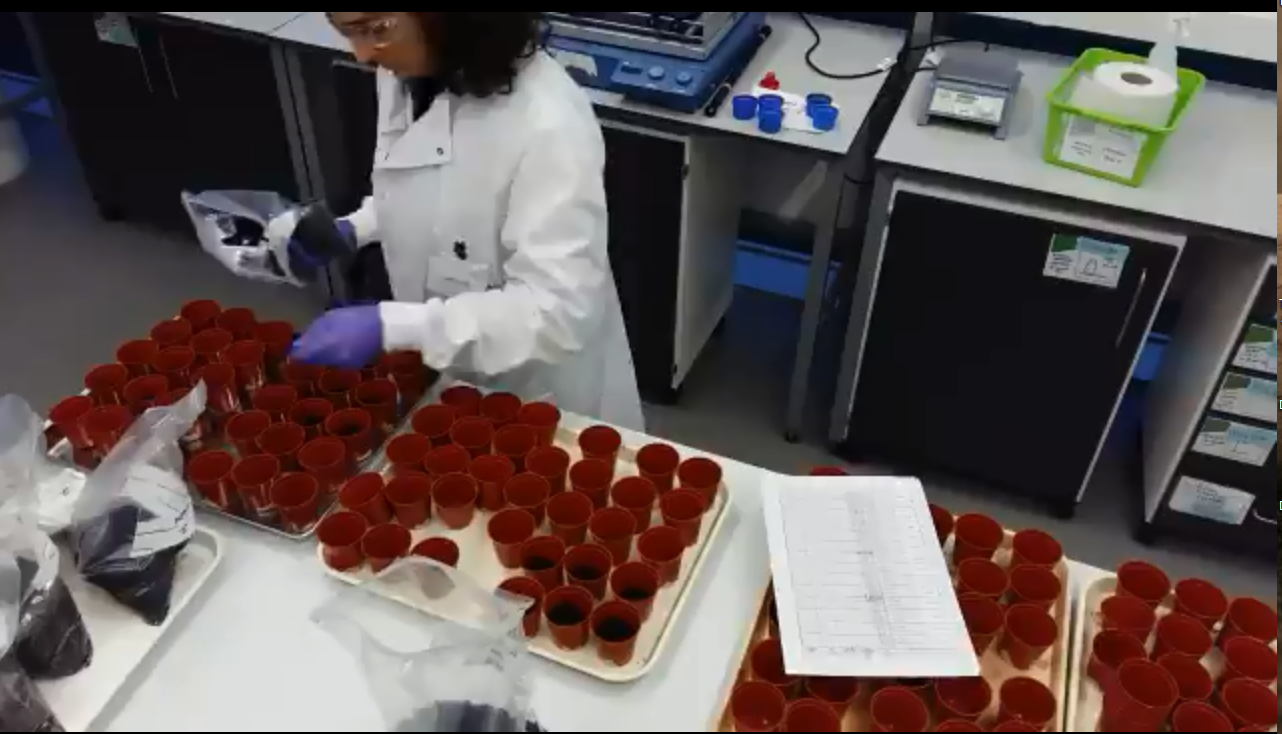
During the last year of my PhD (part of REMEDIATE), I have been focused on linking bioavailability of complex chemical mixtures to toxicity changes, providing multiple lines of evidence to inform risk management decisions at contaminated sites. Therefore, I presented my work on an experimental set-up where contaminated soils, collected from former gas work sites were treated with amendments (biochar or compost) incubated for 6 months, and their toxicity evaluated thought different ecotoxicological assays. The CEA team was very engaged, asked a lot of questions and provided valuable feedback on my work.

Eco-toxicological assays earthworms acute toxicity test (Location: Cranfield University)
Throughout the day Dr. Adrian Terry presented/introduced the CEA team (which includes experts in environmental fate and behaviour, exposure and spatial modelling, ecotoxicology and toxicology), and explained the overall aim and objectives of the company.
Dr. Hanna Schuster, presented the current work on over 200 outdoor aquatic mesocosms (flat-bottomed or sloped) to simulate different edge-of-field environments with a focus on plants and invertebrates (e.g; in-house identification of freshwater phytoplankton, periphyton, macrophytes, zooplankton, and macroinvertebrates). Hanna also guided me through the facility to visit their mesocosms set-up for bespoke higher-tier aquatic studies.
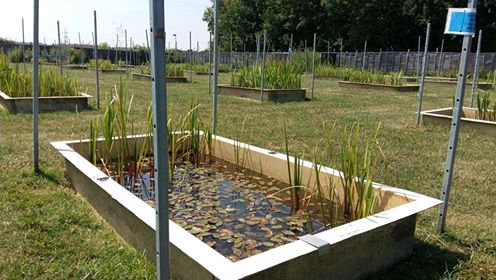
Mesocosms setup for bespoke higher-tier aquatic studies (Location: CEA)
Dr. Nadine Taylor, presented a range of different works including the very interesting research projects she developed during her PhD and postdoc using molecular high throughput techniques and physiological endpoints to determine ecosystem changes to environmental stress.
I would like to express my sincere thanks to my sponsor for providing funding for my training and networking opportunities; and to the ecotoxicology team and Adrian Terry for hosting me at CEA and appreciating my research work.
It was a great day for me to network and discuss my work with experts in the field, and hopefully future collaborations will arise from this meeting.
If you would like to learn more please visit https://www.cranfield.ac.uk/research-projects/remediate
Links
Note: Top photo located within Cranfield University.

Categories & Tags:
Leave a comment on this post:
You might also like…

Moving to the UK to study? How to plan for banking, exchange rates and transfers
Currency and banking are two of the most practical parts of financial planning for international students. They are also often the most overlooked. We asked Dr Lakshmy Subramanian, Course Director for Cranfield University's Banking, ...
Cranfield: an environment where innovation thrives
The latest Knowledge Exchange Framework rankings from UK Research and Innovation (UKRI) gives an insight into the real and meaningful impact that UK universities have. The seven categories that make up KEF6 cover everything ...
How Cranfield accelerated my career in Logistics and Supply Chain Management
After graduating from the MSc in Logistics and Supply Chain Management at Cranfield University, I've been reflecting on the experiences that made my journey so valuable and the impact it has had on my ...

Mendeley: a powerful tool to organise and manage your references
Are you looking for a way to manage your references, create in-text citations and reference lists for your assignments or thesis? If so, you may wish to consider using Mendeley. What is it? Mendeley is ...

Keen to develop your study skills?
Alongside the technical skills and academic knowledge that you will gain on your course, as a Cranfield student you have the opportunity to develop a range of other skills that can enhance your learning experience. ...

The V-conomy: powering the sixth wave of global economic growth
The world could be on the verge of a major surge in economic growth and development, driven by the convergence of AI and clean energy technology. Waiting to ride the K-wave The Russian ...