


Bloomberg basics
16/10/2025

Accessible in Kings Norton Library from 11 dedicated terminals, Bloomberg provides access to the real world of finance through the same platform as used by the world’s leading banks, corporations and government agencies. Bloomberg provides real-time and historical pricing information from the world’s stock exchanges, as well as detailed information, news and financial data on global companies. The content includes information on equities, commodities, currencies, economic data and statistics, government bonds, hedge funds, credit default swaps, business news and analytics.
You can find the Bloomberg and Training Suite on the ground floor to the right of the main entrance to the Library. Access is by swipe card (your University ID card), with priority given to business and management staff and students.
There are three ways of finding your way around a Bloomberg terminal:
- Using the dedicated yellow function keys on the Bloomberg keyboard
- Using the command line’s predictive text function – start typing in what you’re looking for and Bloomberg will pull up a list of possible matches. The more you type, the more targeted Bloomberg’s suggestions will be.
- Using Bloomberg’s codes (or short-cuts) to access specific areas of data. The more you use Bloomberg, the more familiar you will become with some of the commonly used function codes. Codes can be easily identified in on-screen menus in white text.
The data you find can be exported and saved in a variety of formats – pdf and Excel being the two most common. Charts are also very easy to produce and export.
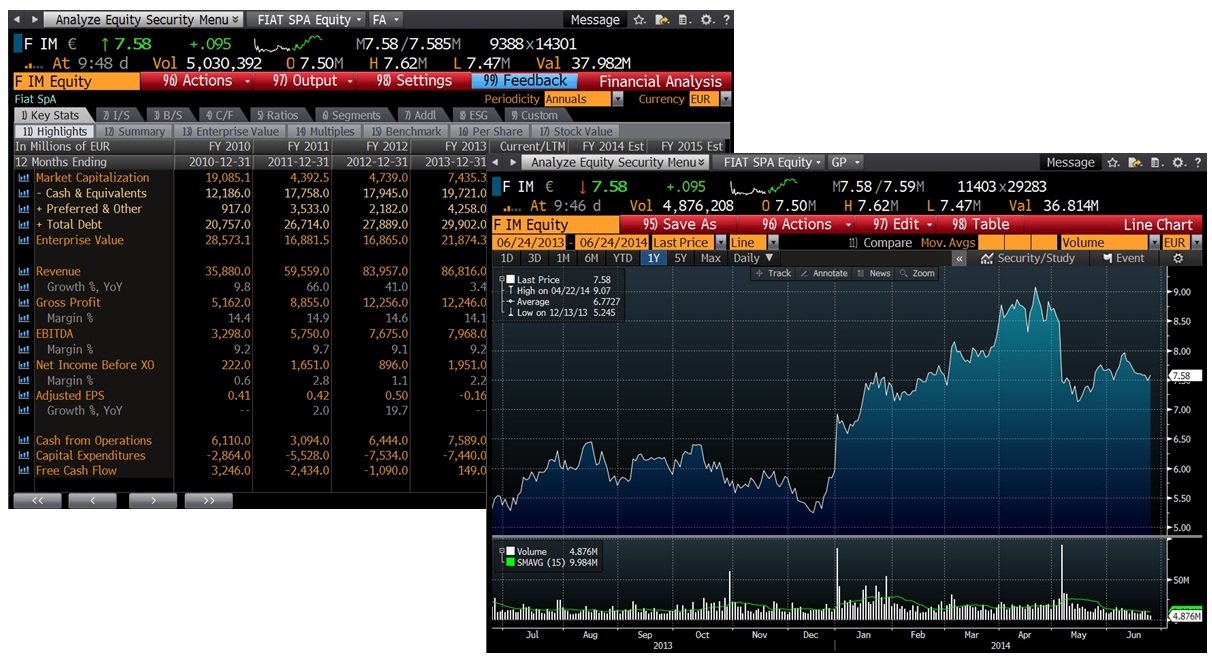
There are a number of ways to enhance your knowledge:
- Bloomberg University (<BU>) is an online resource centre providing access to seminars and events to help you develop your knowledge and skills.
- Bloomberg Certifications (<BCER>) provides access to a variety of e-learning courses which provide an excellent introduction to the world of finance via the Bloomberg terminal. these include:
- The Bloomberg Market Concepts (BMC), an e-learning certification course which provides a visual introduction to financial markets.
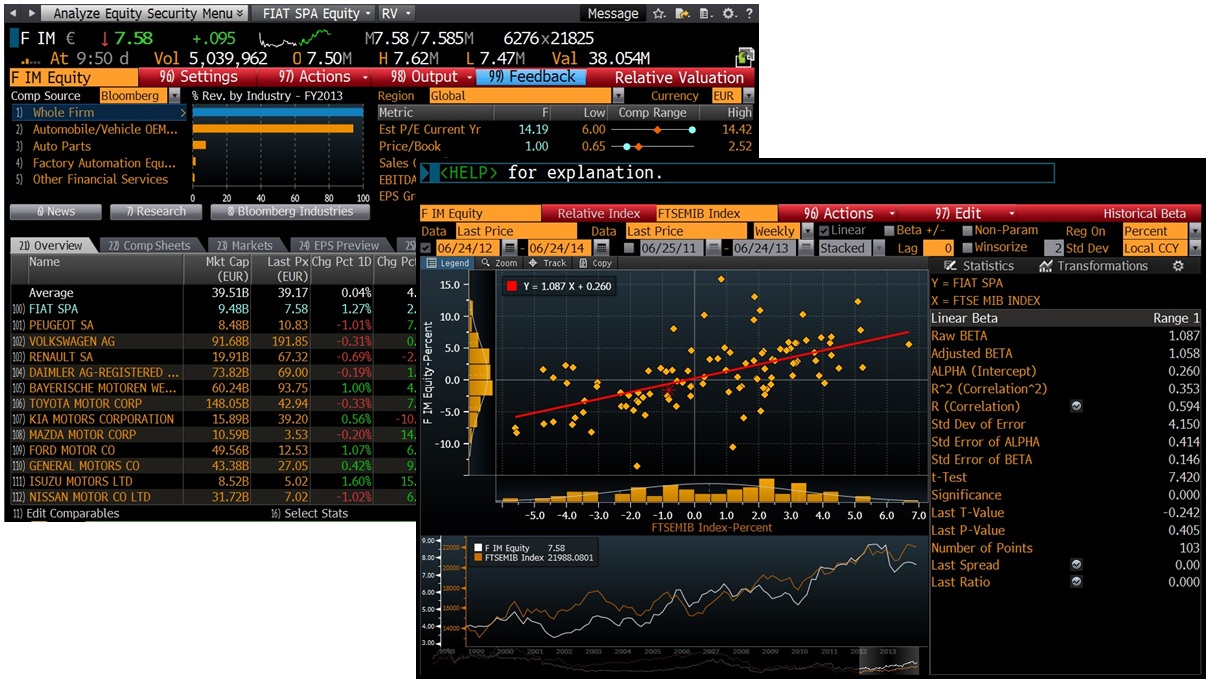
Bloomberg terminals should be booked in advance. Please see our booking page for further details where you will also find our Bloomberg basics guide.
Want to know more? Contact Library staff for a demonstration.

Categories & Tags:
Leave a comment on this post:
You might also like…

Moving to the UK to study? How to plan for banking, exchange rates and transfers
Currency and banking are two of the most practical parts of financial planning for international students. They are also often the most overlooked. We asked Dr Lakshmy Subramanian, Course Director for Cranfield University's Banking, ...

Cranfield: an environment where innovation thrives
The latest Knowledge Exchange Framework rankings from UK Research and Innovation (UKRI) gives an insight into the real and meaningful impact that UK universities have. The seven categories that make up KEF6 cover everything ...

How Cranfield accelerated my career in Logistics and Supply Chain Management
After graduating from the MSc in Logistics and Supply Chain Management at Cranfield University, I've been reflecting on the experiences that made my journey so valuable and the impact it has had on my ...

Mendeley: a powerful tool to organise and manage your references
Are you looking for a way to manage your references, create in-text citations and reference lists for your assignments or thesis? If so, you may wish to consider using Mendeley. What is it? Mendeley is ...

Keen to develop your study skills?
Alongside the technical skills and academic knowledge that you will gain on your course, as a Cranfield student you have the opportunity to develop a range of other skills that can enhance your learning experience. ...

The V-conomy: powering the sixth wave of global economic growth
The world could be on the verge of a major surge in economic growth and development, driven by the convergence of AI and clean energy technology. Waiting to ride the K-wave The Russian ...
Comments are closed.