

How practical sessions are revving up our automotive MScs
07/01/2020
Here at Cranfield, we pride ourselves on the strong practical vein of our courses. We understand that true knowledge comes not just from listening, reading and writing, but from doing.
Research shows that practical leaning boosts individuals’ know-how and proficiency and makes them feel that their education is more relevant – moreover, it has been shown to improve self-esteem in the workplace, perhaps because individuals feel better equipped to overcome challenges.
But what does this look like in practice and what do our students really think about this approach?
Real-life research on the automotive MScs
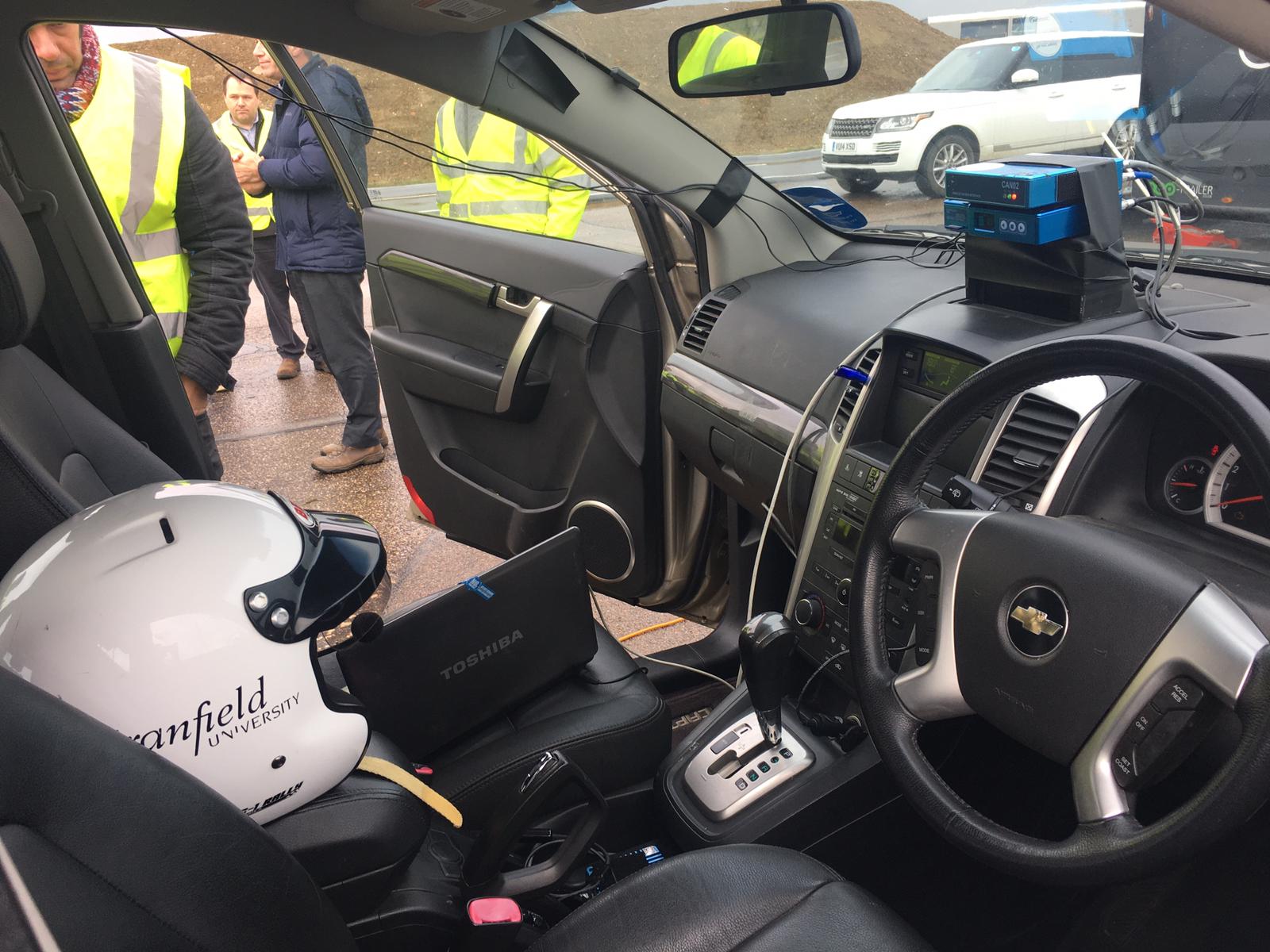
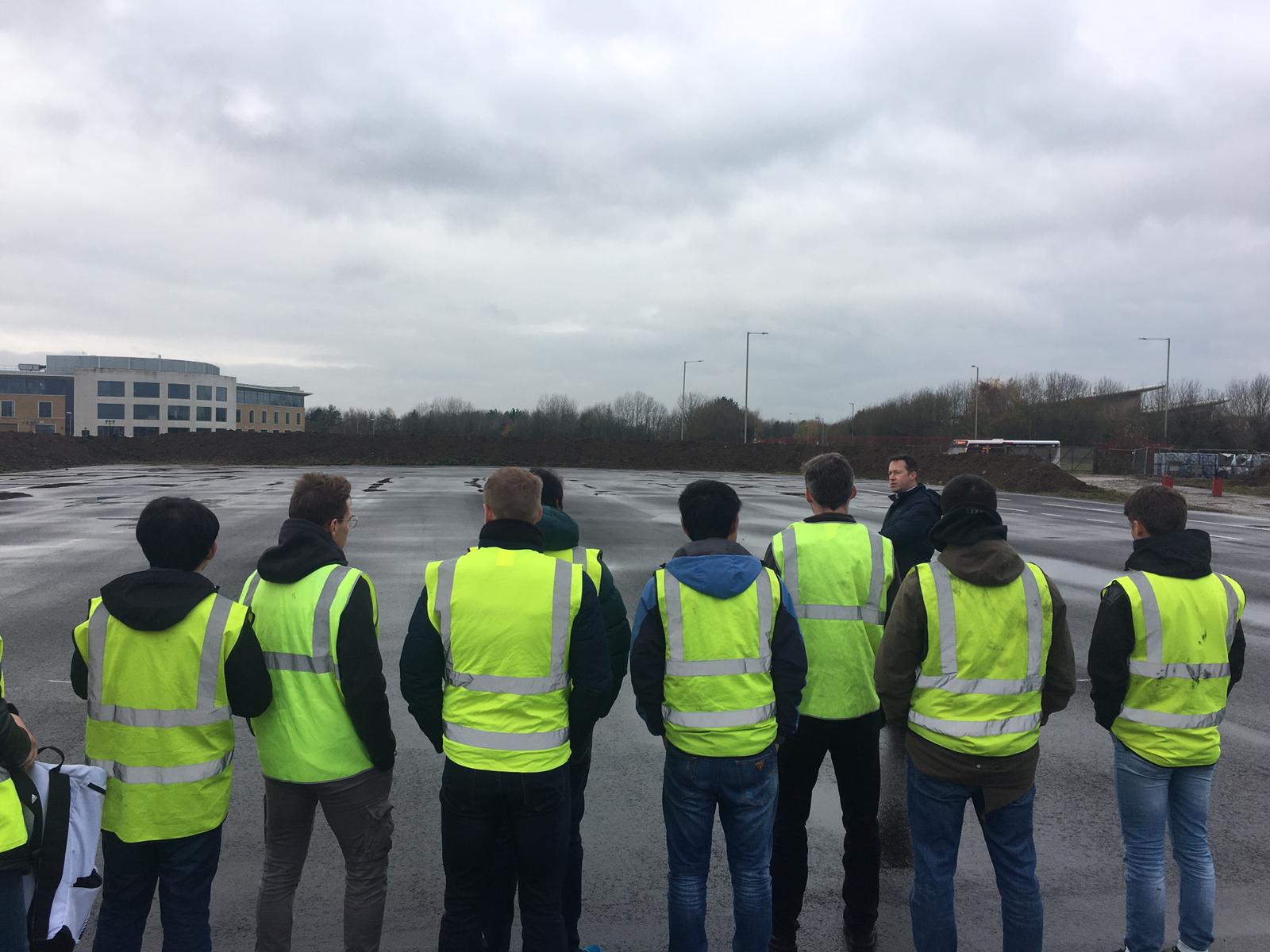
During the last week of November, students studying our Automotive Engineering and Automotive Mechatronics MScs took part in two practical sessions, as part of their Vehicle Dynamics module. The first session was a handling test, which took place on our Multi-User Environment for Autonomous Vehicle Innovation (MUEAVI) road, and the second session was a hands-on look at suspension designs in our mechatronics laboratory.
Describing the first practical session, Dr Efstathios Velenis said: “The vehicle handling practical at MUEAVI aims at demonstrating current approaches of vehicle instrumentation and standard techniques of objective evaluation of vehicle handling performance. The test procedure includes a variety of dynamic and steady-state cornering manoeuvres. The tests are repeated for different configurations of the suspension.
“Post-processing of the data is presented and the effects of the different suspension modifications on the cornering performance of the vehicle are studied and discussed in class. The focus is on the interpretation of the observed behaviours based on the theory covered in the module.”
This was a jam-packed day that saw students actively involved in the sessions (despite the bleak weather!) and allowed them to apply their learning in an everyday setting.
MSc student Georges Sayes commented: “These practical sessions offer a different approach to studying, which is better than a purely theoretical one. We can really understand the different technologies that are employed and the benefits of each of them.
“Learning only the theory does not allow you to really understand the fundamental functioning of different suspension designs, for example.
“During the handling session outside, we could apply what we had learned the day before. By seeing how the vehicle could perform on the track, we were able to validate our calculations on real vehicles.
“Through these sessions, we get closer to the automotive industry and acquire a better and deeper understanding.”
Another MSc student, Sreeram Santosh Vasamsetty, said: “Cranfield offers a huge number of practical sessions compared to other universities and these sessions are really impressive and industry-orientated. We deal with real-life situations.
“AVEC has great facilities and, for me, the most interesting part of the day was the vehicle handling session.
“Automotive companies want to hire students from Cranfield because we’ve dealt with real-life scenarios.”
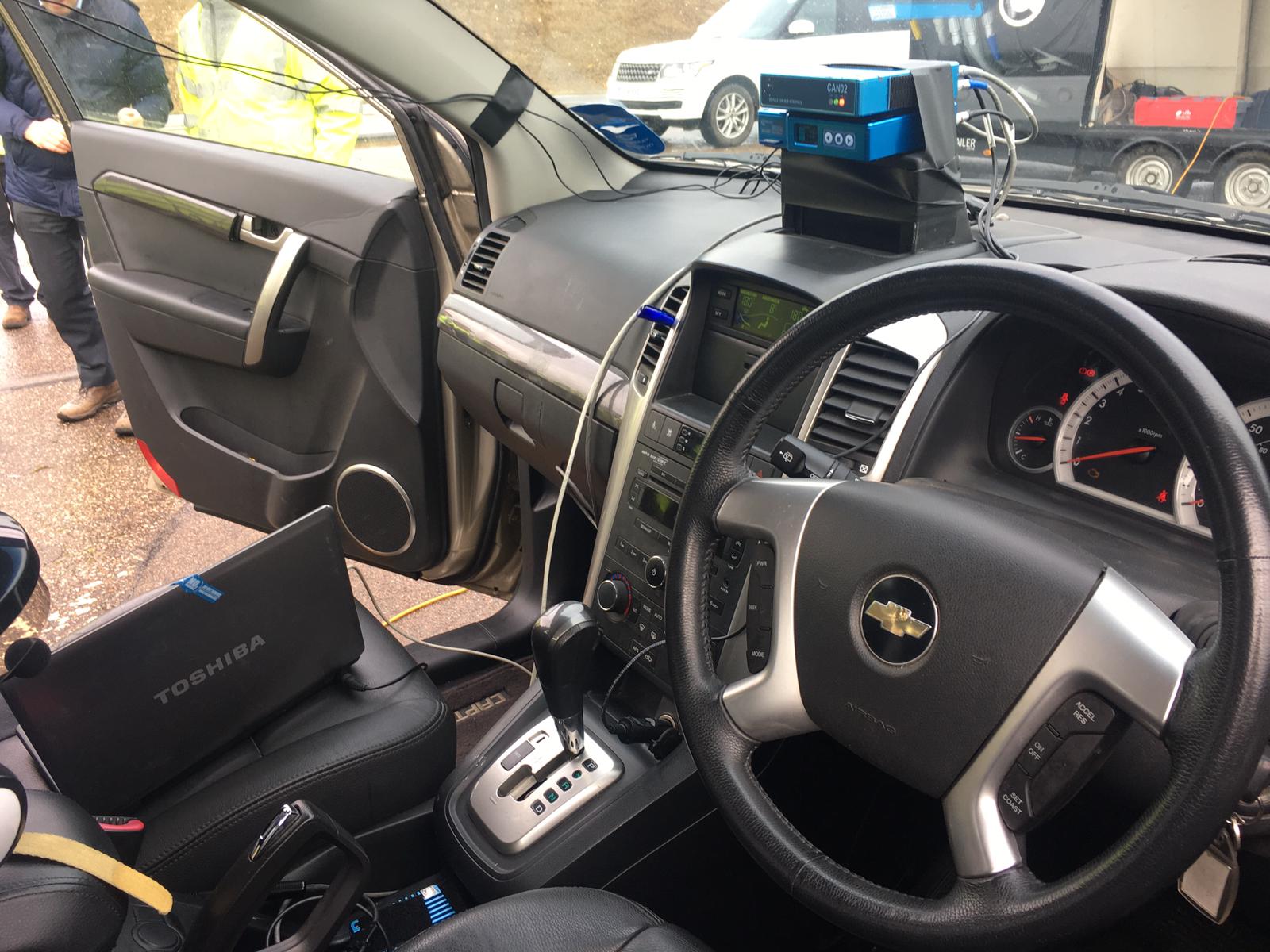
Our automotive students have plenty more to look forward to throughout the rest of the academic year, including continuing to work on their group design project. Next year also marks the 60th anniversary of our Advanced Vehicle Engineering Centre (AVEC), so it’s an exciting time to be studying an automotive MSc at Cranfield.

Categories & Tags:
Leave a comment on this post:
You might also like…

How Cranfield accelerated my career in Logistics and Supply Chain Management
After graduating from the MSc in Logistics and Supply Chain Management at Cranfield University, I've been reflecting on the experiences that made my journey so valuable and the impact it has had on my ...

Mendeley: a powerful tool to organise and manage your references
Are you looking for a way to manage your references, create in-text citations and reference lists for your assignments or thesis? If so, you may wish to consider using Mendeley. What is it? Mendeley is ...

Keen to develop your study skills?
Alongside the technical skills and academic knowledge that you will gain on your course, as a Cranfield student you have the opportunity to develop a range of other skills that can enhance your learning experience. ...

The V-conomy: powering the sixth wave of global economic growth
The world could be on the verge of a major surge in economic growth and development, driven by the convergence of AI and clean energy technology. Waiting to ride the K-wave The Russian ...

Need help using the Python programming language?
We know some of our students are currently trying to learn Python, so we wanted to make you aware of some great LinkedIn Learning videos that can help. But don't you have to pay for ...

What does it really take to become a Chevening Scholar?
Say “Turkmenistan” to most people and you’ll get a blank look. That was true when I left Ashgabat for the UK to study an MSc in Logistics and Supply Chain Management at Cranfield University ...