


Alumnus Rob Wilson’s Journey from Cranfield to Skyports Infrastructure
28/02/2024

Rob Wilson’s interest in aviation started long before he came to Cranfield to study Air Transport Management MSc. However, it wasn’t until 2017, when he started regularly flying between the UK and Austria to visit his then-girlfriend, that Rob became really fascinated with how it works – from ticket pricing to operations.
Whilst looking at the options for a master’s in aviation, Rob found Cranfield to be highly recommended. Amongst other factors, he admired the university’s links to industry and the opportunity to create an airline as part of the final group project.
A year at Cranfield
Rob thoroughly enjoyed his time here at Cranfield, particularly the opportunities to work with fellow students and the opportunity to speak on a one-to-one basis with staff about topics that particularly interested him.
Rob still has fond memories of Carole Blackshaw lecturing his cohort on air law – which was a real highlight.
When on campus and attending lectures in person, he’d wake up, spend time with his flatmates (being lucky enough to live with two other people who were studying the same course as him) and then head over to Martell House for lectures. After, they would spend some time in the library, or head to Stafford Cripps for a coffee. His favourite part of the day, undeniably, was meeting up with friends over a pint at the CSA.
Life after Cranfield
Rob interned for Eastern Airways – a small regional airline based at Humberside Airport, UK. Since May 2022, he has worked for a company called Skyports Infrastructure. There are two sides to the business – infrastructure and drone services. Drone services deliver cargo and time-critical goods to customers worldwide, with operations in Asia, South America and Europe. Rob, however, works on the infrastructure side of the business.
The company’s core focus is on the establishment of vertiport – landing sites for electric vertical and take-off aircraft (eVTOLs) – networks across the globe. From site acquisition, to design, through to the build, Skyports owns and operates vehicle-agnostic vertiports.
Day-to-day, Rob’s project manages a multimillion-pound programme as part of the Future Flight Challenge. Known as the Air Mobility Ecosystem Consortium (AMEC), their group (which includes Vertical Aerospace, Heathrow Airport, NATS, Atkins Realis, Warwick Manufacturing Group, Cranfield University, London City Airport, Connected Places Catapult & Bristol Airport) is looking at the full advanced air mobility ecosystem, with work packages researching fire safety, electrification, passenger experience and much, much more.
They will construct a vertiport in the Southeast of England and demonstrate the full end-to-end passenger journey for eVTOL passengers later this year. He has been lucky enough to work directly with two of his previous lecturers on the project – Henrik Rothe and Edgar Jimenez Perez. Rob explains that it’s been great to work alongside his previous lecturers, continuing the collaboration with Cranfield.
Upon Cranfield generally, Rob says:
“Cranfield in particular is one of the best places to study for a postgraduate degree. Being surrounded by the countryside is perfect for walking and having the time to clear your head after a long day of lectures or essay writing. However, when you need to have fun, you’re not far from Bedford and Milton Keynes, but the true beauty of Cranfield is that you’re not far from London. There’s a limitless number of things to do in the capital, and you’re surrounded by major airports – great for a weekend getaway with course mates.”
When Rob finishes his current project, he’d like to become more involved in establishing advanced air mobility (AAM) across the globe. Skyports currently has a presence in Japan, and he would love to be involved in bringing AAM to Tokyo or Osaka.
If Rob was to give one piece of advice to anyone thinking about studying at Cranfield University, he would say:
“Keep your mind open. I knew very little about AAM before coming to Cranfield, and as I was studying for an Air Transport Management MSc, I thought I would go to work for an airline. Through a combination of luck, advice from faculty staff, and a bit of hard work, I found myself doing something different from what I thought I was going to do. And it’s been great!”
Before Rob got into aviation, he wanted to be a full-time singer-songwriter. He had released a couple of tracks on Spotify a few years ago, to some success, but realised that he’d struggle to make it work full-time. Maybe one day he’ll pull out the guitar again, but until then, he will be sticking with aviation!


Categories & Tags:
Leave a comment on this post:
You might also like…

Engineering Tomorrow. Part two: Can we move around the world without emissions?
Moving people and goods around the world is essential to modern life. But every journey has an environmental cost, and reducing the emissions associated with transport is one of the major engineering challenges of ...
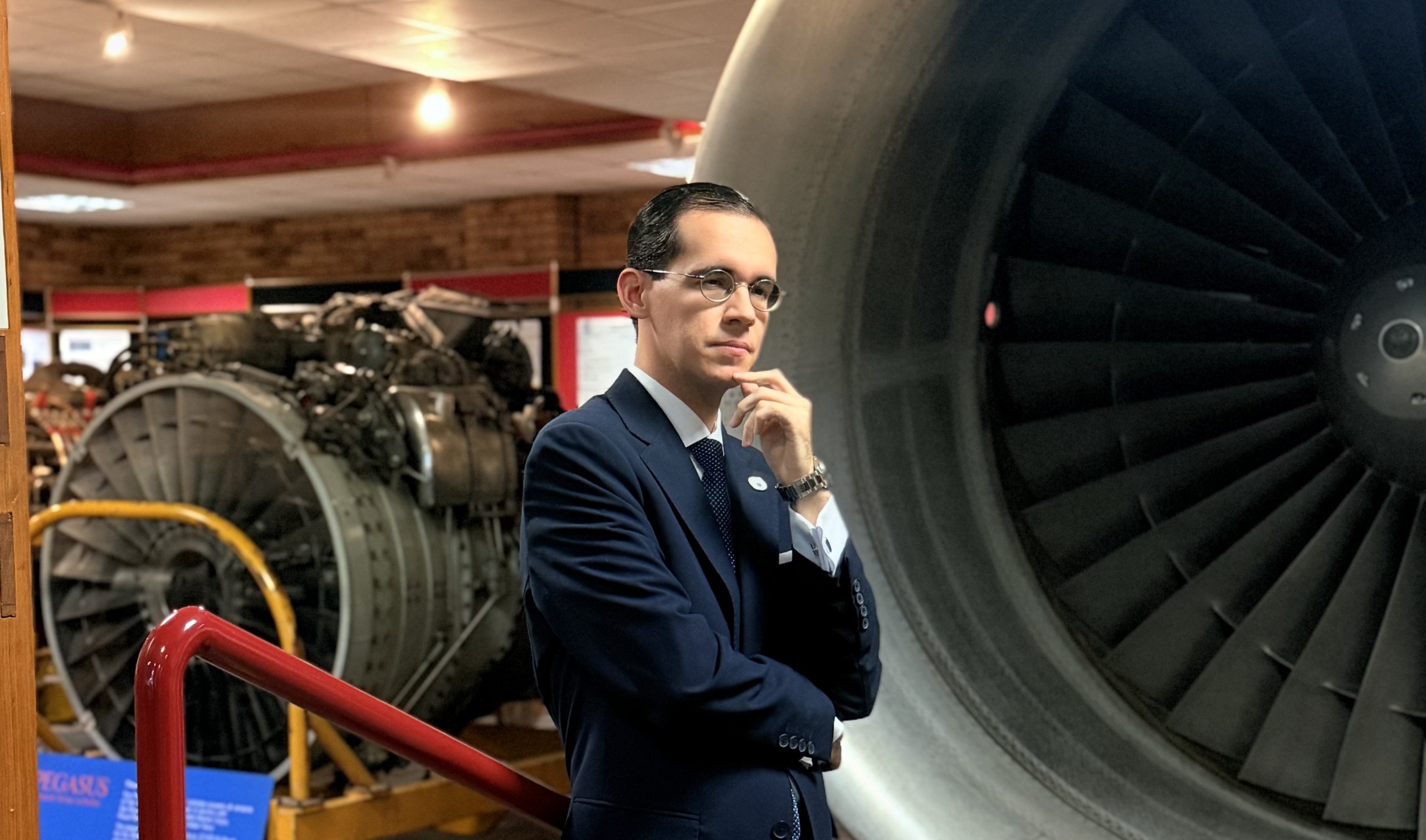
Following in the footsteps of aerospace pioneers
I came to Cranfield to understand how aircraft stay in the sky. Months later, I was measuring the performance of aircraft engines in flight aboard the National Flying Laboratory Centre's Saab 340B. My ...
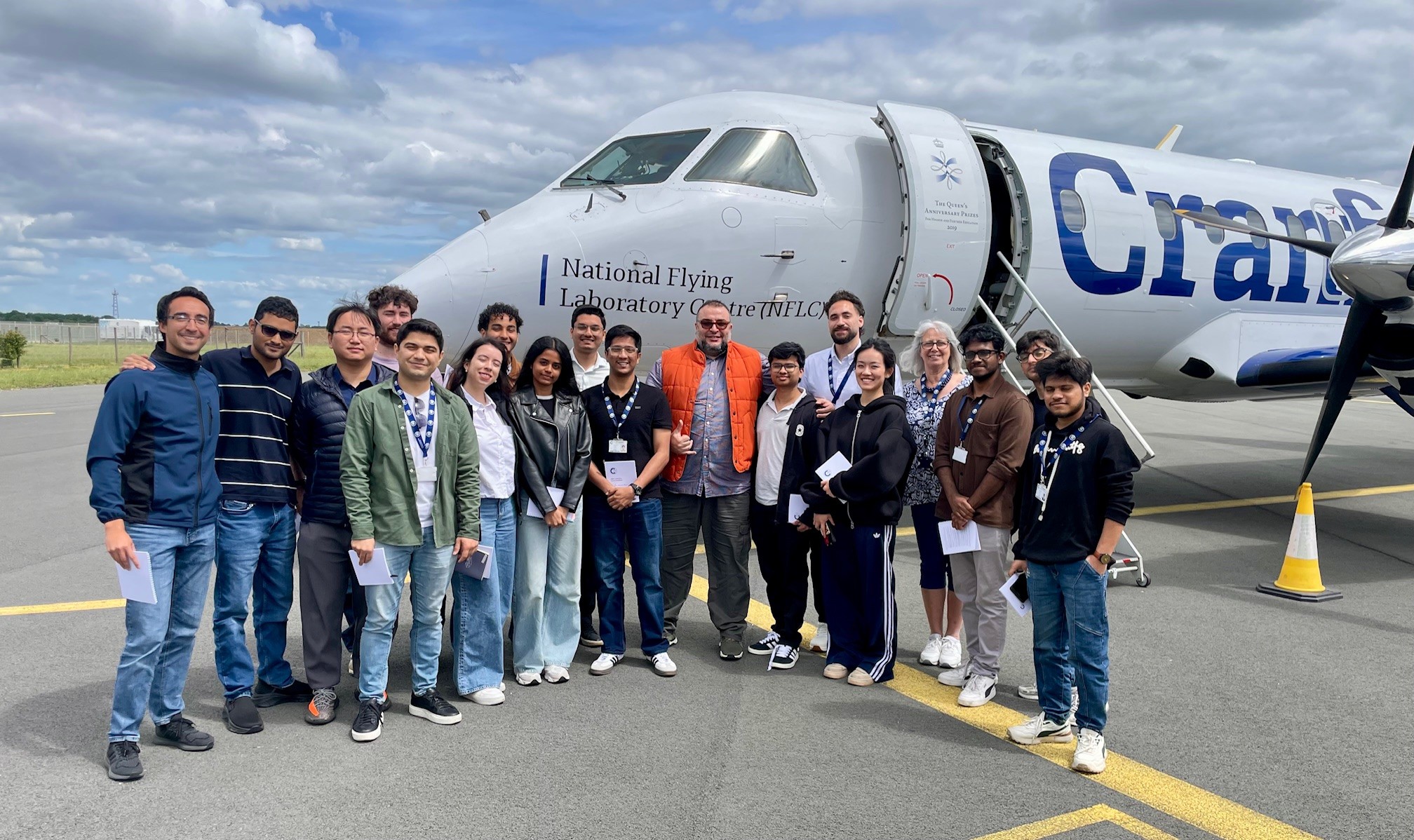
From looking up at jet engines to powering the future of flight
From flying aboard Cranfield's Saab 340B flying classroom to rebuilding a gas turbine component by component, Jouni Kailouh's journey shows how specialist, hands-on experience can turn a fascination with propulsion into a future career ...
Engineering Tomorrow. Part one: Can we power the future without costing the Earth?
The world needs energy. To power homes, industries, transport and the technologies shaping our future. But as demand grows and the pressure to reduce emissions increases, how do we generate the energy we need ...
Looking ahead: Building foresight skills for a more sustainable future
As sustainability challenges become more complex and uncertain, organisations need people who can look beyond today's pressures and think strategically about the future. From changing regulations and emerging technologies to supply chain disruption and ...
Brazil to Cambridge: How Cranfield helped me build a career in data analytics
I was hungry for something bigger. Before Cranfield, I was living in São Paulo, Brazil, working as a Data and Market Intelligence Analyst in the trading division of Raízen. My background is actually ...
Comments are closed.