


From medical robotics to space exploration: My journey at Cranfield University
03/02/2025

My name is Praveen Elavazhagan, and I’m from India. I recently completed my MSc in Robotics at Cranfield University, graduating in 2024. My journey to Cranfield, and now into a PhD, has been a fascinating one, and I’m excited to share my experiences.
Building a strong foundation in medical robotics
My robotics career began with eight years working as a senior software engineer in medical robotics. I developed advanced robotic solutions at HTIC-IIT Madras and Perfint Healthcare, integrating collaborative robots like the UR5e with medical imaging systems. This work honed my expertise in real-time control and 3D spatial registration, igniting a passion for the intricate challenges and precise applications of robotic systems. This passion ultimately steered me towards exploring their potential in space exploration.
Choosing Cranfield: Industry focus and advanced research
Cranfield University’s MSc in Robotics offered the perfect platform to expand my expertise. Its deep integration with leading industrial partners like BAE Systems, Rolls-Royce, Thales, and Airbus ensures the curriculum stays at the cutting edge. These partnerships provide invaluable hands-on experience and exposure to real-world engineering challenges. The strong industry focus prepares graduates to contribute meaningfully to sectors like aerospace, defence, and manufacturing.
I chose Cranfield for its unique blend of industry-focused education and advanced research in aerospace robotics. The programme gave me a comprehensive understanding of motion planning, robotic control, and system integration. Access to state-of-the-art facilities and mentoring from leading experts allowed me to bridge theoretical knowledge with real-world application. My master’s thesis focused on space robotics for in-orbit operations, a project I undertook with the European Space Agency and Airbus. This experience provided precisely the domain knowledge I was hoping to gain.
The MSc experience: Stimulating and enriching
The course itself was both intellectually stimulating and practically enriching. Each module was evaluated through assignments designed to prepare us for our thesis work, ensuring we could apply theoretical concepts effectively. Group projects working on real-time industrial problems were a major highlight, providing invaluable exposure to real-world systems and tasks. A visit to the ABB robotics facility in Milton Keynes offered further first-hand insight into advanced robotics processes and technologies. The course structure was meticulously designed, with interactive lectures, state-of-the-art facilities, and supportive faculty making the learning experience exceptionally comprehensive.
A typical day on campus: Lectures, practical sessions, and extra-curricular activities
A typical day on campus started early, with meal prep to ensure a smooth transition into a day filled with lectures and activities. Mornings were dedicated to engaging lectures, building from fundamental concepts to complex ideas. The faculty actively encouraged questions, making the material accessible and engaging. Lunch was a welcomed break, a chance to connect with friends at the CSA (Cranfield Student Association) or head back to my accommodation. Afternoons focused on practical sessions: programming, real-time robot interactions, and other exercises that solidified the morning’s theoretical concepts. Evenings were for extracurricular activities, often involving sports clubs or student societies like CranSEDs (Cranfield Space Exploration and Development Society) and UIAS (Unmanned Intelligent Aerial Systems), followed by dinner and review of the day’s work.
Moving forward: A PhD in Space Robotics
I’m now embarking on a funded PhD programme at Cranfield, specialising in space robotics with a focus on in-orbit servicing and manufacturing through the ISAAC and RISE missions in collaboration with the European Space Agency and Airbus. This is an incredible opportunity to build on my thesis work and collaborate with leading experts in the field.
The Cranfield experience: Rewarding and impactful
Studying in the UK, particularly at Cranfield, has been an incredibly rewarding experience. As a postgraduate-only university, Cranfield offers a research-driven, industry-focused learning environment. The close ties with industry ensure the knowledge and skills we acquire are directly relevant to real-world challenges. The faculty are not only leaders in their fields but also genuinely invested in student success, always available for guidance and support. Cranfield’s innovative facilities, especially in aerospace and robotics, provide access to the latest tools and technology, seamlessly blending theory and practice. The diverse and international student community further enriches the experience, fostering collaboration across cultures.
Future aspirations and advice for aspiring roboticists
My future aspiration is to contribute meaningfully to space exploration and push the boundaries of research in this field. My advice to anyone interested in this field is to fully immerse yourself in the learning process. Seek out challenges that push you beyond your comfort zone, as this is where real growth happens. As Benjamin Franklin said, “Tell me and I forget, teach me and I may remember, involve me and I learn.”
A fun fact: Beyond the lab
Finally, a fun fact about me: while academics are a passion, I also find joy in travelling, driving, and gaming. Despite the demands of my master’s thesis, I managed a trip to Ireland. I’m a dedicated PC gamer, and a new gaming PC is definitely on the cards. Alongside my PhD, I plan to explore more of Europe and enjoy life beyond the lab.



Categories & Tags:
Leave a comment on this post:
You might also like…
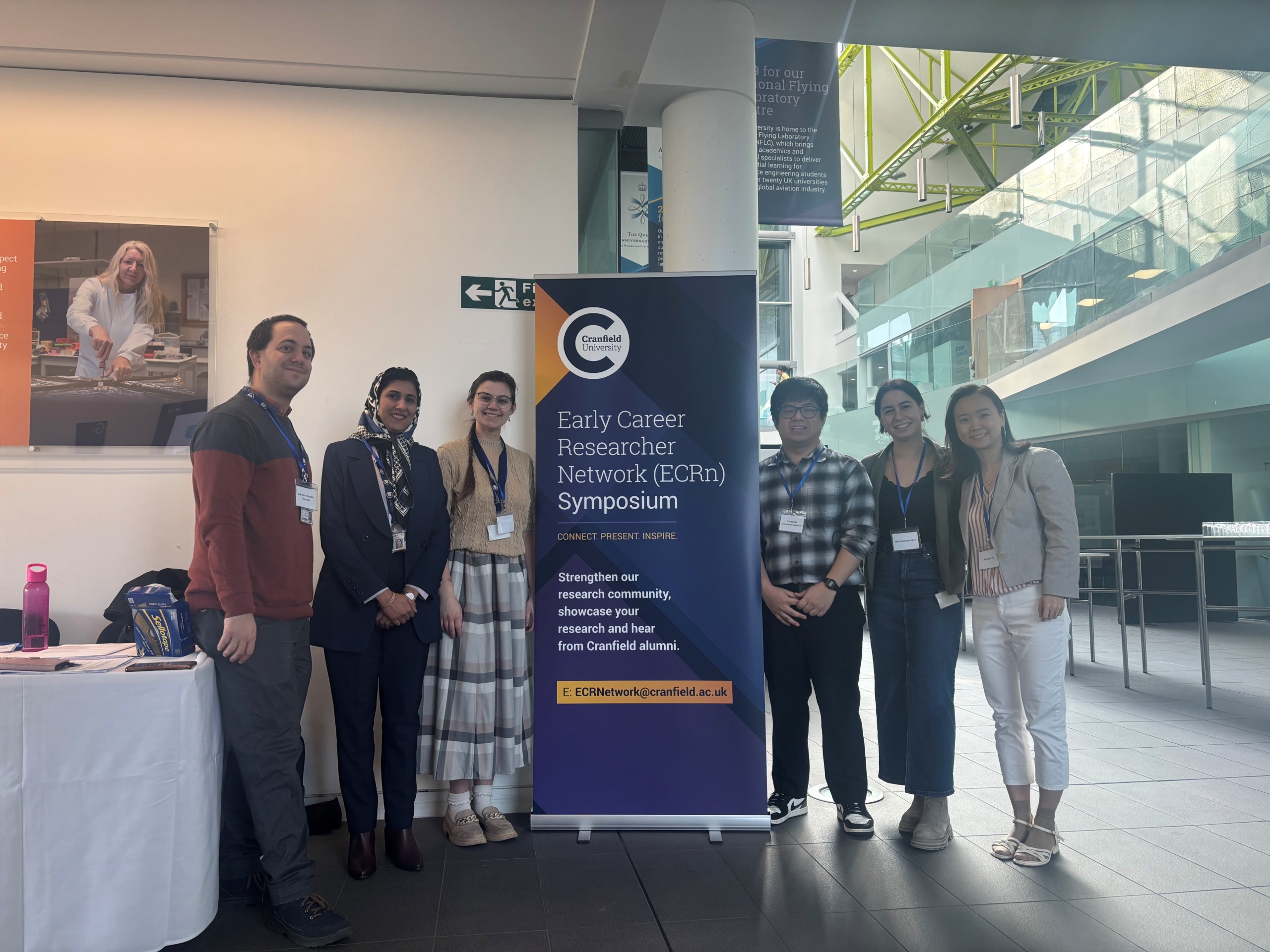
Building more than research: Reflections from the ECRn Symposium 2026
There’s something quietly powerful about a room full of early career researchers. Not just the ideas, although there were plenty of those—but the conversations, the curiosity, and the sense that everyone is figuring things ...
Library services over Easter, 3-6 April
Kings Norton Library will remain open for study 24/7. You will need your University ID card to enter the building and can use the self-service machines to borrow and return items as usual. Barrington Library ...

How do I access the full-text of Harvard Business Review (HBR)?
This is a frequently asked question, and it's worth knowing how to access this key management journal. So, how do you access HBR in full-text? The short answer is via our eJournals finder. You can find ...

Engineering problem to solve? Let Knovel help you find a solution
Did you know that Knovel provides you with more than just eBooks? Knovel is a key database for many engineering, mechanical and materials courses here at Cranfield University, and contains content from an extensive range ...
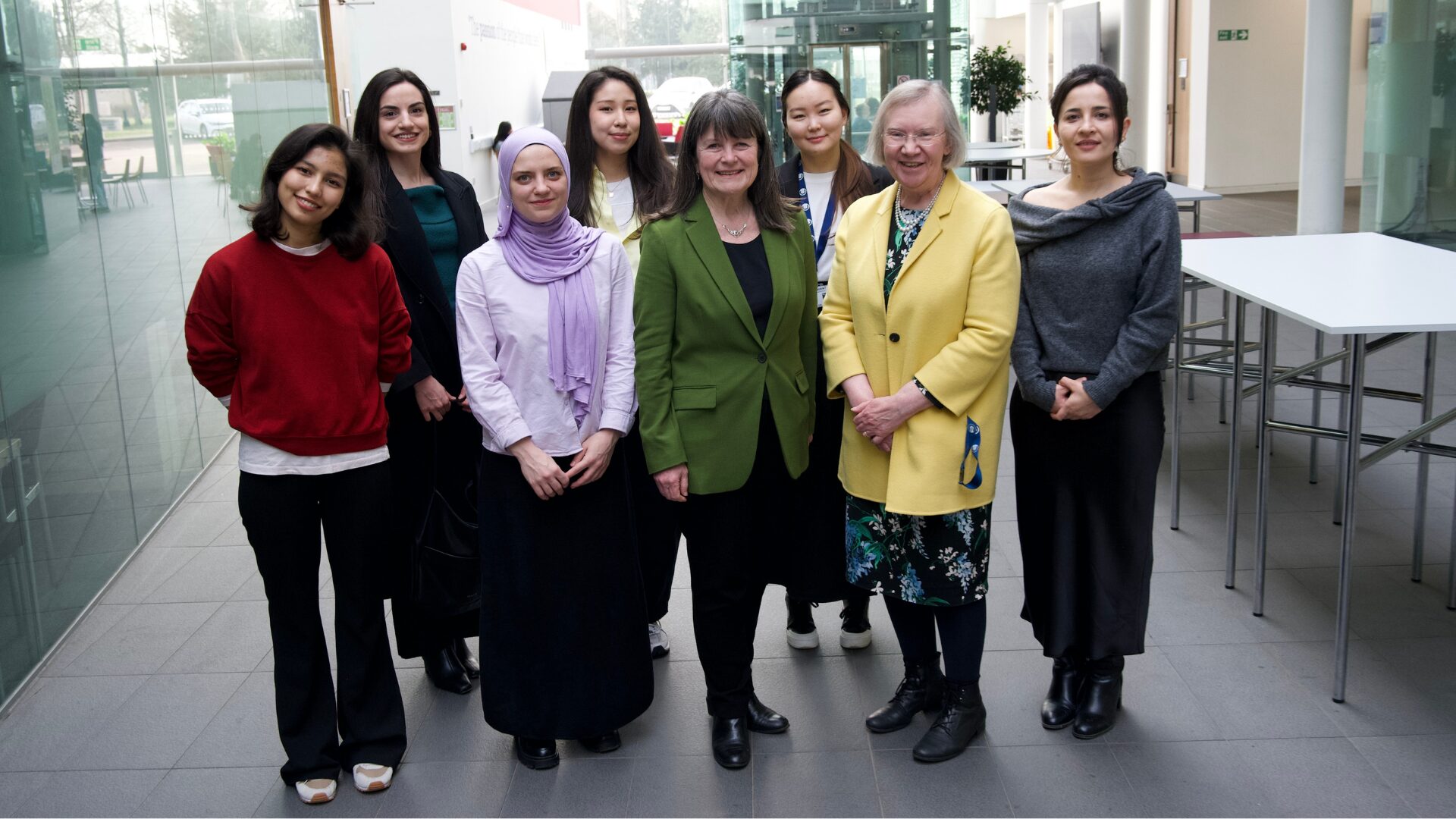
What happens when female scholars meet influential leaders?
On the 5 March 2026, our British Council Women in STEM Scholars had the privilege of sitting down with two excellent role models of industry and academia: Professor Dame Karen Holford, ...
From MSc to CEO: Igniting a research revolution
For many, a master’s degree is achieving a big milestone. Kilyan Ocampo, Computational Fluid Dynamics alumni shares how studying at Cranfield helped launch his career in the energy sector. Today, Kilyan ...