


On-demand webinar: Industry and manufacturing’s journey to net zero
07/02/2024

On Tuesday 30 January 2024, Cranfield University hosted a webinar on the theme of net zero. Globally, countries, governments, and industries are focused on reducing greenhouse gas emissions to as close as zero as possible, to avoid cataclysmic climate change and safeguard our planet for future generations. Achieving this requires tangible actions, including replacing fossil fuels with renewable energy sources, utilising new materials and implementing innovative technologies, and reducing deforestation.
Complete the form to view the webinar recording.
During this expert-led webinar, we discussed the latest thinking and research being carried out to achieve net zero and create a sustainable future. Our panel of experts covered a range of topics, including:
- Defining net zero and its importance.
- Current strategies in materials engineering.
- The role of hydrogen (in civil aviation and other industries).
- Net zero practices in asset management.
- The wider macroeconomic and geopolitical context.
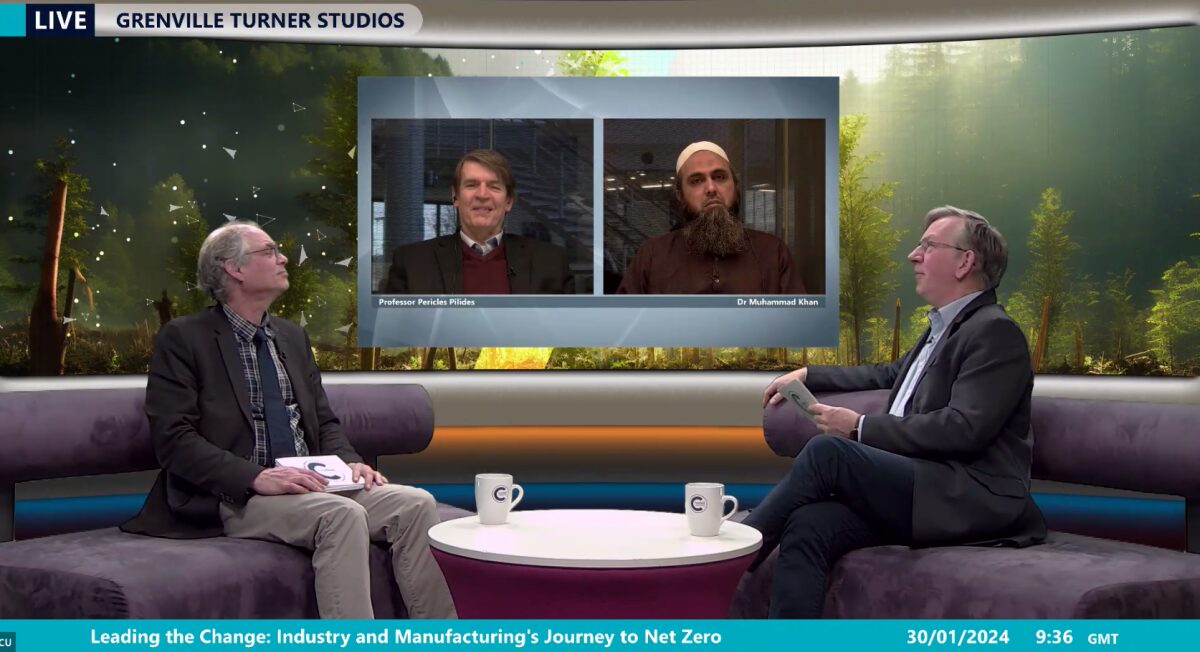
The panel
Professor Pericles Pilidis
Professor Pericles Pilidis is a professor in gas turbine performance in the Centre for Propulsion and Thermal Power Engineering at Cranfield University. He has organised and contributed to many international teaching and applied research programmes in the power, gas, oil and aviation industries, and is currently addressing research interests in the field of hydrogen for air, land and sea applications.
Dr David Ayre
Dr David Ayre is a senior lecturer in composites and polymers in the Composites and Advanced Materials Centre at Cranfield University. He is the course director for the Advanced Materials MSc, and has 10 years’ experience working in industry as a chemist in the nuclear power generation industry.
Dr Muhammad Khan
Dr Muhammad Khan is the acting head of centre for the Centre for Life-cycle and Engineering Management in Cranfield University. He has been involved in industrial and academic research for the last 20 years, and is currently working with his research group in areas including structural health monitoring, environmentally assisted material degradation, and asset maintenance and health assessment.
Watch the webinar recording now.

Categories & Tags:
Leave a comment on this post:
You might also like…

Moving to the UK to study? How to plan for banking, exchange rates and transfers
Currency and banking are two of the most practical parts of financial planning for international students. They are also often the most overlooked. We asked Dr Lakshmy Subramanian, Course Director for Cranfield University's Banking, ...

Cranfield: an environment where innovation thrives
The latest Knowledge Exchange Framework rankings from UK Research and Innovation (UKRI) gives an insight into the real and meaningful impact that UK universities have. The seven categories that make up KEF6 cover everything ...
How Cranfield accelerated my career in Logistics and Supply Chain Management
After graduating from the MSc in Logistics and Supply Chain Management at Cranfield University, I've been reflecting on the experiences that made my journey so valuable and the impact it has had on my ...

Mendeley: a powerful tool to organise and manage your references
Are you looking for a way to manage your references, create in-text citations and reference lists for your assignments or thesis? If so, you may wish to consider using Mendeley. What is it? Mendeley is ...

Keen to develop your study skills?
Alongside the technical skills and academic knowledge that you will gain on your course, as a Cranfield student you have the opportunity to develop a range of other skills that can enhance your learning experience. ...

The V-conomy: powering the sixth wave of global economic growth
The world could be on the verge of a major surge in economic growth and development, driven by the convergence of AI and clean energy technology. Waiting to ride the K-wave The Russian ...
Comments are closed.