


Launch of the new University research information system (CRIS)
06/02/2024
As you are now hopefully aware, our new Current Research Information System (CRIS) successfully launched as planned on Friday 15 December. From last week, all academic profiles in the system are now syncing on our website as well.
The new system will help ensure our research output is managed, stored, and publicly shared in a timely and organised way and will be a huge improvement on the previous system. Anyone with a profile will have better oversight of all the work they’ve submitted. It will also integrate with our other University systems such as Agresso, support the Excellence in Scholarship programme, and produce better reporting, especially on compliancy.
All academic and research staff, and research students, will have received an email on Monday from Professor Leon Terry, our Pro-Vice-Chancellor for Research and Innovation, asking them to take action to ensure their data has transferred accurately to the new system. This includes logging in and checking their profile, and booking a headshot if they don’t already have one. We encourage everyone to follow these instructions carefully and to contact researchsupport@cranfield.ac.uk if they have any questions.
Phase 2 – What’s coming next?
This is a great example of collaborative working between Library Services, IT Services, RIO, CEA and the CRIS Stakeholder Group and we are looking forward to sharing the next phase of the project with you. This will include a fresh look and new features for CERES (our open access research repository) including the migration of our research data (CORD) onto the same platform. You can find out more about how this specific phase of the project might affect you by visiting the CERES/CORD project page.
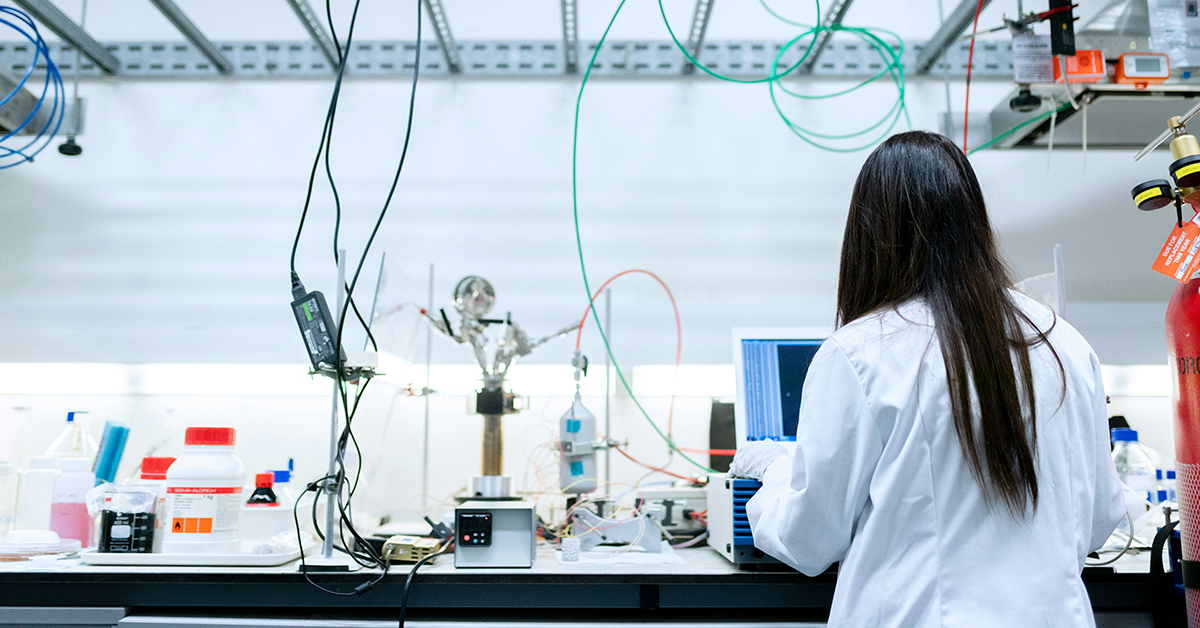
Photo by ThisisEngineering RAEng on Unsplash

Categories & Tags:
Leave a comment on this post:
You might also like…

Moving to the UK to study? How to plan for banking, exchange rates and transfers
Currency and banking are two of the most practical parts of financial planning for international students. They are also often the most overlooked. We asked Dr Lakshmy Subramanian, Course Director for Cranfield University's Banking, ...

Cranfield: an environment where innovation thrives
The latest Knowledge Exchange Framework rankings from UK Research and Innovation (UKRI) gives an insight into the real and meaningful impact that UK universities have. The seven categories that make up KEF6 cover everything ...

How Cranfield accelerated my career in Logistics and Supply Chain Management
After graduating from the MSc in Logistics and Supply Chain Management at Cranfield University, I've been reflecting on the experiences that made my journey so valuable and the impact it has had on my ...

Mendeley: a powerful tool to organise and manage your references
Are you looking for a way to manage your references, create in-text citations and reference lists for your assignments or thesis? If so, you may wish to consider using Mendeley. What is it? Mendeley is ...

Keen to develop your study skills?
Alongside the technical skills and academic knowledge that you will gain on your course, as a Cranfield student you have the opportunity to develop a range of other skills that can enhance your learning experience. ...

The V-conomy: powering the sixth wave of global economic growth
The world could be on the verge of a major surge in economic growth and development, driven by the convergence of AI and clean energy technology. Waiting to ride the K-wave The Russian ...