


Not a tick-box but everybody’s business
05/04/2024
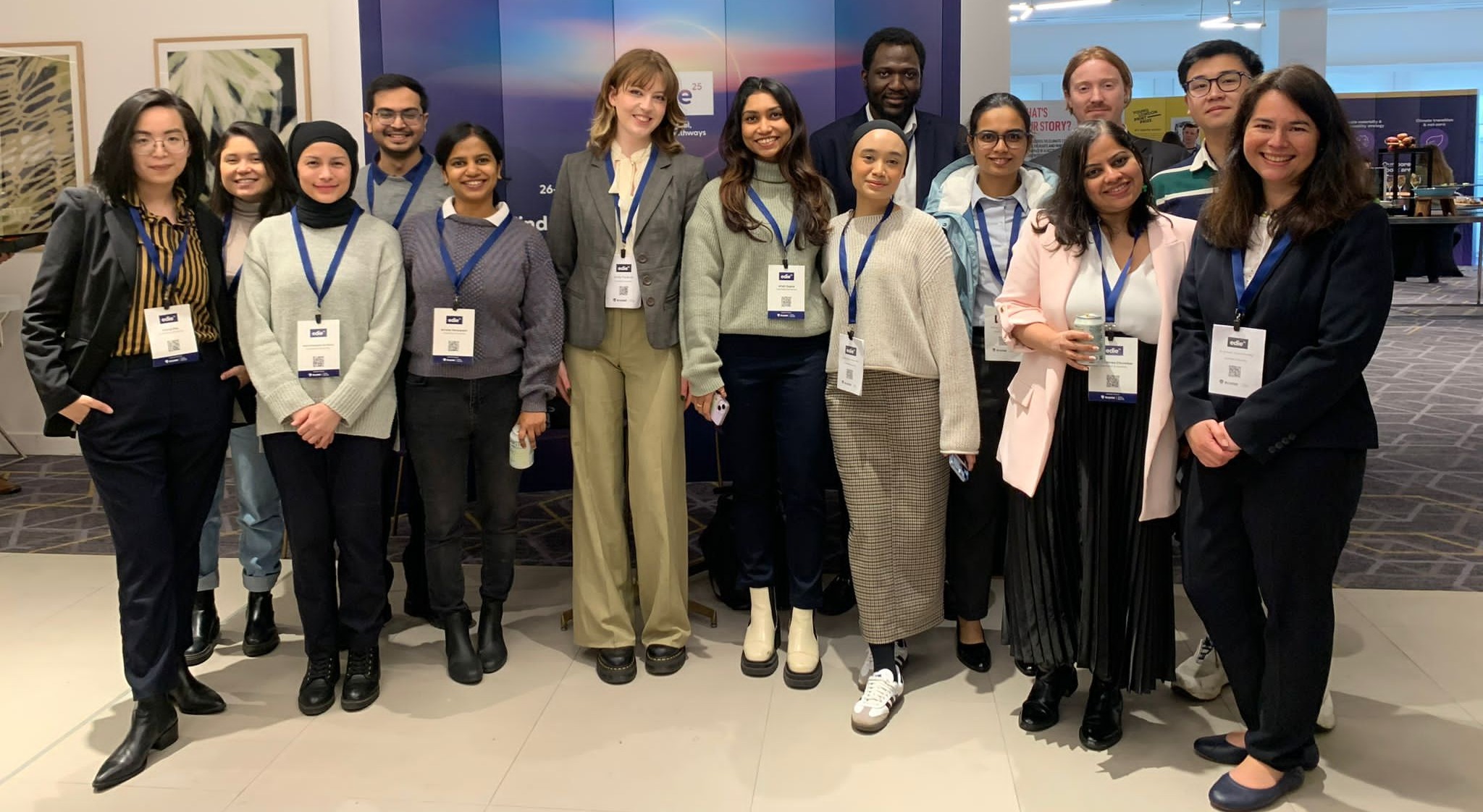
As the countdown to the 2030 sustainability milestones draws closer, the Edie 24 conference emerges as a beacon of reflection and progress. With just 69 months remaining, the burning question lingers: are we on course?
The event commenced with an electrifying address from Jim Skea, Chair of the IPCC, who ignited the room with the latest scientific insights. It’s abundantly clear: merely quoting reduction strategies won’t suffice to meet the Paris Agreement’s ambitious targets. Climate action isn’t a mere checkbox; it’s a collective imperative, echoing in every corner of society.
“Turning Vision into Reality”
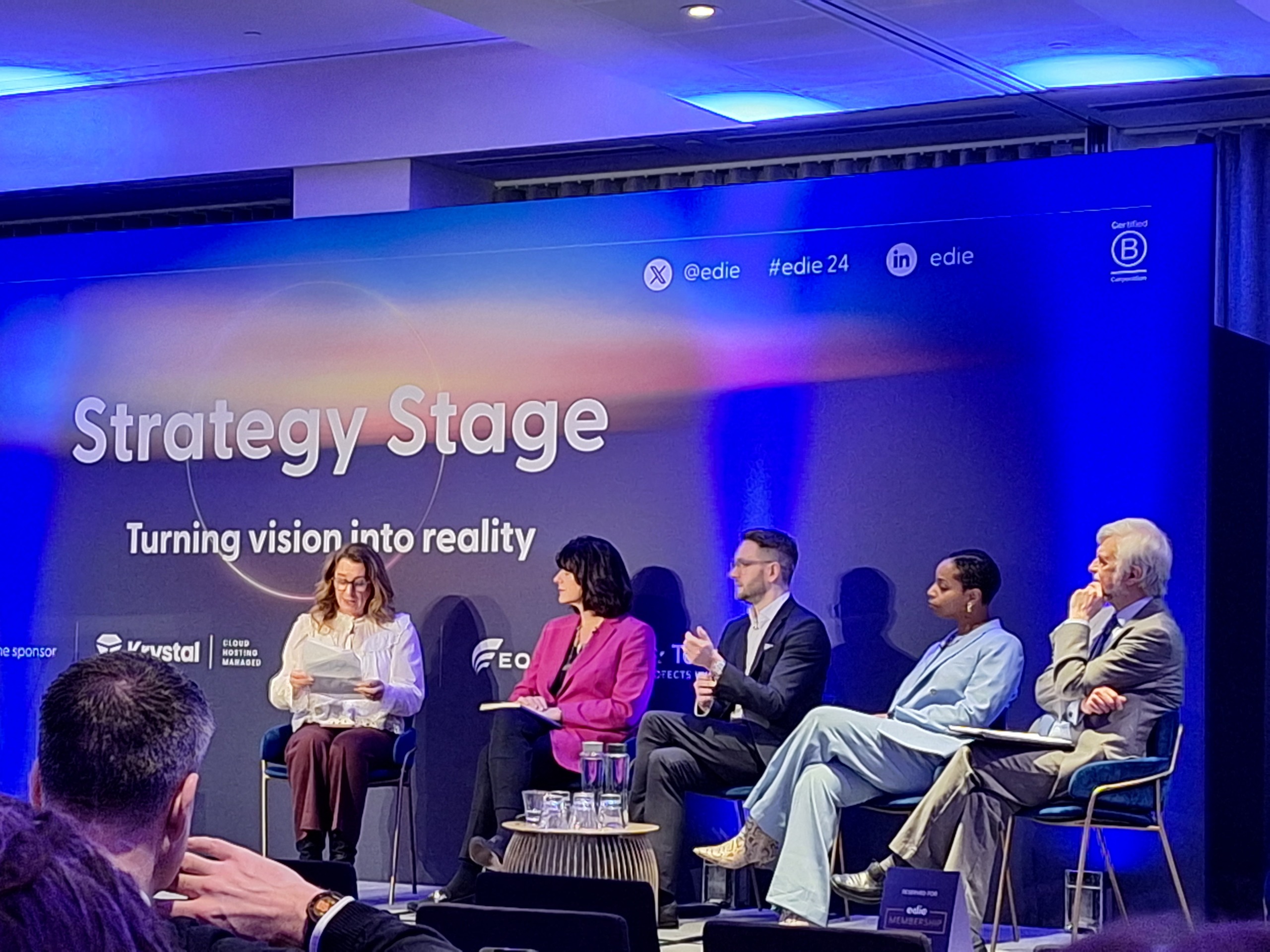
Initiating from the Strategy Stage, discussions revolved around the critical role of politics in charting the course towards climate resilience. Calls echoed for governmental action to address the grid challenge, foster wider adoption of green technologies, and champion robust political leadership. Amidst the myriad of sessions, one particularly impactful discourse delved into the power of purpose, passionately delivered by Charmain Love from Natura. Her poignant reminder that individual actions have significant transformative power struck a chord, highlighting the importance of advocacy, cultural shifts, and communal co-creation in building resilience. Additionally, catalysing change around circularity emerged as a central theme, guided by Aisha Stenning from Ellen MacArthur Foundation. In a subtle discussion, the focus broadens to encompass policy reforms, coalition-building, and incentivization strategies to instigate meaningful behavioural shifts.
“Accelerating the Transformation”
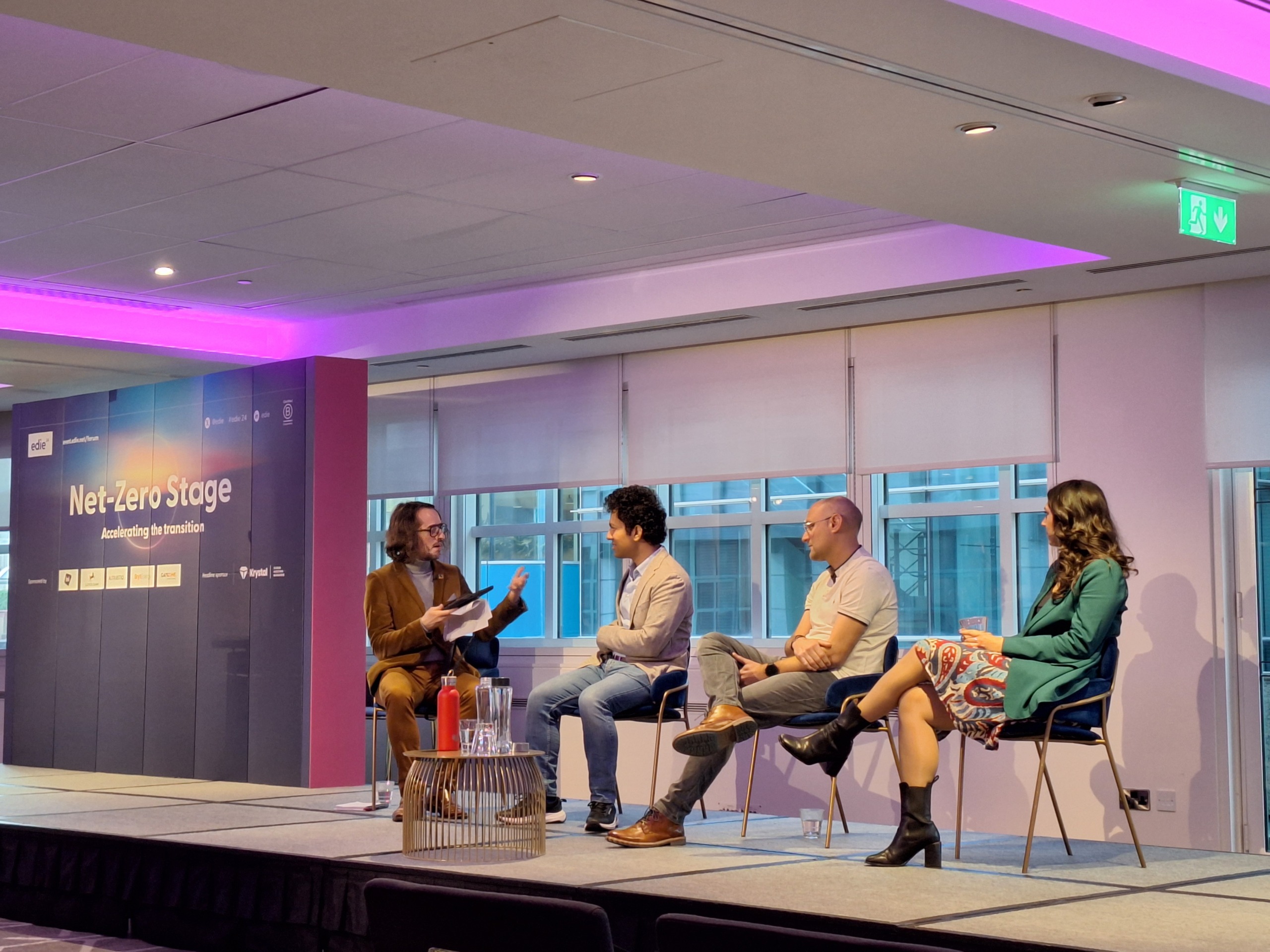
The Net Zero Stage ignited intense discussions around supply chain challenges, notably the complexities of measuring Scope 3 emissions. Led by Shaun Spiers, Executive Director of Green Alliance, panels unanimously underscored the necessity for collective bargaining, robust infrastructure budgets, collaborative efforts with competitors, and forward-thinking roadmaps surpassing regulatory norms. An insight emerged: transitioning to sustainability demands strategic planning beyond mere compliance or reporting. Mike Barry, as the discussion’s moderator, urged us to explore all avenues, advocating for discomfort as a catalyst for transformative growth.
“Making it Happen”
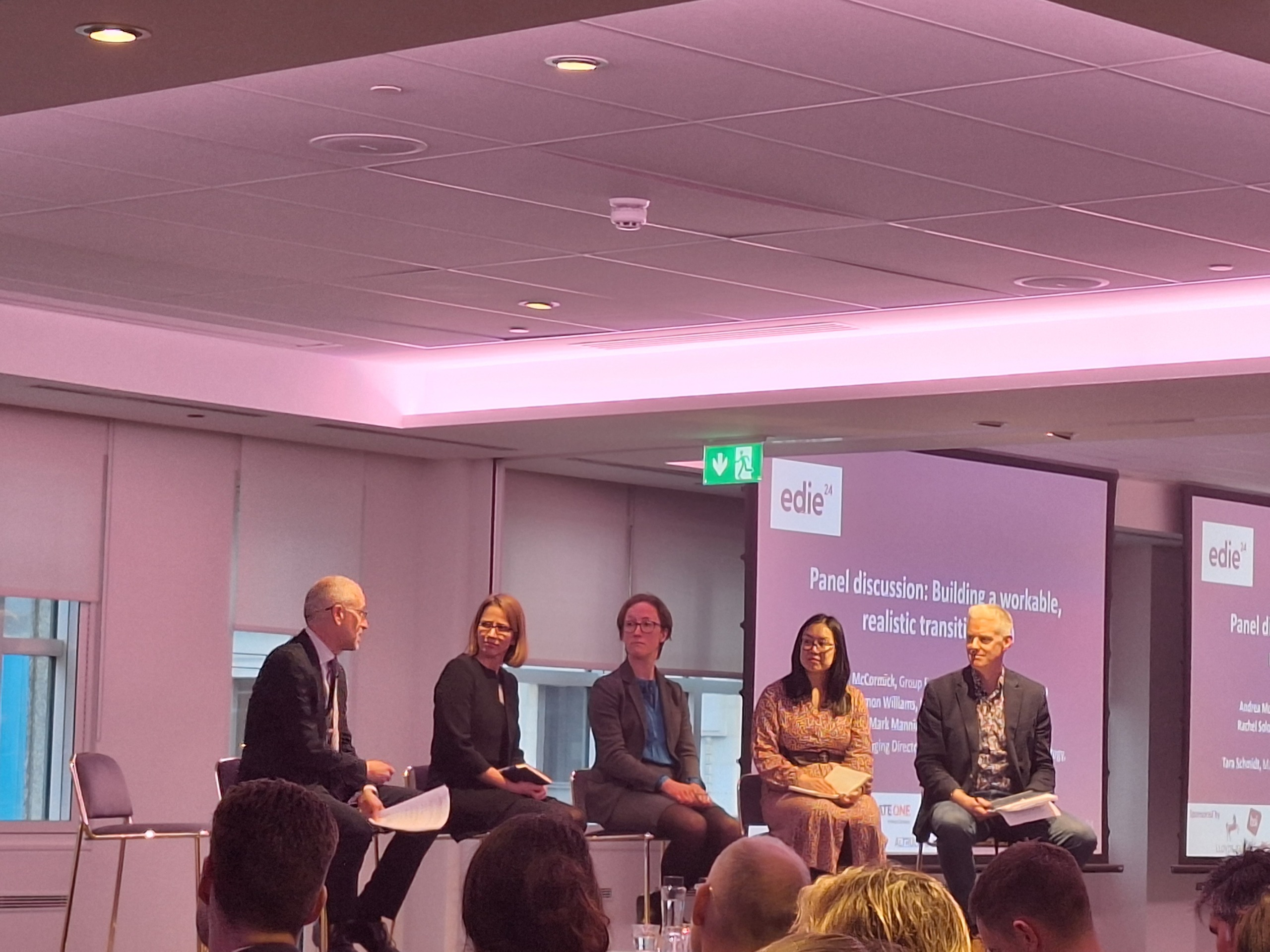
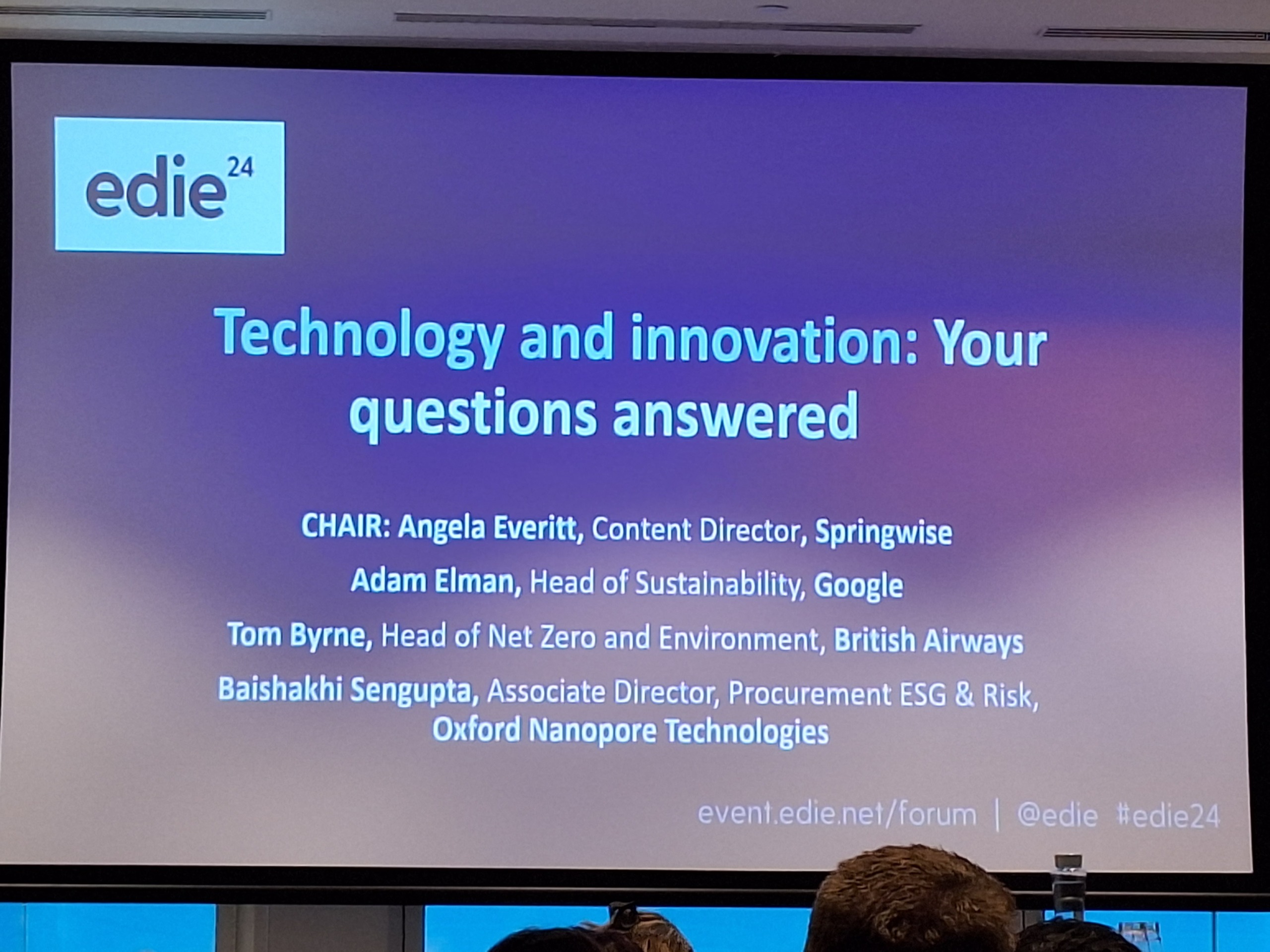
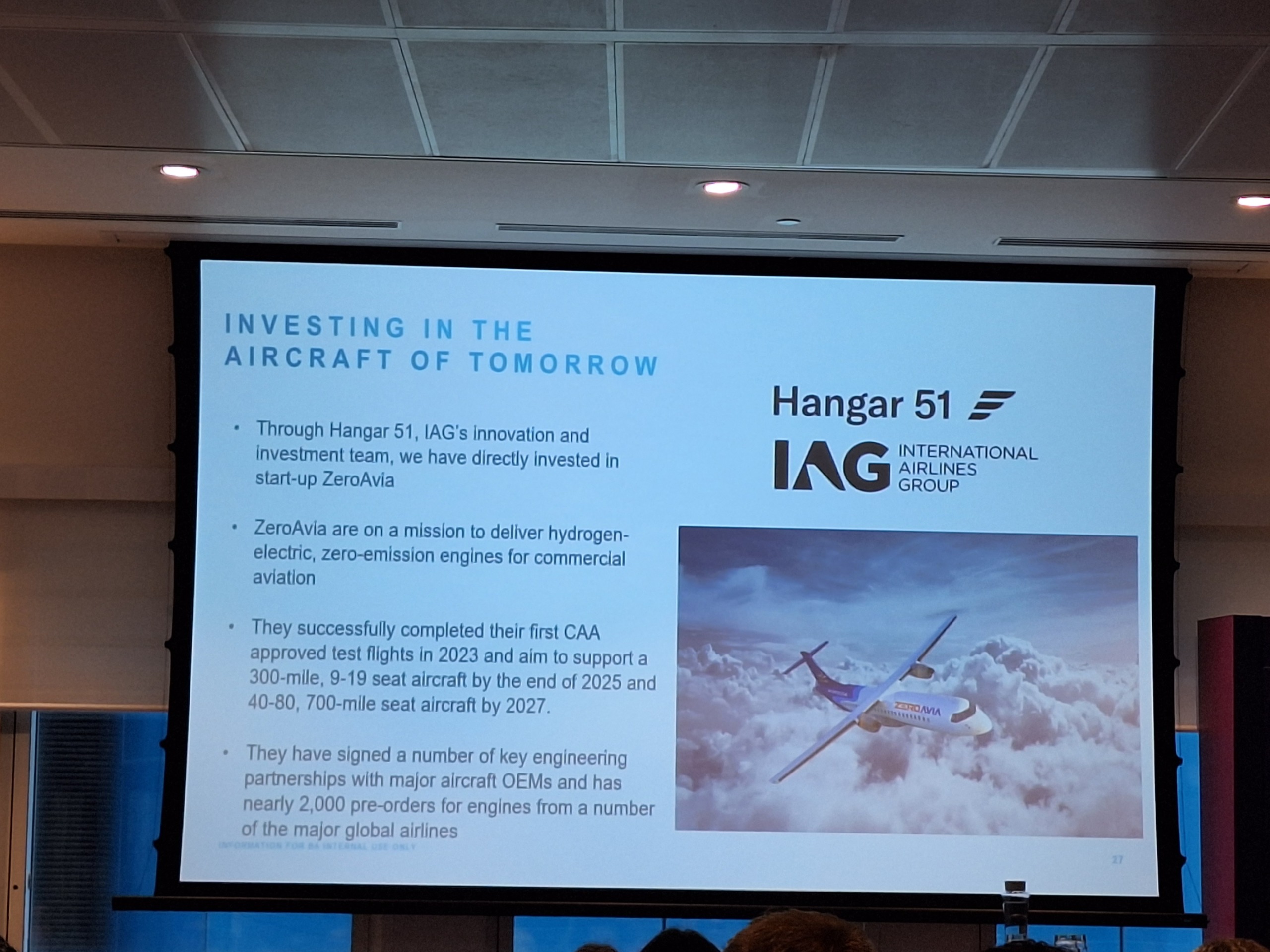
One of the most captivating moments on the Action Stage was Adam Elman’s presentation on “AI for Good,” a visionary initiative advancing innovation and accessibility. From cutting-edge flood forecasting to methane leak identification and environmental insights driving data-driven decisions, Elman’s insights herald a new era of sustainable technology. Additionally, Tom Byrne from British Airways shared their ambitious mission to invest in the aircraft of tomorrow, including the pursuit of hydrogen-electric engines for commercial aviation, signalling a bold step towards greener skies.
In conclusion, the chance to gather first-hand insights from sustainability experts and leaders across various sectors is truly priceless. As we strive to make meaningful contributions to climate action, let’s harness the wealth of knowledge shared at Edie and continue our journey towards a more sustainable future. Stay updated by subscribing to their newsletter, and let’s work together to drive positive change. A heartfelt thank you to Cranfield University and the School of Management for facilitating this invaluable opportunity for learning and growth.


Categories & Tags:
Leave a comment on this post:
You might also like…

Keen to develop your study skills?
Alongside the technical skills and academic knowledge that you will gain on your course, as a Cranfield student you have the opportunity to develop a range of other skills that can enhance your learning experience. ...

The V-conomy: powering the sixth wave of global economic growth
The world could be on the verge of a major surge in economic growth and development, driven by the convergence of AI and clean energy technology. Waiting to ride the K-wave The Russian ...

Need help using the Python programming language?
We know some of our students are currently trying to learn Python, so we wanted to make you aware of some great LinkedIn Learning videos that can help. But don't you have to pay for ...

What does it really take to become a Chevening Scholar?
Say “Turkmenistan” to most people and you’ll get a blank look. That was true when I left Ashgabat for the UK to study an MSc in Logistics and Supply Chain Management at Cranfield University ...

Get a head start on referencing and plagiarism
We offer a module on Referencing And Avoiding Plagiarism which you can find on your Canvas dashboard. It explains the role and importance of citing references and how to incorporate the work of other authors ...
How Cranfield shaped my journey as an Aerospace Engineer
If I'm being specific about the moment it clicked, it was reading a paper called "On the Role and Challenges of Computational Fluid Dynamics (CFD) in the Aerospace Industry" by two Boeing engineers, P. ...
Comments are closed.