


Logistics and Procurement Supply Chain study tour – Vienna, day two
25/04/2017
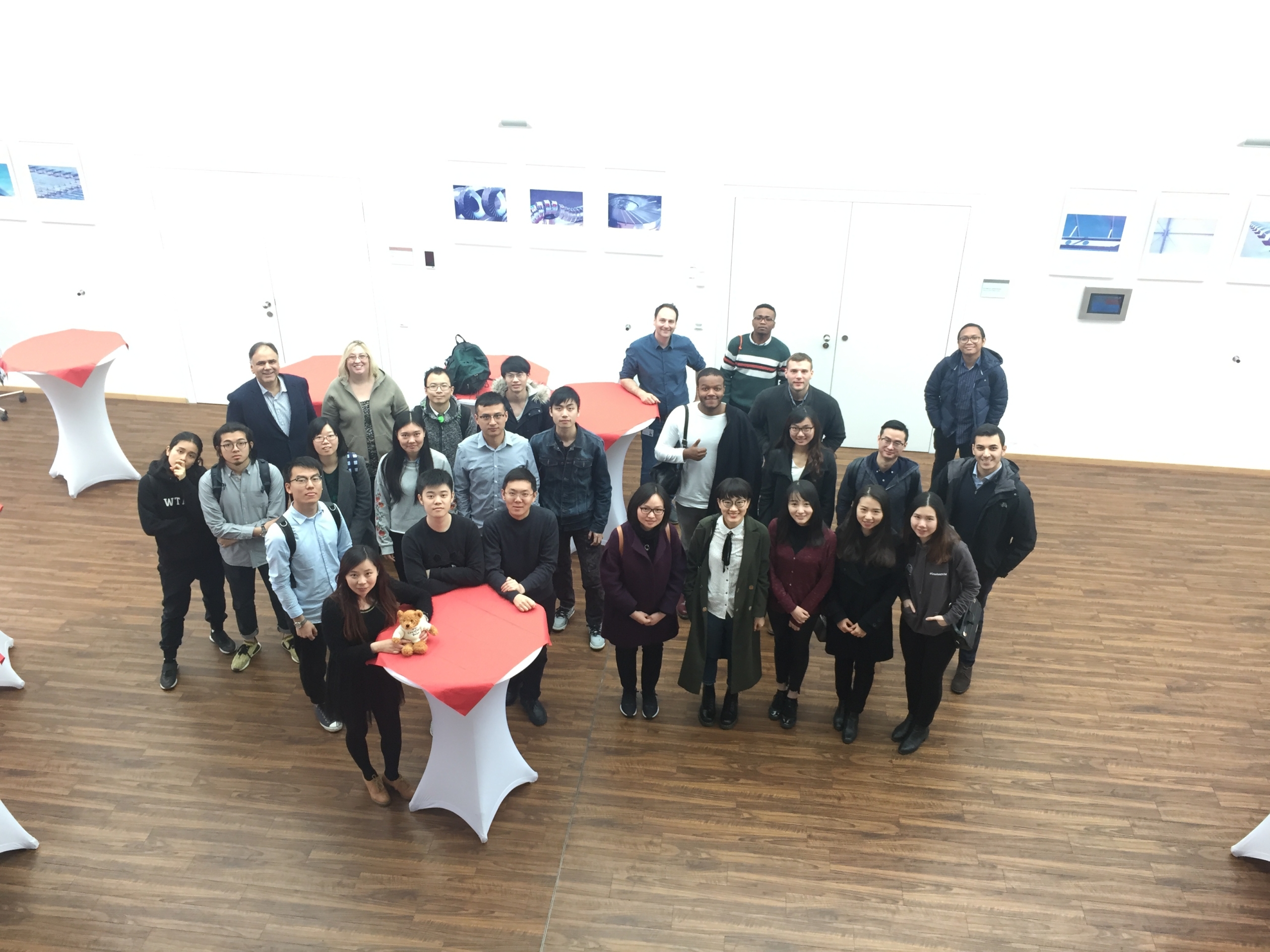
Hi everyone!
Day two of our study tour was quite exciting. We traveled to Fronius International and the BMW Engine plant.
The roads on day two were covered in snow. It’s completely white. We took the coach from the hotel to Fronius International in Sattledt. We had a short introduction to the company and a plant tour. This plant produces battery charging systems, welding systems and solar inverters. They have developed a sustainable program which is called “24 hours of sun vision”. The emphasis is on making renewable energy more accessible and replacing coal, electricity and nuclear. The question is how can we do that? The sun is the key part of the solution since it provides 8000 times the energy needed directly to the planet. However, the problem is cost and solar infrastructure. One student in our group raised a good question regarding how to persuade people to use renewable energy when it is more expensive. The answer is that some people just want it. Similarly to why we buy an iPhone over a cheaper phone – we just want it, not necessarily because it has financial value.
Moreover, we have learnt more about how digital transformation has changed the supply chain at Fronius. The key success factors are customers and suppliers. The whole thing starts from the customer purchase order in Electronic Data Interchange (EDI) which will translate Enterprise Resource Planning (ERP) from customer to the ERP of the company. Many activities in the company are done through e-platforms such as procurement, invoicing and credit notes, which are paperless and help to facilitate these business processes. In their warehouse, the company have IWACS vs Manufacturing Executing System (MES) – increased machine utilisation and maintenance programmes.
In the afternoon, we headed to the BMW Group Plant in Steyr. This plant is where BMW Group’s diesel engines are developed, as well as its three, four and six-cylinder diesel and petrol engines. On average, an engine will roll off the assembly line every 14 seconds. Eighty percent of the processes in this manufacturing plant are automatic. And to avoid mistakes on the assembly line, they use pick-to-light systems which will direct staff to which part is needed. After assembly, the engines have to pass premium quality tests.

Fronius International Plant with solar panel on the roof top
 .
. 
Plant tour and Q&A session


Dinner time@ Saloon 5

Categories & Tags:
Leave a comment on this post:
You might also like…

Engineering problem to solve? Let Knovel help you find a solution
Did you know that Knovel provides you with more than just eBooks? Knovel is a key database for many engineering, mechanical and materials courses here at Cranfield University, and contains content from an extensive range ...
What happens when female scholars meet influential leaders?
On the 5 March 2026, our British Council Women in STEM Scholars had the privilege of sitting down with two excellent role models of industry and academia: Professor Dame Karen Holford, ...
From MSc to CEO: Igniting a research revolution
For many, a master’s degree is achieving a big milestone. Kilyan Ocampo, Computational Fluid Dynamics alumni shares how studying at Cranfield helped launch his career in the energy sector. Today, Kilyan ...
Commuting, collaborating and growing: My first term experience at Cranfield
My first term at Cranfield University has been an extremely positive and rewarding experience. While the course has been intense at times, it has pushed me in the best possible way and allowed me ...

Sourcing country analysis – a guide to Library sources
For those researching a country, you will find that country information tends to take two forms: Analysis - country reports are descriptive reports covering most areas of interest on a country. They contain an analysis ...

The degree that launched my marketing career
Insights from Tayo George, Strategic Marketing MSc Alumni I chose the Strategic Marketing MSc at Cranfield because I wanted a programme that combined academic rigour with practical, commercial relevance. The emphasis on applied learning, ...