


A Commonwealth Scholar’s path in environmental engineering
17/11/2025
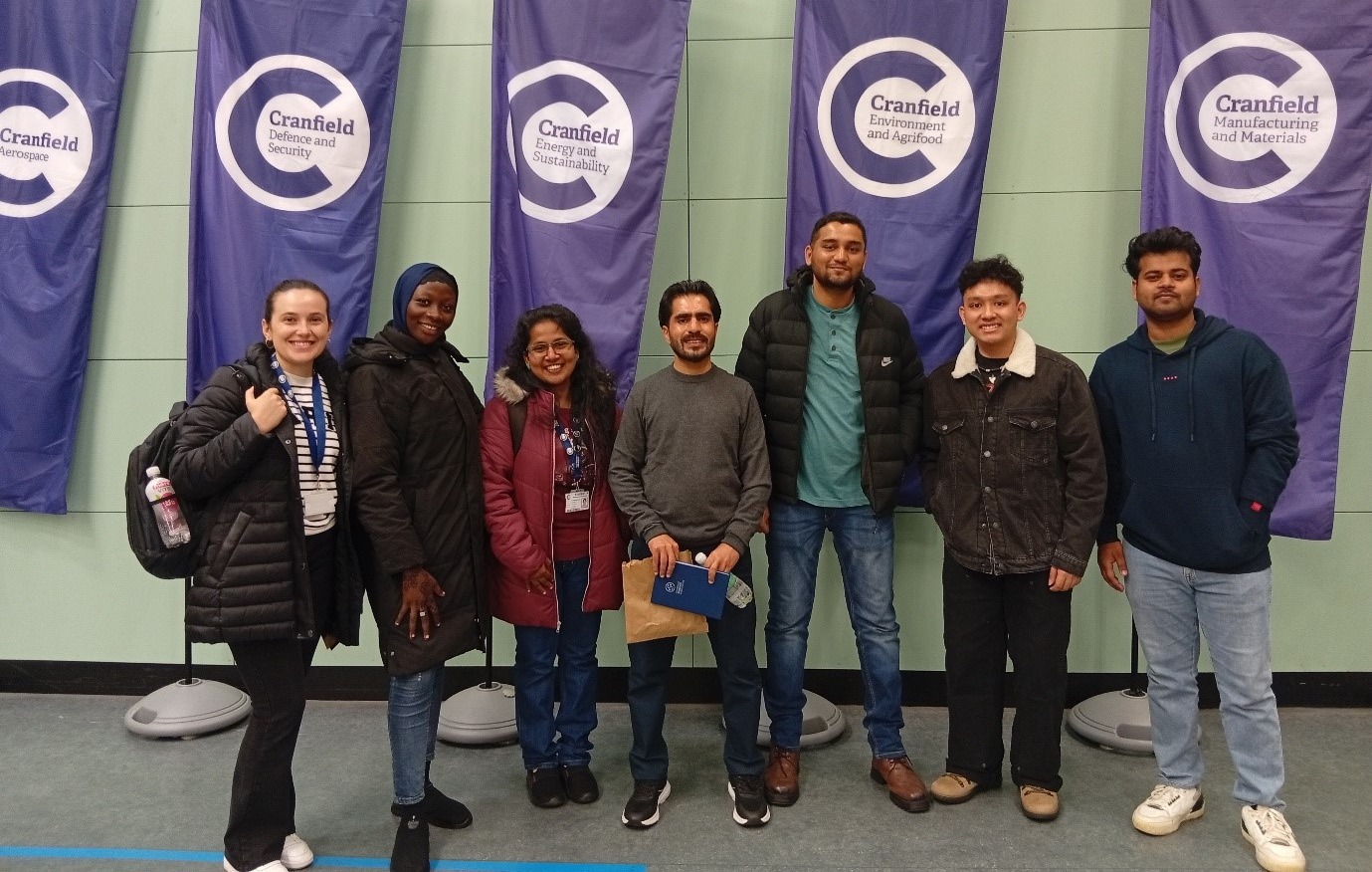
My personal motto is: Engineering for everyone, communities thrive when women build. It’s a reminder of why I chose this path and why I’m committed to making space for more women in engineering
I graduated with First Class Honours in Agricultural and Environmental Engineering from Modibbo Adama University, Yola. My academic journey was shaped by a strong interest in sustainability and environmental protection, but the defining moment came during my undergraduate thesis project on gully erosion. Conducting fieldwork and tackling the technical challenges of land degradation opened my eyes to the real-world impact of environmental engineering how it can restore damaged ecosystems and safeguard communities.
Beyond the academic drive, I’ve always been motivated by a personal mission: to challenge the stereotype that engineering is a male-only field. In my department, the late Prof. Fati Astapawa stood out as the only female engineer and she became my role model. Her presence and leadership inspired me to believe that women not only belong in engineering but can thrive and lead in it.
I want to be that kind of role model for other young women. I believe engineering is for everyone, and representation matters.
Pursuing an MSc in Environmental Engineering is not just about advancing my technical skills it’s about making an impact, both environmentally and socially.
Currently, I am applying my knowledge to a technical report focused on sustainable flood solutions for the Liverpool City Region. It’s incredibly fulfilling to work on projects that align with my values and contribute to building a more resilient and inclusive future.
What drew you to Cranfield for your MSc journey?
Cranfield University stood out to me because of its unique postgraduate-only environment and its strong reputation for applied research and industry collaboration. As someone passionate about environmental sustainability and engineering solutions that serve communities, I was drawn to the MSc in Environmental Engineering for its practical, interdisciplinary approach to solving real-world environmental challenges.
The programme is accredited by CIWEM and IAgrE, which assured me of its relevance and quality. I was particularly interested in modules covering waste management, pollution control, and land remediation areas that directly connect to my undergraduate thesis on gully erosion, and my interest in climate resilience.
What truly aligned with my goals, was Cranfield’s emphasis on hands-on learning through group and individual projects. The structure of the course: 80 credits of taught modules, 40 credits for group projects, and 60 credits for an individual thesis offered the perfect balance between academic depth and practical experience.
Cranfield’s commitment to sustainability and its close ties with industry also resonated with my mission to be a role model for women in engineering. It’s a place where innovation meets purpose, and I knew it was the right environment to grow both technically and personally.
What was the transition like moving to the UK?
Moving to the UK for my MSc was a big step, exciting, but also filled with new experiences and adjustments. Coming from Nigeria, I had to adapt to a different academic culture, climate, and lifestyle. Thankfully, Cranfield made that transition smooth and welcoming.
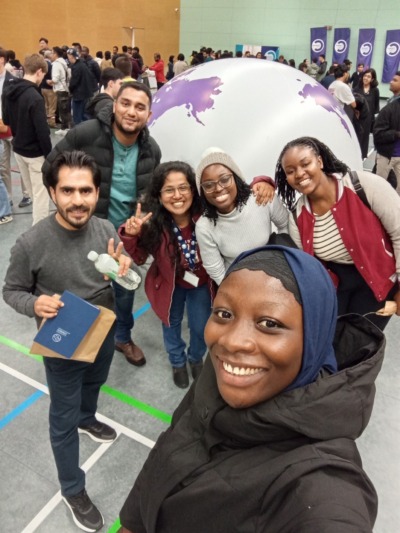 The Welcome Week and Induction events were incredibly helpful in getting settled. They gave me a chance to meet fellow students, understand the campus layout, and feel part of the community from the start. The free bus tours to Milton Keynes and Bedford were a thoughtful touch that helped me explore my surroundings and feel more at home.
One of the most beautiful aspects of my experience so far has been the diverse culture at Cranfield. All my flatmates are from different countries, and yet, in our flat, it feels like we’re a family. We share meals, stories, and laughter, it’s a daily reminder of how enriching it is to live and learn in a multicultural environment.
Academically, I’ve found the environment to be very engaging. The teaching style encourages independent thinking, collaboration, and practical application, which aligns well with my goals. The academic support and wellbeing resources have been fantastic, accessible, responsive, and genuinely student-focused.
Joining societies has also played a big role in my adaptation. I’m part of the Cranfield Islamic Society (CIS), which has been a great source of spiritual and social support, especially with the mosque located at CIS. I’ve also joined the Cranfield African Students Group, and the Green Team, which focuses on sustainability initiatives. These groups have helped me build friendships, share ideas, and stay connected to causes I care about. I also plan to join the Badminton Sports Club to stay active and meet more people.
Overall, the transition has been a journey of growth. Cranfield’s inclusive and supportive environment has made it easier to adapt, and I feel grateful to be part of a community that values both academic excellence and personal wellbeing.
What exciting things have you done, or do you have coming up in your course?
The first term has been full of exciting and hands-on learning experiences. One of the highlights has been working on our group project, where we collaborate to solve a real-world environmental challenge. It’s been a great way to apply classroom knowledge, build teamwork skills, and learn from the diverse perspectives of my peers.
I’m also currently developing a technical report on sustainable flood solutions for the Liverpool City Region, focusing on areas like Formby, Maghull, Crosby, and Bootle. It’s a meaningful opportunity to connect my academic background with practical solutions that benefit communities.
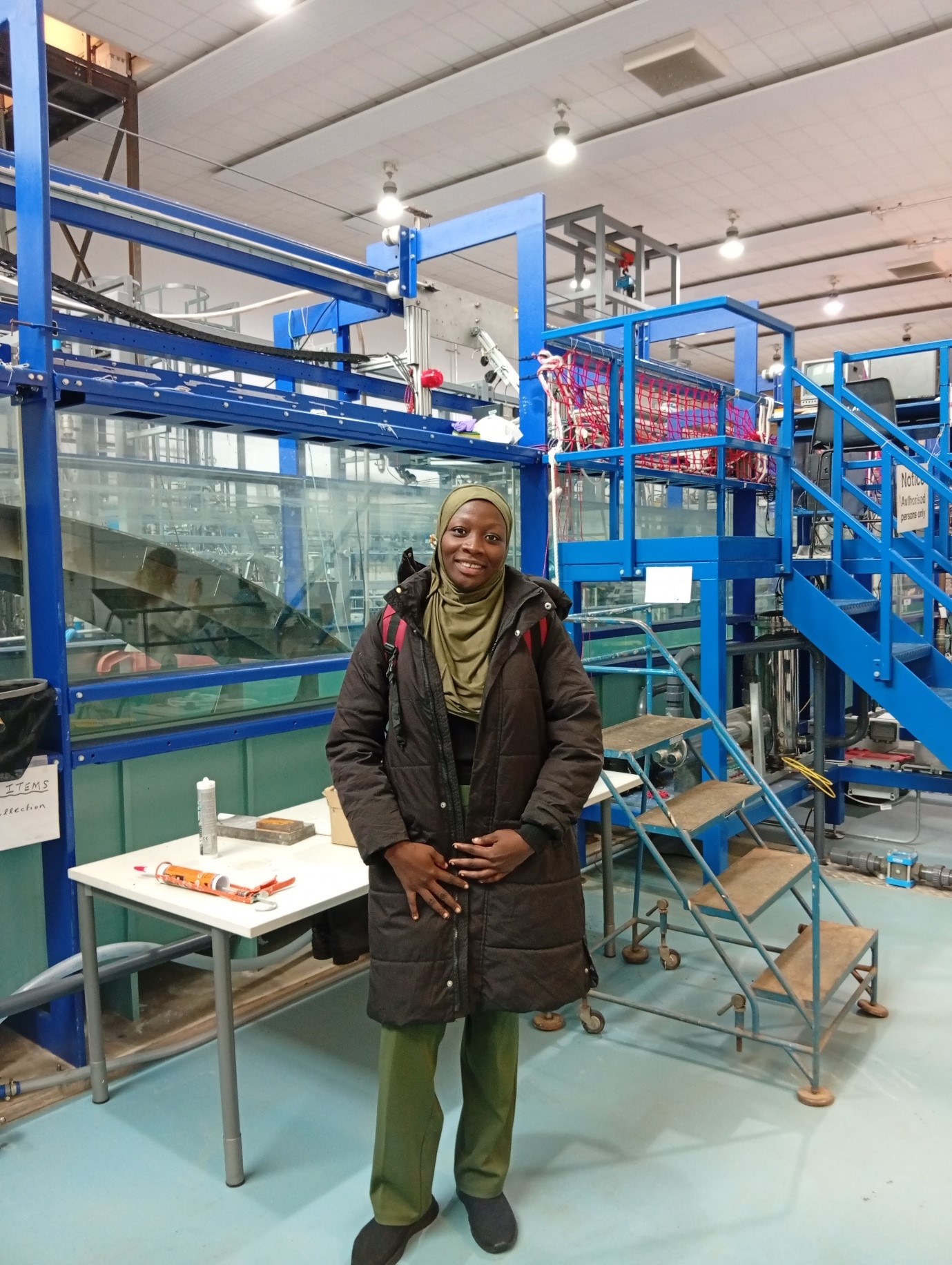
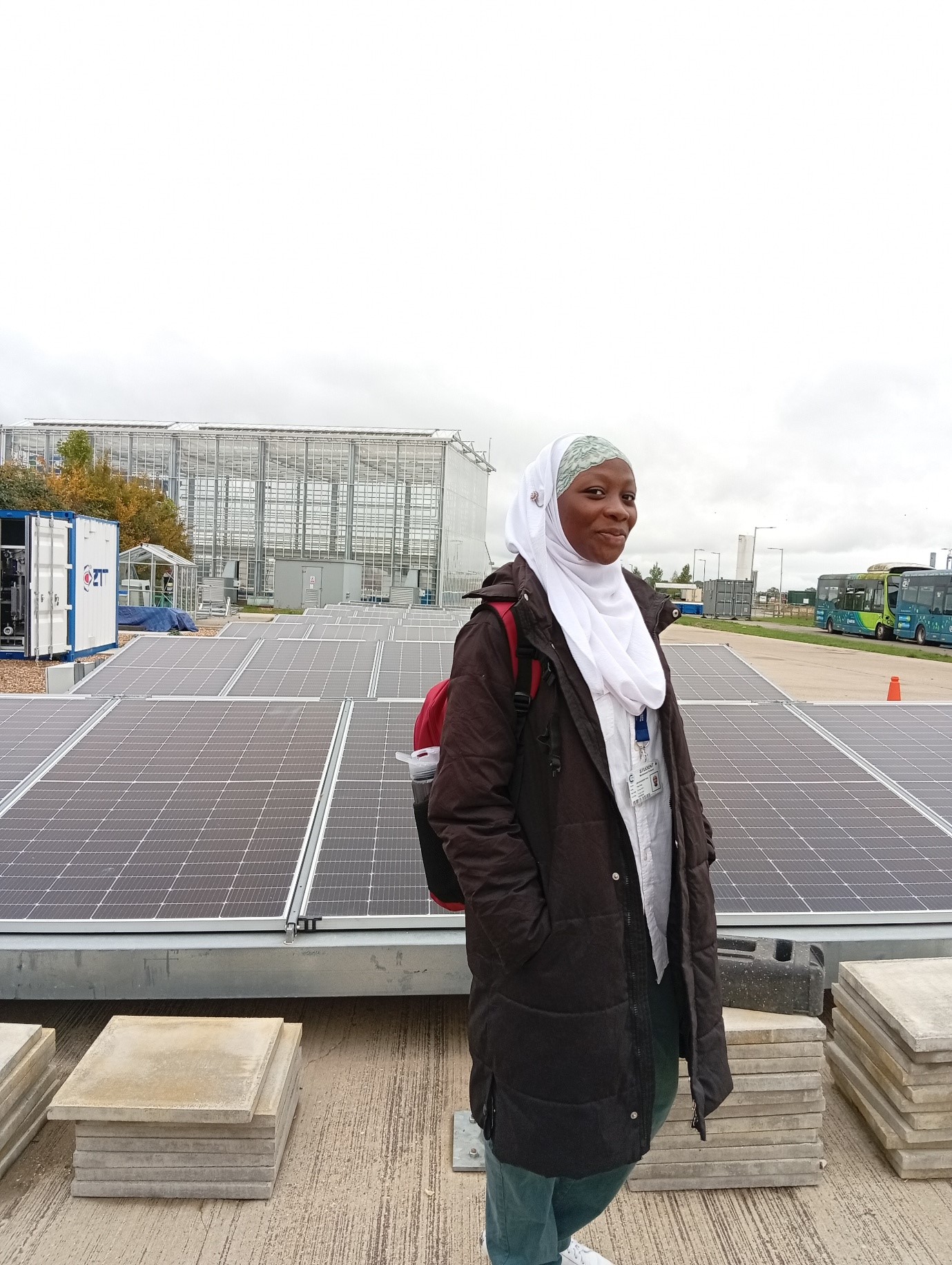
What makes the course even more engaging are the field trips that are part of our modules. We’ve visited Holcot Woodland to explore ecological restoration, toured ACO Technologies to understand sustainable drainage systems, and explored a waste recycling facility to see circular economy principles in action. These trips have brought theory to life and deepened my understanding of environmental engineering in practice. 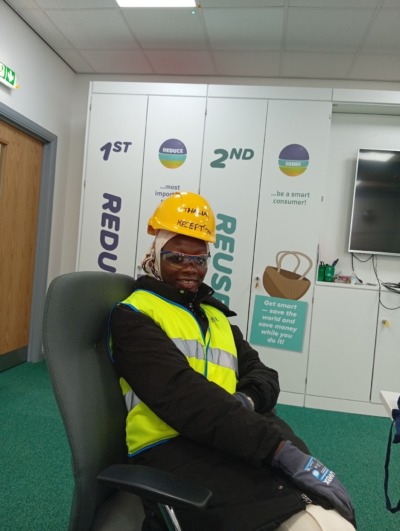
We’ve also started learning modelling software tools, which are essential for environmental analysis and design. Gaining proficiency in these tools is helping me build the technical foundation I need for future research and professional work.
Overall, this term has been a dynamic mix of fieldwork, technical learning, and collaboration and I’m excited for what’s still ahead.
How did it feel to be awarded a Commonwealth Scholarship?
I am proud to be a Commonwealth Shared Scholar 2025, and receiving the scholarship was one of the most affirming moments of my academic journey. It felt like a recognition not just of my academic achievements, but of my potential to make a meaningful impact in environmental engineering and sustainability.
It gave me a deep sense of responsibility and motivation. It reminded me that my work matters not only to me, but to the communities I hope to serve and the young women I want to inspire. It also reinforced my personal motto: “Engineering for everyone, communities thrive when women build.”
The Commonwealth Scholarship Commission describes its mission as a “vivid and enduring demonstration of the UK’s commitment to the Commonwealth,” providing opportunities to individuals with outstanding talent and potential who would not otherwise have access to UK-based study. That mission resonates deeply with me. I see this scholarship not just as a personal achievement, but as a platform to contribute to sustainable development and to empower others especially women to pursue careers in engineering and environmental leadership.
Studying at Cranfield University through this scholarship has opened doors to world-class education, diverse networks, and transformative experiences that I will carry forward into my career and community.
Final thoughts
Reflecting on my journey so far, I feel incredibly grateful for the opportunity to study at Cranfield, for the support of the Commonwealth Scholarship, and for the diverse, welcoming community I’ve found here.
From field trips and technical projects to late-night conversations with flatmates from around the world, every experience has helped me grow both as an engineer and as a person.
I came here with a mission: to contribute to sustainable solutions and to inspire more women to pursue careers in engineering. And every day, I’m reminded that I’m not alone in that mission. Cranfield has given me the tools, the platform, and the community to turn that vision into reality.
I hope my story encourages others to believe in their potential, challenge stereotypes, and build a future where everyone has a place in engineering.


Categories & Tags:
Leave a comment on this post:
You might also like…

Mendeley: a powerful tool to organise and manage your references
Are you looking for a way to manage your references, create in-text citations and reference lists for your assignments or thesis? If so, you may wish to consider using Mendeley. What is it? Mendeley is ...

Keen to develop your study skills?
Alongside the technical skills and academic knowledge that you will gain on your course, as a Cranfield student you have the opportunity to develop a range of other skills that can enhance your learning experience. ...

The V-conomy: powering the sixth wave of global economic growth
The world could be on the verge of a major surge in economic growth and development, driven by the convergence of AI and clean energy technology. Waiting to ride the K-wave The Russian ...

Need help using the Python programming language?
We know some of our students are currently trying to learn Python, so we wanted to make you aware of some great LinkedIn Learning videos that can help. But don't you have to pay for ...
What does it really take to become a Chevening Scholar?
Say “Turkmenistan” to most people and you’ll get a blank look. That was true when I left Ashgabat for the UK to study an MSc in Logistics and Supply Chain Management at Cranfield University ...

Get a head start on referencing and plagiarism
We offer a module on Referencing And Avoiding Plagiarism which you can find on your Canvas dashboard. It explains the role and importance of citing references and how to incorporate the work of other authors ...
Comments are closed.