

A holistic approach to Sustainability at Cranfield University: A student’s point of view
08/11/2023

Unless you have been living under a rock, you must have come across a discussion on sustainability, especially in an academic environment like Cranfield University. As a PhD researcher conducting research under the Energy and Sustainability theme, this is quite a frequent conversation. In 1987, the United Nations Brundtland Commission defined sustainability as “meeting the needs of the present without compromising the ability of future generations to meet their own needs.” Sustainability is a complex multi-layered problem that requires a holistic multi-faceted approach.
Cranfield has set 2030 net zero targets that revolves around themes like reducing energy consumption, efficient waste management, increasing biodiversity, building capacity for more renewable energy sources and so on. From my perspective, I believe the University, and any other organisation serious about sustainability, should focus on four core areas: technical, management and policy, engagement, and research.
Technical
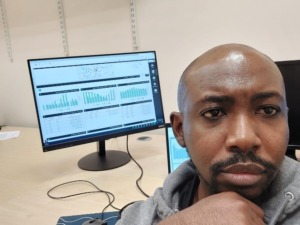
From the wider university perspective, I believe there needs to be a team/committee/working group that is directly responsible for the University’s net zero targets. I am happy that the University has a dedicated team in the Energy and Environment department headed by Gareth Ellis. I had the privilege of working with Gareth and his team while researching on solar energy forecasting and then again as a volunteer member of the Green Team. As part of my data collection, I was introduced to SystemsLink, a platform that collects and displays energy consumption and generation data across all utilities (water, gas, electricity) in the University. I was happy that the saying “you cannot manage what you cannot measure”, was central in the thinking of the team’s adoption of this software. I am glad to say “greening” of the University is in good hands as Gareth and his colleagues are passionate in delivering our sustainability goals. Having a technically sound team that clearly understands the challenges and solutions in achieving net zero is critical.
Management and policy
I think Cranfield University needs to be commended for setting a 2030 net zero target. However, the university management must not pay lip service, but be the central force in driving this mandate. The job of policy is to provide a favourable environment for the implementation of the right solutions at the right time. I believe this is achievable by working closely in tandem with the Energy and Environment Team, seriously taking on their recommendations, and providing the resources for their implementation. Once this has been provided, the university management is within its right to demand accountability and measure targets against resources expended.
Engagement
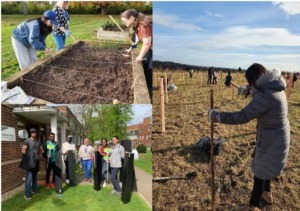
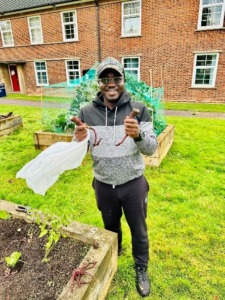
The problem of sustainability is a problem for everybody and not just management. If many of the energy end-users are ill-informed or uneducated about issues relating to net zero, then even the best technical efforts may fail. I believe the existence of initiatives like the Green Team and a similar platform for staff is crucial in creating meaningful engagement that leads to greater collaboration in the University. The Green Team has been active in planting trees, bee keeping, organising clothes swap shops and so on. In addition, the jobs of Green Ambassadors in educating the student body and turning off unnecessary and idling heating and light has a wider footprint than any team in the university. By being aware of the university’s policies on energy and waste, and directly being involved in sustainable measures, students and staff can take ownership and help achieve energy targets.
Research
Research helps to enhance current practices, discover new methods, and document successes and failures in contributing to our wider knowledge on any topic. A robust and pragmatic research programme gives researchers like us the freedom to work boldly. My research focuses on sustainably integrating solar energy into the traditional grid using an energy management system. This has been enhanced by the facilities and the industry partnerships Cranfield has. For instance, I was able to use the data from the 1.6 MW solar farm located in Cranfield’s airfield to design a solar energy forecasting model that will help inform end users better match their consumption with solar availability. This will increase solar energy penetration and use.
Currently, I am working on an important research piece sponsored by Honeywell related to direct load control. Direct load control is an energy management concept that involves remotely turning off sockets to save energy especially when they are not in use. I just concluded tests on campus in the Costa Café at the Vincent building and one of the laboratories in the Aerospace Integration Research Centre (AIRC) building. My findings will help provide vital information on energy patterns and inform the university on areas of potential energy saving. This would not have been possible without the support from my department and my research supervisors Dr. Liyun Lao and Dr. Da Huo, the team at Honeywell, and Gareth Ellis and Ceri Dawson from the Energy and Environment Team.
All these factors are important in making sure that we “walk the talk”. I have no doubt that the University has the capacity to reach its net zero targets and make sustainability a reality.


Categories & Tags:
Leave a comment on this post:
You might also like…

Moving to the UK to study? How to plan for banking, exchange rates and transfers
Currency and banking are two of the most practical parts of financial planning for international students. They are also often the most overlooked. We asked Dr Lakshmy Subramanian, Course Director for Cranfield University's Banking, ...
Cranfield: an environment where innovation thrives
The latest Knowledge Exchange Framework rankings from UK Research and Innovation (UKRI) gives an insight into the real and meaningful impact that UK universities have. The seven categories that make up KEF6 cover everything ...
How Cranfield accelerated my career in Logistics and Supply Chain Management
After graduating from the MSc in Logistics and Supply Chain Management at Cranfield University, I've been reflecting on the experiences that made my journey so valuable and the impact it has had on my ...

Mendeley: a powerful tool to organise and manage your references
Are you looking for a way to manage your references, create in-text citations and reference lists for your assignments or thesis? If so, you may wish to consider using Mendeley. What is it? Mendeley is ...

Keen to develop your study skills?
Alongside the technical skills and academic knowledge that you will gain on your course, as a Cranfield student you have the opportunity to develop a range of other skills that can enhance your learning experience. ...
The V-conomy: powering the sixth wave of global economic growth
The world could be on the verge of a major surge in economic growth and development, driven by the convergence of AI and clean energy technology. Waiting to ride the K-wave The Russian ...
Comments are closed.