

Unlocking Innovation: The Power of Design Thinking at Cranfield
03/12/2024

Design thinking is more than a methodology—it’s a mindset that tackles real-world problems with innovative solutions. By blending creativity, technology, and strategic thinking, this approach empowers individuals and industries to address complex challenges effectively. At Cranfield University, the Design Thinking MDes exemplifies this essence by fostering an environment where diverse minds collaborate to shape transformative solutions.
A diverse community of innovators
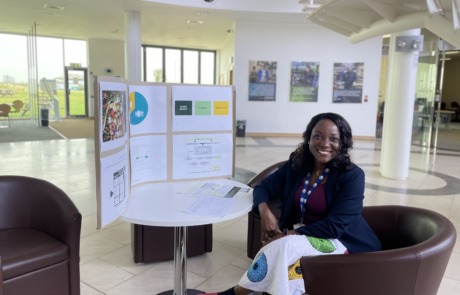
The course attracts a dynamic cohort of students from across the globe, creating a melting pot of ideas, perspectives, and expertise. Whether entrepreneurs, designers, or strategic business developers, the participants share a common drive to push boundaries, challenge norms, and explore new opportunities. This diversity fuels rich collaboration, enabling students to innovate holistically.
Strategic design at Cranfield
Cranfield stands out for its commitment to academic excellence, state-of-the-art facilities, and strong ties with industry. Its multidisciplinary approach ensures that students not only learn theory but also immerse themselves in hands-on, practical applications. Cranfield’s ability to bridge academic rigour with real-world relevance makes it the ideal choice for student’s looking to expand their expertise.
Learning by doing
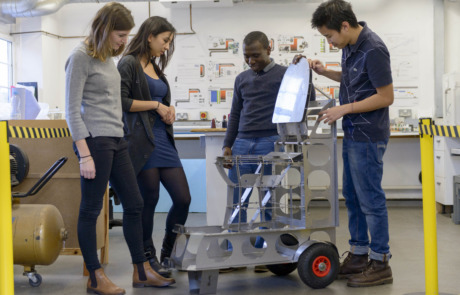
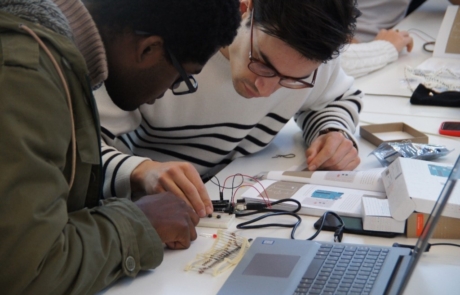
The course structure combines lectures, theoretical applications, and practical exercises. Each module culminates in individual or group projects, often developed in partnership with industry leaders. These projects, designed to solve real client challenges, expose students to diverse disciplines and foster teamwork. This dual learning approach benefits both students and industry, ensuring the solutions are grounded in practicality and innovation.
Industry at the core
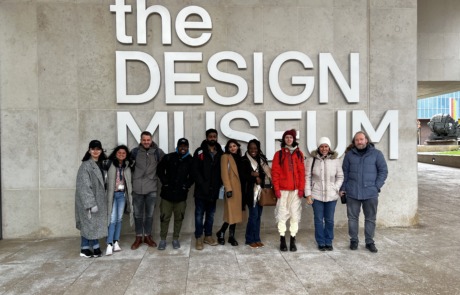
Cranfield’s close ties with industry are central to the programme’s success. Events like Meet the Designer and Meet the Manufacturer provide students with invaluable insights into the real-world processes of design and production. Moreover, the involvement of practicing professionals and leading researchers as faculty ensures students gain cutting-edge knowledge and skills that are immediately transferable to their careers.
Equipping students for the future
Graduates of the Design Thinking MDes course leave with a versatile skill set, opening doors to roles in creative management, engineering, and directorial positions across industries. By emphasising iterative design processes, rapid prototyping, and collaborative problem-solving, the programme equips students to develop real innovations that address real challenges.
A hub for creative excellence
At the heart of Cranfield is the Centre for Design Engineering, a space dedicated to fostering creativity, strategy, and innovation. From traditional workshops to advanced prototyping tools, the centre provides students with everything they need to refine their ideas and bring concepts to life. This hub acts as a bridge between academia and industry, creating a seamless flow of knowledge and innovation.
Cranfield’s Design Thinking MDes course embodies the future of problem-solving and innovation. By integrating creativity, technology, and strategic partnerships, it empowers students to become leaders in tackling the complex challenges of tomorrow. Whether shaping new products, services, or systems, graduates are equipped to drive meaningful change in industries worldwide.


Categories & Tags:
Leave a comment on this post:
You might also like…

Keen to develop your study skills?
Alongside the technical skills and academic knowledge that you will gain on your course, as a Cranfield student you have the opportunity to develop a range of other skills that can enhance your learning experience. ...

The V-conomy: powering the sixth wave of global economic growth
The world could be on the verge of a major surge in economic growth and development, driven by the convergence of AI and clean energy technology. Waiting to ride the K-wave The Russian ...

Need help using the Python programming language?
We know some of our students are currently trying to learn Python, so we wanted to make you aware of some great LinkedIn Learning videos that can help. But don't you have to pay for ...

What does it really take to become a Chevening Scholar?
Say “Turkmenistan” to most people and you’ll get a blank look. That was true when I left Ashgabat for the UK to study an MSc in Logistics and Supply Chain Management at Cranfield University ...

Get a head start on referencing and plagiarism
We offer a module on Referencing And Avoiding Plagiarism which you can find on your Canvas dashboard. It explains the role and importance of citing references and how to incorporate the work of other authors ...

How Cranfield shaped my journey as an Aerospace Engineer
If I'm being specific about the moment it clicked, it was reading a paper called "On the Role and Challenges of Computational Fluid Dynamics (CFD) in the Aerospace Industry" by two Boeing engineers, P. ...