


Senior Strategic Leadership Programme 2021 held online with defence leaders from around the world
28/07/2021
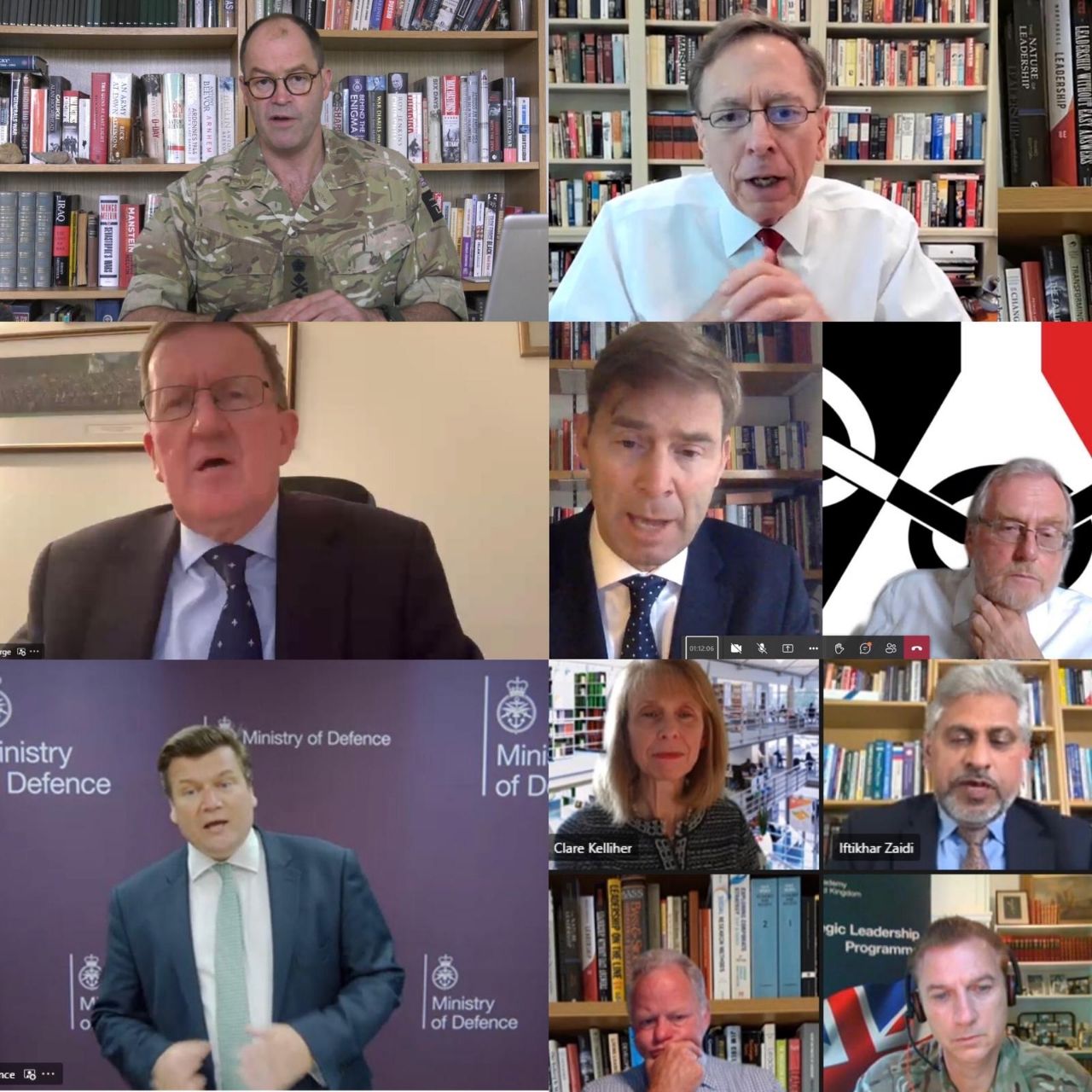
In July each year, the Defence Academy of the United Kingdom with Cranfield University deliver a Senior Strategic Leadership Programme in Shrivenham for five days to 30 senior leaders from 30 countries. The leaders are invited by The Ministry of Defence (MoD).
This year, due to Covid restrictions, the course was run over two days online with a blend of strategic leadership theory and practice. It was attended by 120 senior leaders from 40 countries across the globe.
The course was opened by Major General Andrew Roe, Chief Executive and Commandant, Defence Academy of the UK.
On the first day, Senior British military officers from the MoD explained the critical role of strategic defence engagement and how the MoD interpret the wider strategic context. There were then lectures on strategic leadership’s theoretical frameworks and remote leadership from three Cranfield academics: Dr Bryan Watters, Dr Ifti Zaidi and Professor Clair Kelliher.
Day one concluded with an insightful talk by the Rt Hon Lord Robertson of Port Ellen who discussed the strategic leadership challenges he had faced as the UK’s Minister of Defence and as NATO’s Secretary General.
The second day began with an exploration of policy and the democratic oversight of defence with the Chair, Rt Hon Tobias Ellwood MP and Deputy Chair, Rt Hon John Spellar MP of the House of Commons Defence Select Committee. This was followed by a talk titled, ‘Delivering the Strategic Intent’ by James Heappey MP, Parliamentary Under Secretary of State (Minister for the Armed Forces).
After the Minister’s exploration of defence policy, General Sir Patrick Saunders, Commander Strategic Command, gave an enlightening talk on strategy from the practitioners perspective. This was followed by two lectures from Cranfield academics, Dr David Turns, on command responsibility and the law, and Dr Ifti Zaidi on theoretical perspectives of policy and strategy.
The final event was an interview conducted by Dr Bryan Watters with General David Petraeus, former commander of Forces in Iraq, US Central Command, Afghanistan and Director of the CIA. The interview sought General Petraeus’ personal perspectives on strategic leadership.
Colonel Richard Maundrell closed the course, thanking the attendees and contributors.
The team that designed and delivered the course were Colonel Richard Maundrell, Lieutenant Colonel Saskia Hart (Defence Academy) and Dr Bryan Watters (Cranfield University).

Categories & Tags:
Leave a comment on this post:
You might also like…

How do I access the full-text of Harvard Business Review (HBR)?
This is a frequently asked question, and it's worth knowing how to access this key management journal. So, how do you access HBR in full-text? The short answer is via our eJournals finder. You can find ...

Engineering problem to solve? Let Knovel help you find a solution
Did you know that Knovel provides you with more than just eBooks? Knovel is a key database for many engineering, mechanical and materials courses here at Cranfield University, and contains content from an extensive range ...
What happens when female scholars meet influential leaders?
On the 5 March 2026, our British Council Women in STEM Scholars had the privilege of sitting down with two excellent role models of industry and academia: Professor Dame Karen Holford, ...

From MSc to CEO: Igniting a research revolution
For many, a master’s degree is achieving a big milestone. Kilyan Ocampo, Computational Fluid Dynamics alumni shares how studying at Cranfield helped launch his career in the energy sector. Today, Kilyan ...

Commuting, collaborating and growing: My first term experience at Cranfield
My first term at Cranfield University has been an extremely positive and rewarding experience. While the course has been intense at times, it has pushed me in the best possible way and allowed me ...

Sourcing country analysis – a guide to Library sources
For those researching a country, you will find that country information tends to take two forms: Analysis - country reports are descriptive reports covering most areas of interest on a country. They contain an analysis ...