


How does Cranfield prepare me to be a counterterrorism specialist?
05/03/2024

It was during the 1880’s that the first dedicated counterterrorism body was formed. The United Kingdom’s Metropolitan Police created the Special Irish Branch to combat the ongoing terror campaign by the Irish Fenians.
The requirement for intelligence at the turn of the century was becoming more and more prevalent as the rise of insurgency both at home and abroad saw more and more countries also equipping their own intelligence-based law enforcement units across the world.
The first real test for strategic counterterrorism in an active situation was the Munich Massacre at the 1972 Summer Olympics. The GSG 9 of the German Federal Police engaged in a televised hostage situation when members of the Palestinian militant group, Black September infiltrated the Olympic village taking hostage and murdering 11 members of the Israeli Olympic team.
This event created a template for how counterterror units across the world would deal with both hostage taking, violent extremists and threats to life. This was evident in the way that the National Gendarmerie Intervention Group (GIGN) would approach the hijacking and murder of civilians in the Air France Flight 8969 hijacking in Algeria and Marseille in 1994.
Unfortunately, ever since Munich, the role of terrorism within everyday life has got more and more real. We have seen the disasters of mass casualties such as New York’s 9/11 attacks in 2001, the London 7/7 bombings in 2005, or the Oklahoma City bomb in 1995 create chaos and widespread fear through communities and the population.
These aggressive manifestations of extremism are often seen as the most common terrorist threats, but the growing and ever-present threat of cyberterrorism and the ability to infiltrate security systems, critical infrastructure or national databases.
The act of terrorism now cannot just be defined as a violent act which is enacted in a public space. The digital world has meant that data networks and supply chains are at risk from attacks from hackers that can unleash different styles of attacks from ransomware to DDoS.
It can be easy to view counterterrorism as covert ‘James Bond’ style operatives, but the truth is that companies worldwide are looking for analysts, consultants and those who are willing to think outside the box and find simple solutions to complex problems.
Cranfield University has been home to two Counterterrorism Master’s courses since 2018. We worked with industry to design the most applicable courses in both counterterrorism and risk management and resilience.
Our Counterterrorism, Risk Management and Resilience MSc team worked with industry experts to provide modules that best reflect the need for expertise around the world for how counterterrorism and business are intertwined.
We teach in-depth analysis into both the tactics of terrorism, through to mitigation and future proofing against a growing threat. The wide selection of electives means that students can tailor their learning to their experience.
Our Counterterrorism MSc is a course growing in popularity as we see the ever-present threat of both national and international terrorism climbing. The course works closely with Cranfield’s forensic department and electives can be taken from our extensive portfolio.
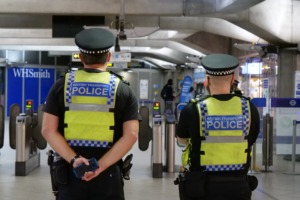
Ever since the London bombings in 2005. There has been a noticeable increase in the public presence of police both armed and unarmed in mass transport hubs across the United Kingdom.
The expert teaching department have joined us from across the spectrum of counterterrorism and management sectors. They give us the ability to enhance those wanting both postgraduate study, research and become a conduit between industry and education.
Cranfield University are looking to bridge to gap between further education and the gap in counterterror expertise worldwide, and with new methods that terrorists are finding to disrupt, infiltrate and harm nations around the world. The further we need those who can understand, interpret and mitigate the circumstances.
The courses are suitable for those both in career and recent undergraduates, with strong critical thinking skills and a suitable career path such as police, government, or security agencies.
We also welcome those who wish to research with us and would invite those with suitable research projects to get in touch. As a hugely research-active University, we aim to provide expert facilities, networking and collaboration to help you achieve the outcome of innovation, expertise and understanding.
Counter terrorism experts not only make us safer in the mitigation of terrorist attacks through surveillance, intelligence and prevention techniques, but they look to the future and how the world is adapting to these threats and how the mind works of those extremists who look to cause harm to others, whether through physical or cyber-attacks.
Graduates and researchers can look at going onto roles such as a negotiator within the police or military, criminal psychologist and within government agencies that aim to stop the threat before it arrives.
Whilst the ‘Special Branch’ was formed in the 1880’s. We still see how terrorists are willing to make bold and catastrophic choices over 140 years later. There will always be a need for expertise in this area, and it can never be underestimated.
Over a series of blogs we will explain how Cranfield is utilising its expertise and teaching methods to provide and promote the next generation of subject matter experts and thought leaders.
This series will aim to inform, inspire and energise. Giving you the information for why we believe so strongly in our teaching, and how we can develop and shape the future of each student who passes through the doors at Cranfield University.

Categories & Tags:
Leave a comment on this post:
You might also like…

Mendeley: a powerful tool to organise and manage your references
Are you looking for a way to manage your references, create in-text citations and reference lists for your assignments or thesis? If so, you may wish to consider using Mendeley. What is it? Mendeley is ...

Keen to develop your study skills?
Alongside the technical skills and academic knowledge that you will gain on your course, as a Cranfield student you have the opportunity to develop a range of other skills that can enhance your learning experience. ...

The V-conomy: powering the sixth wave of global economic growth
The world could be on the verge of a major surge in economic growth and development, driven by the convergence of AI and clean energy technology. Waiting to ride the K-wave The Russian ...

Need help using the Python programming language?
We know some of our students are currently trying to learn Python, so we wanted to make you aware of some great LinkedIn Learning videos that can help. But don't you have to pay for ...

What does it really take to become a Chevening Scholar?
Say “Turkmenistan” to most people and you’ll get a blank look. That was true when I left Ashgabat for the UK to study an MSc in Logistics and Supply Chain Management at Cranfield University ...

Get a head start on referencing and plagiarism
We offer a module on Referencing And Avoiding Plagiarism which you can find on your Canvas dashboard. It explains the role and importance of citing references and how to incorporate the work of other authors ...
Comments are closed.