

Why choose Digital Forensics at Cranfield?
29/06/2023
What makes our Digital Forensics programme so special?
Our Digital Forensics MSc course is designed to provide students with the knowledge and skills to commence a career in digital forensic science and seek to address the operational needs of policing and the skills shortage of educated and trained individuals in this field. Digital forensics is becoming one of the most critical fields within forensic science. As such, the Digital Forensics MSc at Cranfield University will help equip students with the necessary understanding of digital forensic science, courtroom and investigative skills and research methods to prepare them to practise as digital forensic professionals.
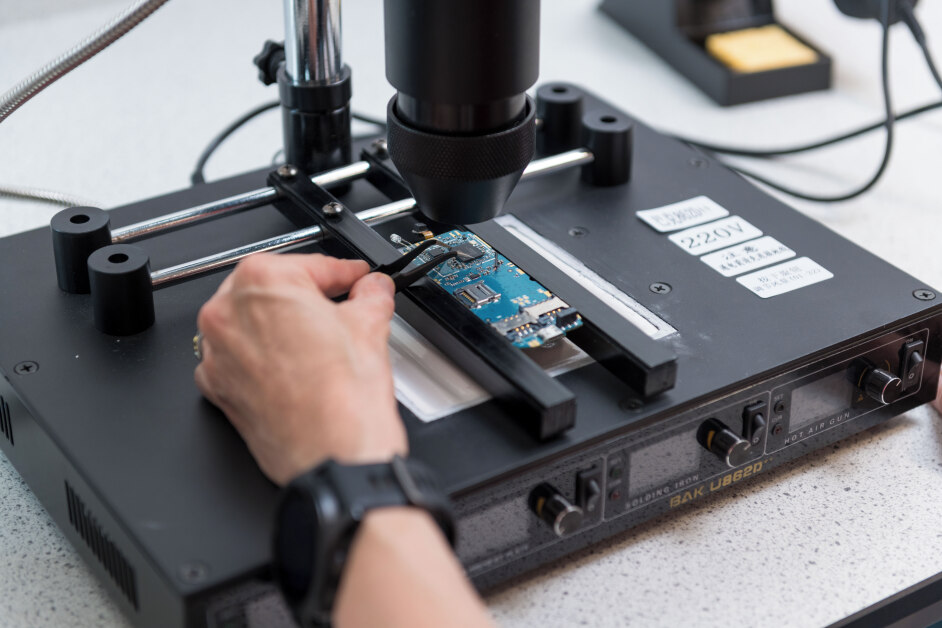
Throughout your learning journey, you will have access to our state-of-the-art lab where you will use forensic tools and learn specialist techniques and approaches that are deployed in many of the forensic laboratories world-wide, readying you for entering industry.
From Crime Scene to Court
The course itself consists of the following seven taught modules and a thesis, designed to prepare students for a digital forensic journey from crime scene to court.
- Courtroom Skills.
- Investigation and Evidence Collection.
- Introduction to Digital Crime and Investigation.
- Digital Forensics Techniques and Traces.
- Internet Based Investigations.
- Programming for Digital Forensics.
- Mobile Device Forensics.
- Thesis.
World-Class MSc
Our Digital Forensics MSc is offered in partnership with CCL Solutions Group Ltd. Our digital forensics teaching team is made up of a mix of academics and currently practising and experienced digital forensic analysts. Our academics have significant and relevant operational experience and are engaged in research that is intended to benefit the digital forensic community by addressing some of the current challenges being faced by law enforcement.
Our experienced analysts practise within CCL Solutions Group Ltd, one of the biggest digital forensics providers in the U.K. and conduct digital forensics case work daily. As a result, they bring a vast amount of practical knowledge and experience to their teaching, providing real-world insight into this discipline.
Building your Skillset
On completion of the Digital Forensics MSc course, we expect our students to have gained a strong technical underpinning and in-depth knowledge of current and emerging technologies, and the forensic challenges they pose. In turn, students will have acquired a range of investigatory skills which should allow them to conduct effective digital forensic examination.
We raise awareness of the legal, ethical, procedural and professional issues and obligations raised in this field and consider approaches to suitable address or adhere to them, and to be sound and reliable decision makers. Our aim is to train the next generation of digital forensic practitioners, capable of tackling those technological challenges that we all face in the coming years.
Funding Support:
If you’re interested in pursuing a Digital Forensics MSc with Cranfield University, the CCL Future of Digital Forensic Science Scholarship may be just what you need to start your journey.


Categories & Tags:
Leave a comment on this post:
You might also like…

Mendeley: a powerful tool to organise and manage your references
Are you looking for a way to manage your references, create in-text citations and reference lists for your assignments or thesis? If so, you may wish to consider using Mendeley. What is it? Mendeley is ...

Keen to develop your study skills?
Alongside the technical skills and academic knowledge that you will gain on your course, as a Cranfield student you have the opportunity to develop a range of other skills that can enhance your learning experience. ...

The V-conomy: powering the sixth wave of global economic growth
The world could be on the verge of a major surge in economic growth and development, driven by the convergence of AI and clean energy technology. Waiting to ride the K-wave The Russian ...

Need help using the Python programming language?
We know some of our students are currently trying to learn Python, so we wanted to make you aware of some great LinkedIn Learning videos that can help. But don't you have to pay for ...

What does it really take to become a Chevening Scholar?
Say “Turkmenistan” to most people and you’ll get a blank look. That was true when I left Ashgabat for the UK to study an MSc in Logistics and Supply Chain Management at Cranfield University ...

Get a head start on referencing and plagiarism
We offer a module on Referencing And Avoiding Plagiarism which you can find on your Canvas dashboard. It explains the role and importance of citing references and how to incorporate the work of other authors ...
Comments are closed.