

Innovation at Play: Empowering change-makers in the food sector (Entrepreneurship Perspective)
11/07/2023
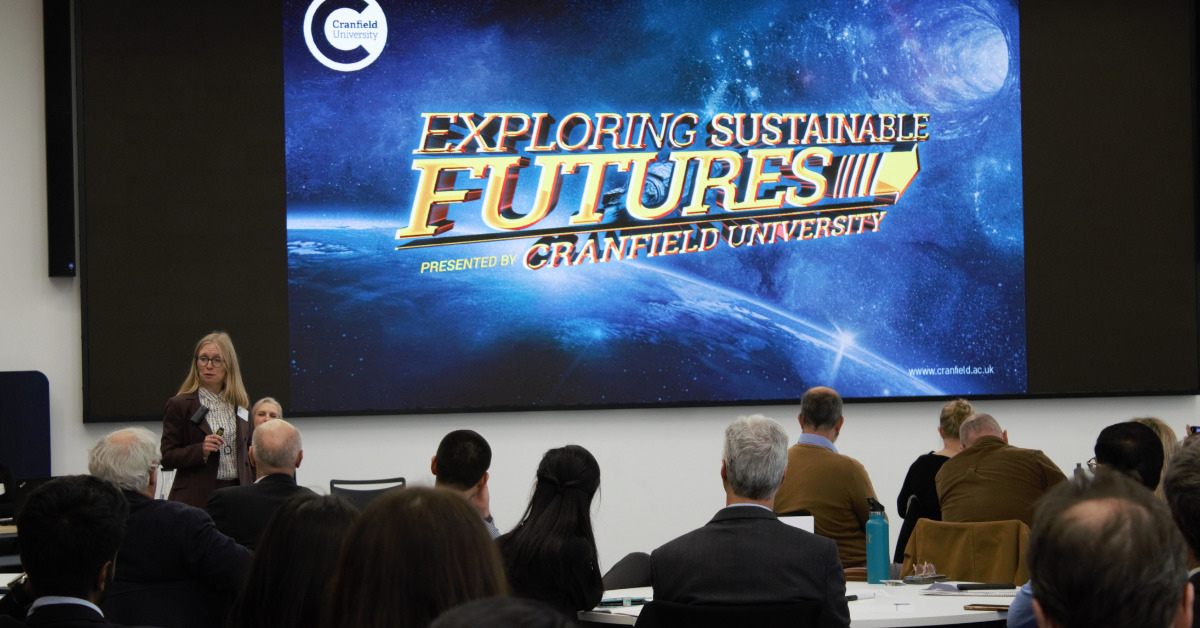
I had the pleasure of being involved in organising and running a workshop for PhD students from the Food Biosystems DTP (Doctoral Training Partnership). The Sustainable Business Group (SBG) delivered the morning session, a simulation game centred around systems thinking, and in the afternoon innovation sessions were run by The Bettany Centre for Entrepreneurship. The workshop aimed to unlock the entrepreneurial potential by introducing the entrepreneurial mindset and the role of creativity when tackling complex problems such as food. This blog is an overview of this unique learning experience which explores the significance of ‘serious play’ to opening your mind to aid explorative conversation and deal with the ‘what next’ by fostering an entrepreneurial mindset and demonstrating the transformative power of collaboration, and interdisciplinary learning.
Exploring Sustainable Futures: A Game for Change
Situated in the food sector (a context explicitly developed for this event) it provided participants with a dynamic and immersive experience, enabling them to explore the potential impact of their actions on the future. By engaging in systems thinking, participants gained a deeper understanding of the complex interdependencies within the food sector and how innovation can drive transformative change. The game acts as a catalyst for critical thinking, collaboration, and creative problem-solving. The insights gained from the simulation in the morning was harnessed in the afternoon sessions to apply the entrepreneurial mindset, exploring exactly what the ‘Entrepreneurial mindset’ is and not just leaning on the ideology of ‘being your own boss’ – including but not limited to:
- Opportunities vs problems
- Creative thinking
- Persuasive communication
- Social capital
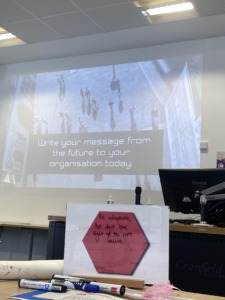
The game uses scenarios to support strategic decision-making in four different pathways towards a sustainable future in 2050, in the context of climate and societal change applying the above mindset to achieve their collective goal of a carbon neutral future. Players representing established businesses interact with players representing entrepreneurs, policymakers, civil society organisations and ‘the public voice’ as they all react to changes in the economy, technology, and society along these pathways.
Morning Session: The Game Unleashed
The workshop began with a context-setting introduction from Dr Orsolya Ihasz and Professor Stephanie Hussels, highlighting how the problems and solutions surrounding the SDG goals are all interconnected and how applying traits of an entrepreneurial mindset is crucial for problem-solving to turn any given ‘problem’ into an opportunity. Applying an open mindset to risk and seeing failure as part of continuous learning is important for entrepreneurship. This guided us into the simulation led by Gemma Adams, SBG’s Experiential Learning Lead. Participants enthusiastically engaged with the game, navigating through various scenarios set within the food sector, travelling through 2030, 2040 and ultimately glimpsing 2050. As they made decisions and faced the consequences, they witnessed the ripple effects of their actions within the simulated food system, responding to real-world problems such as the rise of AI (Artificial Intelligence) technology affecting the ongoing issue of animal extinction, and the evolving landscape of democratic governance. This hands-on experience allowed them to explore the potential impacts of different approaches and strategies, enhancing their understanding of the complex dynamics at play. To amplify the game’s relevance, profiles were created for distinct roles within the food sector. These profiles allowed participants to embody specific organisations, such as a big business, like Starbucks, individuals such as influencers or public figures, alongside SMEs – in our game ‘SunFoods’, a food wholesaler. By inhabiting these roles, participants gained valuable insights into the challenges and opportunities faced by different stakeholders within the food system. This customised approach fostered empathy and a deeper connection to the subject, serving as a powerful tool to ignite the entrepreneurial mindset for the afternoon.
Afternoon Workshops: From Game to Research Impact
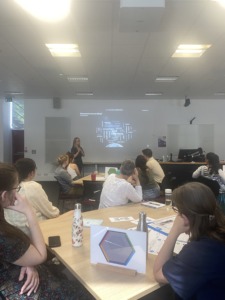
Building upon the insights gained from playing the game, the afternoon workshops focused on applying the lessons learnt from the game to participants’ research projects. The first workshop led by Dr Orsolya Ihasz, “Exploring what role your research could play in shaping the Future of food systems,” encouraged participants to consider the broader social and economic implications of their work and to explore the connectedness of problems in a systemic way. Participants were equipped with practical tools and innovative approaches to use with the aim to identify opportunities to sustainable food systems incorporating aspects of efficiency, environmental stewardship, and social impact. Participants immersed themselves in the process of creativity applying divergent and convergent thinking to particular challenges across the food systems, with the intention to critically explore links between ideas and to build new innovative solutions. It was great to see such a buzz in the room around the exercises, igniting conversation beyond food systems and the importance of individual motivation and values when applying creativity to research projects with the intention to bring value to society, planet and the economy.
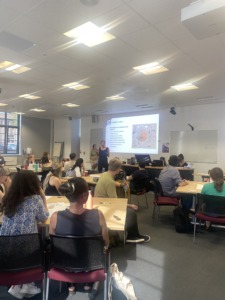
The second workshop, led by Professor Stephanie Hussels, “How can you exploit your research and create an impact,” empowered participants to translate their research findings into practical applications and create real-world change by clearly articulating the research purpose, its uniqueness and future value (social and economic relevance). Through interactive exercises and discussions, participants discovered strategies for effectively communicating their research, collaborating with stakeholders, and leveraging opportunities for impact. The researchers were asked to dig deep to explore how they can apply the entrepreneurial mindset and skills to their research in the economy, technology, and society through the workshop (much like the game asked them to do, but this time directly in relation to their research!). The workshop aimed to equip participants with the tools and skills necessary to drive meaningful change in their respective fields and maximise the impact of their research, looking at the opportunities hidden within the problems.
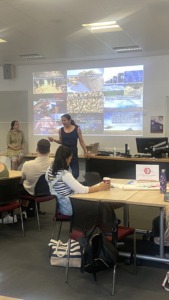
In summary, the ‘innovation at play’ workshop, highlighted the transformative power of combining simulation games and innovation workshops. By immersing themselves in the experience, participants gained a deeper understanding of the complex dynamics of the food system and the potential impact of their actions. The workshops that followed then enabled them to apply their newfound knowledge to their own research, unlocking opportunities for innovation and impact from an entrepreneurial perspective. Reflecting on this workshop, we celebrate the immense potential of play, collaboration, and interdisciplinary learning to empower change-makers and shape a sustainable future for our food systems. The learning experience can be applied to many sectors, opening the door to creative thinking, pushing boundaries, and driving innovation in specific areas.
- Find out more about the game, its history and future development.
- Find out more about the Sustainable Business Group.
- Find out more about the Bettany Centre.
- Find out more about the FoodBioSystems DTP – FoodBioSystems (reading.ac.uk)


Categories & Tags:
Leave a comment on this post:
You might also like…
Keen to develop your study skills?
Alongside the technical skills and academic knowledge that you will gain on your course, as a Cranfield student you have the opportunity to develop a range of other skills that can enhance your learning experience. ...
The V-conomy: powering the sixth wave of global economic growth
The world could be on the verge of a major surge in economic growth and development, driven by the convergence of AI and clean energy technology. Waiting to ride the K-wave The Russian ...

Need help using the Python programming language?
We know some of our students are currently trying to learn Python, so we wanted to make you aware of some great LinkedIn Learning videos that can help. But don't you have to pay for ...

What does it really take to become a Chevening Scholar?
Say “Turkmenistan” to most people and you’ll get a blank look. That was true when I left Ashgabat for the UK to study an MSc in Logistics and Supply Chain Management at Cranfield University ...

Get a head start on referencing and plagiarism
We offer a module on Referencing And Avoiding Plagiarism which you can find on your Canvas dashboard. It explains the role and importance of citing references and how to incorporate the work of other authors ...
How Cranfield shaped my journey as an Aerospace Engineer
If I'm being specific about the moment it clicked, it was reading a paper called "On the Role and Challenges of Computational Fluid Dynamics (CFD) in the Aerospace Industry" by two Boeing engineers, P. ...
Comments are closed.