

David Falcó Orduna: Why I chose Aerospace Dynamics MSc at Cranfield
24/11/2023
Hi everyone! My name is David Falcó and this year I will be studying an MSc in Aerospace Dynamics here at Cranfield University. I’m from a beautiful Spanish city on the Catalan Mediterranean coast called Tarragona, near Barcelona. In Spain, I have studied for a Bachelor’s degree in Aerospace Engineering and the first year of an MSc in Aeronautical Engineering. I will be completing my aerospace MSc at Cranfield, finishing with a double degree.
It is an incredible opportunity that allows me to combine the strengths and expertise of both institutions. In Spain, my home university leans towards a more theoretical and research-oriented approach in aerospace education. However, Cranfield University, where I’ll be continuing my studies, has a distinct emphasis on the practical, industry-focused aspects of aerospace dynamics. This exciting combination makes this double degree programme an ideal choice for those looking to bridge the gap between academia and industry. I believe that by studying in two different environments and under the guidance of professors from diverse backgrounds, I’ll be as prepared as possible for my next steps in my professional career.
Since I was little, I have been passionate about aviation and I always dreamt of having the “power” and give shape to a machine that is capable of flying. This is why I really chose Aerospace Dynamics and the specialty of Aerodynamics, where I truly believe that the professors here, along with the amazing facilities available, will provide me with the necessary tools to achieve that purpose.
Since the online induction, prior to arriving at Cranfield, I already felt the magnitude of this new adventure that was to come with the background of the teaching staff within well-known and recognised industries.
My experience on the National Flying Laboratory Centre (NFLC)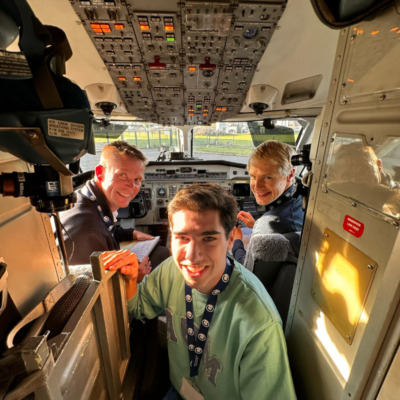
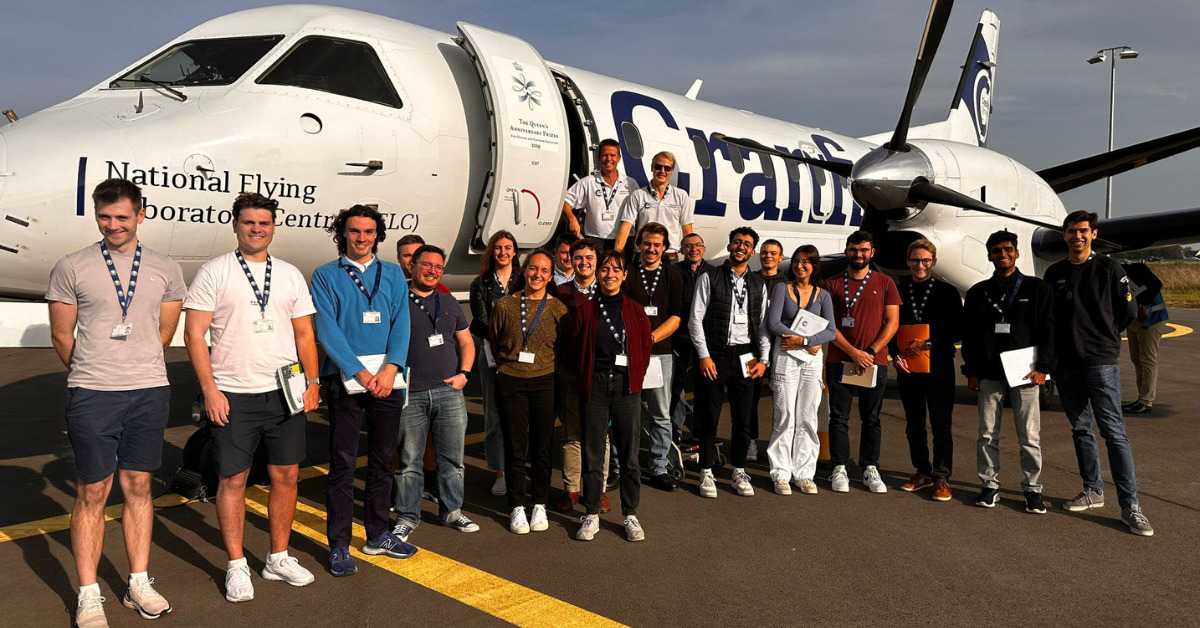
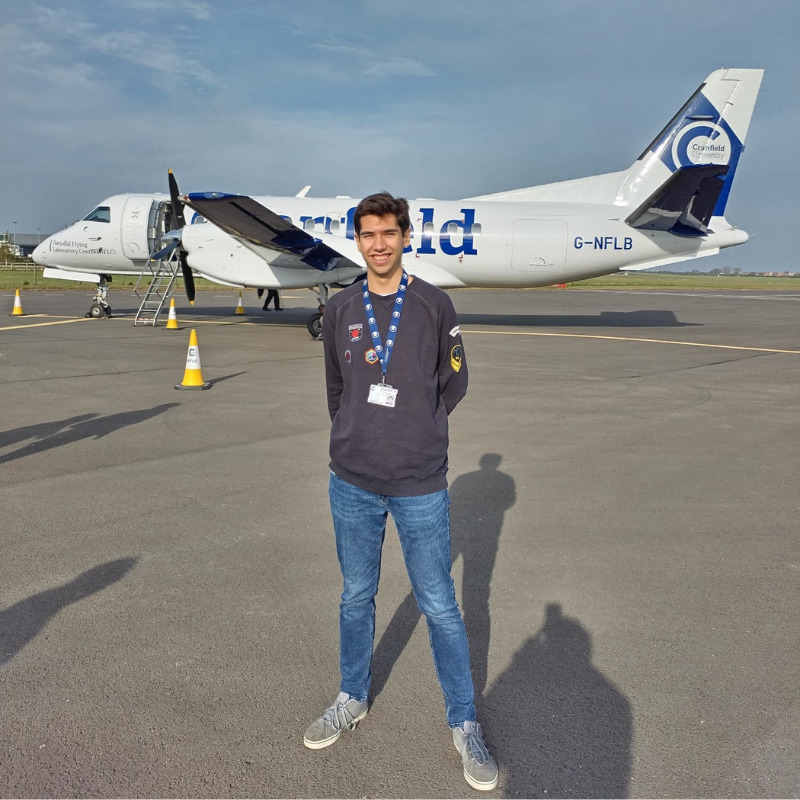
My excitement was increased during the Flight Experimental Methods Course, a mandatory module that takes us to the National Flying Laboratory Centre (NFLC), a modified Saab 340B prepared for the gathering of flight test data. Those first two weeks of the module were unbelievable. Walking towards the DARTeC building and seeing the personnel preparing the aircraft next to the Boeing 737 already puts a smile on your face, it cannot get any better than that.
By the time I am writing this, we have already flown 5 times, and we have two more flights to do.
I find it invaluable to be able to put a sensation to the drawings and equations we see in textbooks. For instance, the different dynamic modes become vivid when you find yourself inside an aircraft, evaluating them first-hand.
The NFLC has been incredible, and I feel so grateful for the people who work with it and allow us to have that experience during our academic studies.
Life outside of study
Although these first weeks at Cranfield have been academically intense, I have found in the tennis club a space where I am able to disconnect for a couple of hours of intense lecture days. I am truly excited to make the most out of my stay in the United Kingdom. I have already visited Milton Keynes, Bedford, and the impressive London.
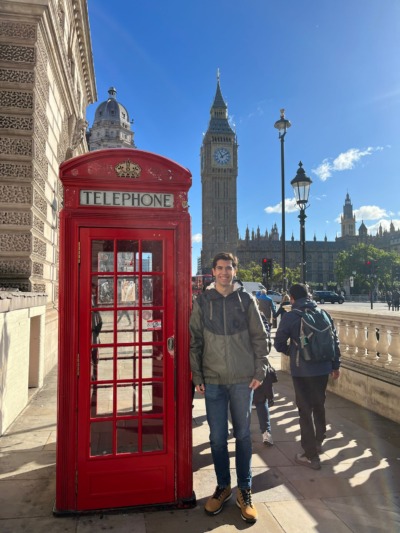
I am eager to visit other special locations such as Oxford, Cambridge, and Edinburgh and for sure watch a game at the mythic Anfield Stadium in Liverpool and Wembley in London, for a huge football fan it would mean a lot.
My future aspirations
I will take this opportunity to benefit from all that Cranfield has to offer. The knowledge, expertise in the field and the facilities such as the NFLC and the amazing range of wind tunnels. Also the staff such as, the amazing team in Careers and Employability, who have already helped me prepare for applications and increase my network.
I hope all the work and effort I will put in this year will help me get closer to becoming an aerodynamics engineer and contribute to this key moment of aircraft design. It will require cutting-edge solutions to reduce carbon footprints and evolve towards more sustainable transport.

Categories & Tags:
Leave a comment on this post:
You might also like…
Keen to develop your study skills?
Alongside the technical skills and academic knowledge that you will gain on your course, as a Cranfield student you have the opportunity to develop a range of other skills that can enhance your learning experience. ...
The V-conomy: powering the sixth wave of global economic growth
The world could be on the verge of a major surge in economic growth and development, driven by the convergence of AI and clean energy technology. Waiting to ride the K-wave The Russian ...

Need help using the Python programming language?
We know some of our students are currently trying to learn Python, so we wanted to make you aware of some great LinkedIn Learning videos that can help. But don't you have to pay for ...
What does it really take to become a Chevening Scholar?
Say “Turkmenistan” to most people and you’ll get a blank look. That was true when I left Ashgabat for the UK to study an MSc in Logistics and Supply Chain Management at Cranfield University ...

Get a head start on referencing and plagiarism
We offer a module on Referencing And Avoiding Plagiarism which you can find on your Canvas dashboard. It explains the role and importance of citing references and how to incorporate the work of other authors ...
How Cranfield shaped my journey as an Aerospace Engineer
If I'm being specific about the moment it clicked, it was reading a paper called "On the Role and Challenges of Computational Fluid Dynamics (CFD) in the Aerospace Industry" by two Boeing engineers, P. ...
Comments are closed.