

Now for clean growth – let’s hope it’s real this time!
01/12/2017

If, like me, you’re downloading a burgeoning number of Government reports committing us to clean growth, low carbon infrastructures and greater disclosure on climate risk, you’ll either be feeling ‘at last, the tide has turned’; or suspending your lingering cynicism about commitments to the green economy. Is it all real this time? Have we moved on this time from Cameron’s alleged ‘getting rid of the green crap’ to recognising the long-run benefits of environmental responsibility for the economy? I’m staying optimistic – after all, it is the festive season and there are genuine grounds to do so.
For once, policies show signs of being joined up and focused on resolving the tension between resource extraction for economic activity and environmental protection for the regeneration of natural capital. Advanced economies see the green economy as a prime contributor to recovery with a wide recognition that an ‘absolute decoupling’ of growth from impact is now a necessity. For this, business models that have been in the wings for some time are being explored afresh with vigour. And, in the context of economic need, the design of cities that are resilient to shock, the sustainable management of global supply chains; and the application of ecological principles to engineered systems are all generating opportunities for our sectors, through admittedly, we are in desperate need of professionals who think foremost about systems, materials flow and disruptive innovation.
Of course, one reason Governments have rediscovered this is because of the genuine prospects for growth, jobs, export, scale-up and skills in a lower carbon economy, but we should also be buoyant about the rising generation’s appetite for seizing an agenda where sustainability is a ‘given’ for products and services and not a ‘bolt-on’. And early career folk with the passion for making this happen through business strategy now have a vibrant palette to play with. A historic focus on implementing environmental management systems and drumming up enthusiasm for green initiatives within the firm is developing into an influential C-suite role for most ‘Heads of Sustainability’. Increasingly sat alongside finance, marketing or consumer affairs, these leaders find themselves at the very forefront of strategic developments within their organisations, tackling:
- the all-pervasive role of ‘digital’ and the need to assemble responses within the firm that relate to environmental sustainability;
- the demands for leadership on aspects as diverse as autonomy, the ‘bankability’ of new technologies and self-regulation;
- decisions on how ‘pace-setting’ their firms should be on climate adaptation in the context of guidance on financial risk reporting;
- leadership on systems and circular thinking, and on sociological and psychological drivers of change, including the emotional elements of choice and lifestyle at as citizens connect more closely with their products and services; and critically,
- the absolute necessity of clear communications across all market channels, but also on longer-term thinking within the firm.
So it seems the stars are aligned for once – clean growth offers genuine prospects, firms are better connecting with new customers and their future customer base has the appetite to make this all happen. Opportunity is firmly knocking at the door!
—
This post first appeared on Edie: https://www.edie.net/blog/Now-for-clean-growth—lets-hope-its-real-this-time/6098418
Cranfield offers Master’s courses in Environmental Management for Business and in Management and Corporate Sustainability These courses are for technical and general manager audiences alike, and equip learners in the practical needs of the green economy.

Categories & Tags:
Leave a comment on this post:
You might also like…
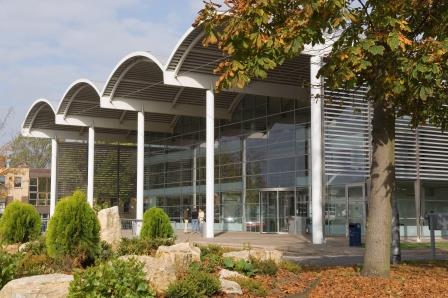
Introducing Kings Norton Library
Welcome to all our new students! We are looking forward to meeting you soon. You will find Kings Norton Library in the centre of the Cranfield campus, and it is open 24/7 to all staff ...

Setting your research on the right course: Four questions every researcher should ask
Whether you are just beginning your doctoral journey or are already well into your research career, successful research rarely happens by accident. Like any successful mission, it depends on good planning, informed decisions, and getting ...

5 budgeting mistakes students make (and how to avoid them)
Good financial planning isn't about how much money you have. It's about the habits you build. We asked Dr Lakshmy Subramanian, Course Director for the Banking, Economics and Finance MSc, about the budgeting mistakes ...

Finding your reading materials
Use Library Search Library Search is the first place to start when you are trying to find academic sources for your work. This is the search box on the library website homepage. It allows you ...

Formula 1 was the dream and Cranfield was the conduit
I still remember the exact moment Formula 1 (F1) got its hooks into me. I was in my first year of an aerospace undergraduate engineering degree when I watched a video about the sport ...

Introducing Barrington Library
Welcome to all our new students! Barrington Library supports all the students and staff at Cranfield Defence and Security on the Shrivenham site. We are looking forward to meeting you all soon, in person or ...