


Introducing… PsycINFO and PsycARTICLES
29/06/2023

If you are searching for scholarly research literature on psychology and the behavioural and social sciences, PsycARTICLES and PsycINFO are the best places to get started! So what’s the difference between the two?
Both databases are published by the American Psychological Association (APA), however PsycINFO is essentially an abstracting and indexing service, whereas PsycARTICLES contains full-text peer reviewed articles. Both are useful in their own right…
PsycARTICLES is a database of more than 202,000 full text peer-reviewed articles across nearly 80 journals published by and affiliated to the APA. Complete article coverage for APA journals, goes back in most cases to the very first volume and issue, and the first articles date back to 1894. The service is updated weekly.
Examples of journals covered include: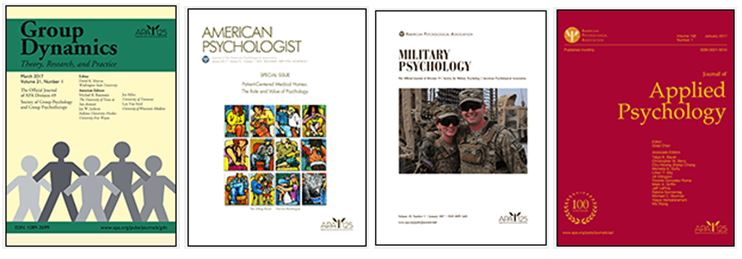
PsycINFO offers more than 4 million records with upwards of 4,000 new additions each week. Earliest entries date from the 17th and 18th century and there is extensive coverage from 1800 onwards. The material is carefully selected and indexed by experts from the APA ensuring that the references and abstracts are easily discoverable. The content has relevance to a host of related disciplines including neuroscience, business, nursing law and education. In addition to 2,500 scholarly journals, coverage includes book chapters, book reviews, dissertations and editorials. Content from PsycARTICLES can be found indexed on PsycINFO.
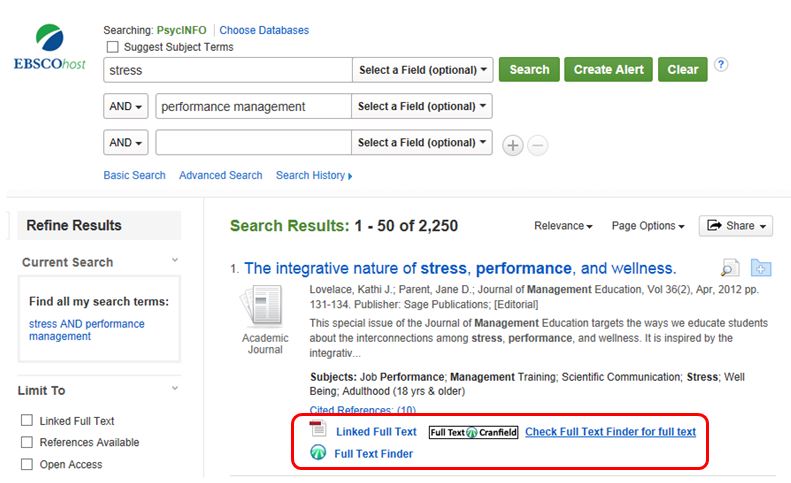
Although PsycINFO essentially contains only citations and abstracts, clicking on one of the links below each record will often open up the full-text of the article from another of our databases, making this service a valuable tool for your research.
If you have any questions about PsycINFO or PsycARTICLES, please contact the Library.
Feature image from Pixabay. Available at: https://cdn.pixabay.com/photo/2016/06/01/06/26/open-book-1428428_960_720.jpg

Categories & Tags:
Leave a comment on this post:
You might also like…

Introducing Kings Norton Library
Welcome to all our new students! We are looking forward to meeting you soon. You will find Kings Norton Library in the centre of the Cranfield campus, and it is open 24/7 to all staff ...

Setting your research on the right course: Four questions every researcher should ask
Whether you are just beginning your doctoral journey or are already well into your research career, successful research rarely happens by accident. Like any successful mission, it depends on good planning, informed decisions, and getting ...

5 budgeting mistakes students make (and how to avoid them)
Good financial planning isn't about how much money you have. It's about the habits you build. We asked Dr Lakshmy Subramanian, Course Director for the Banking, Economics and Finance MSc, about the budgeting mistakes ...

Finding your reading materials
Use Library Search Library Search is the first place to start when you are trying to find academic sources for your work. This is the search box on the library website homepage. It allows you ...

Formula 1 was the dream and Cranfield was the conduit
I still remember the exact moment Formula 1 (F1) got its hooks into me. I was in my first year of an aerospace undergraduate engineering degree when I watched a video about the sport ...

Introducing Barrington Library
Welcome to all our new students! Barrington Library supports all the students and staff at Cranfield Defence and Security on the Shrivenham site. We are looking forward to meeting you all soon, in person or ...
Comments are closed.