


Managing contractor health and safety – but don’t forget the pastries!
12/04/2017

I’m hugely excited about the next two years. Together with two colleagues (Prof Denyer and Dr Doherty) I have secured research funding from The Institution of Occupational Safety and Health (IOSH) to investigate how client organisations manage the occupational safety and health of contractors in their outsourced activities. I learnt enough in the last IOSH funded project on ‘safety leadership in service settings’ to know that contractors and safety don’t mix together well. But I don’t think it can be all bad. After all, contractors often work in a wider range of environments than the client managing them, so they might just be able to help the client improve their own safety performance too. Luckily IOSH agreed, and sponsored us, and Network Rail was able to confirm this hunch at the recent project launch event at Cranfield School of Management.
What a day that was!
Over 20 senior figures responsible for health and safety in leading organisations including Siemens, GSK, Travis Perkins, BT Group, Kuehne + Nagel and Genesis Housing Association, and of course Network Rail, gave up a day to come and discuss the challenges of managing contractor safety. An exercise using a ‘Diamond 9’s’ approach surfaced loads of challenges, but on reflection after the event they did seem to coalesce into three central themes with the acronym ACT (Actor, Context, Task). That may not be surprising, but it gives us something to work on.
Ron Reid from Shoosmiths LLP gave us all an update on managing contractor safety from a legal perspective. Identifying risks, both your own and those of the contractor, and then communicating them and their mitigation strategies effectively to all involved seems to be critical to avoid prosecution. But there do seem to be a lot of potential problems including induction processes, coordination of tasks, permits and risk assessments and monitoring. There is a lot to think about when managing contractor safety. To an important degree it seems to boil down to, “do you have confidence in their competence?”. He concluded his presentation with two quotes, one from the inquiry into the Clapham Junction rail accident, and the other from Admiral Hyman Rickover.
“A concern for safety which is sincerely held and repeatedly expressed but nevertheless is not carried through into action, is as much protection from danger as no concern at all”.
“Responsibility is a unique concept… You may share it with others, but your portion is not diminished. You may delegate it, but it is still with you… If responsibility is rightfully yours, no evasion, or ignorance or passing the blame can shift the burden to someone else”.
That was just the morning. The only thing I’d forgotten was to provide Danish pastries on arrival. Some delegates had travelled a long way and were famished on arrival. So lunch was welcomed.
The afternoon began with a presentation of a pilot study we had done with Gassco LRF. They transport 20% of the gas entering the UK, supplying 16 million households. How they manage the safety of their embedded contractors is clearly important. Unfortunately, their HSSEQ manager had just had knee surgery and couldn’t drive down to make the presentation, so the audience got me instead. After that we got everyone moving with a World Café around five topics including what practices are used to prevent health and safety failures, and what practices are used to make sure things go right from a health and safety perspective. This generated some significant discussions that allowed us to gather some much needed preliminary data.
With such a beginning, I’m really looking forward to working with these organisations over the next two years to discover just how OSH is managed in outsourced relationships.

Categories & Tags:
Leave a comment on this post:
You might also like…

How Cranfield shaped my journey as an Aerospace Engineer
If I'm being specific about the moment it clicked, it was reading a paper called "On the Role and Challenges of Computational Fluid Dynamics (CFD) in the Aerospace Industry" by two Boeing engineers, P. ...
Introducing Kings Norton Library
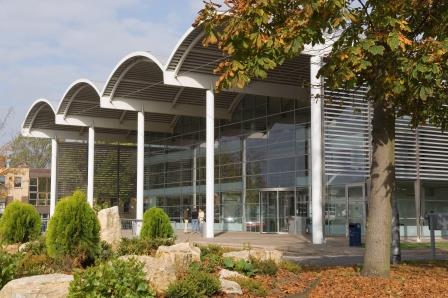
Welcome to all our new students! We are looking forward to meeting you soon. You will find Kings Norton Library in the centre of the Cranfield campus, and it is open 24/7 to all staff ...

Setting your research on the right course: Four questions every researcher should ask
Whether you are just beginning your doctoral journey or are already well into your research career, successful research rarely happens by accident. Like any successful mission, it depends on good planning, informed decisions, and getting ...

5 budgeting mistakes students make (and how to avoid them)
Good financial planning isn't about how much money you have. It's about the habits you build. We asked Dr Lakshmy Subramanian, Course Director for the Banking, Economics and Finance MSc, about the budgeting mistakes ...

Finding your reading materials
Use Library Search Library Search is the first place to start when you are trying to find academic sources for your work. This is the search box on the library website homepage. It allows you ...

Formula 1 was the dream and Cranfield was the conduit
I still remember the exact moment Formula 1 (F1) got its hooks into me. I was in my first year of an aerospace undergraduate engineering degree when I watched a video about the sport ...