

Why study abroad? The impact of international staff and students in the UK
23/01/2017

Today, and for the rest of this week (and most likely beyond that too), you’ll see universities across the country sharing their own figures around the numbers of international students they welcome each year. Here at Cranfield we have students from 106 different countries. But what does it actually mean, to welcome students from across the world to a former RAF base in the middle of the Bedfordshire countryside?
I’ve been working in international recruitment for several years now and I’m still consistently impressed by the ambition and aspiration of the students I meet. Theirs is clearly a generation who understands that personal and professional success is heightened by being global in their outlook, by travelling to different countries, learning about different cultures and by ‘rehearsing’, in seminar and lecture rooms, the type of interpersonal skills that will be required at every stage throughout their careers.
What’s more, business now expects that their future leaders will need to be able to understand and address issues in Chittagong as well as Coventry, in London as well as Lima. They are looking to us in the higher education sector to provide them with minds that are keen to explore, able to integrate with different cultures and willing to embrace global connectivity. Before I came to Cranfield, I did some research which helped me to understand just how important the relationship between academia and business is at Cranfield. Now that I have worked here for 18 months, I know that that relationship is strengthened by Cranfield’s global approach to the recruitment of staff and students. It’s simple: if you want the best results, you need to attract the best minds from across the world and recognise that knowledge has no boundaries.
Since the inception of Erasmus in 1987 (and for years before) Cranfield has been working with a large number of European partners. We offer a ‘double degree’ programme, which provides European students with the opportunity to study the final year of their undergraduate degree here at Cranfield. But it’s not just a one-way system. Through Erasmus, both students and staff take part in exchanges and cross-Europe research. It’s something that is ingrained in our identity as a university – it’s much more than being able to speak multiple languages or understand cultural behaviour, it’s about having a new appreciation of how your research might help to answer questions raised by your peers in Italy, or Spain, or France.
We’ve also designed many of our courses to be international in their outlook. For example, some of the photos above show our MBA students on their international business assignments (IBA). The IBA is an opportunity to visit a number of organisations in a foreign country – last year students went to China, Zambia, Japan and Sri Lanka. The experience is designed to help our students appreciate diversity, sustainability and corporate responsibility, not just as abstract concepts but actually as they affect organisations and society in the host country on a day-to-day basis.
A lot has been spoken in the recent past about the economic impact of international students – non-EU students contribute £7 billion a year to the UK economy – but we must also consider the educational impact. Studying alongside international students creates highly skilled UK postgraduates, who are ready and able to respond to the challenges of working in global companies.
A 2015 study asked people about their experiences studying with international students at school and university. The results showed particularly high positive ratings for the statements: ‘It gives me a better world view’ and ‘Students have to be more aware of cultural sensitivities’. Interestingly though, 34% of the respondents had never studied with someone from another country before going to university. I believe this demonstrates just how vital universities are in building and maintaining global relationships. When we look at the impact of international students and staff on the UK, we must also think about the impact that they have on each other. After all, these are the people that have to work together to tackle some of the world’s biggest challenges, global issues such as climate change or food security which are insurmountable without collaboration across borders.

Categories & Tags:
Leave a comment on this post:
Comments are closed.
You might also like…
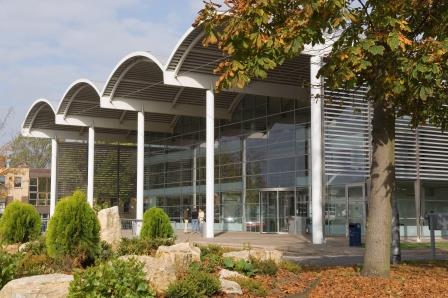
Introducing Kings Norton Library
Welcome to all our new students! We are looking forward to meeting you soon. You will find Kings Norton Library in the centre of the Cranfield campus, and it is open 24/7 to all staff ...

Setting your research on the right course: Four questions every researcher should ask
Whether you are just beginning your doctoral journey or are already well into your research career, successful research rarely happens by accident. Like any successful mission, it depends on good planning, informed decisions, and getting ...

5 budgeting mistakes students make (and how to avoid them)
Good financial planning isn't about how much money you have. It's about the habits you build. We asked Dr Lakshmy Subramanian, Course Director for the Banking, Economics and Finance MSc, about the budgeting mistakes ...
Finding your reading materials
Use Library Search Library Search is the first place to start when you are trying to find academic sources for your work. This is the search box on the library website homepage. It allows you ...

Formula 1 was the dream and Cranfield was the conduit
I still remember the exact moment Formula 1 (F1) got its hooks into me. I was in my first year of an aerospace undergraduate engineering degree when I watched a video about the sport ...
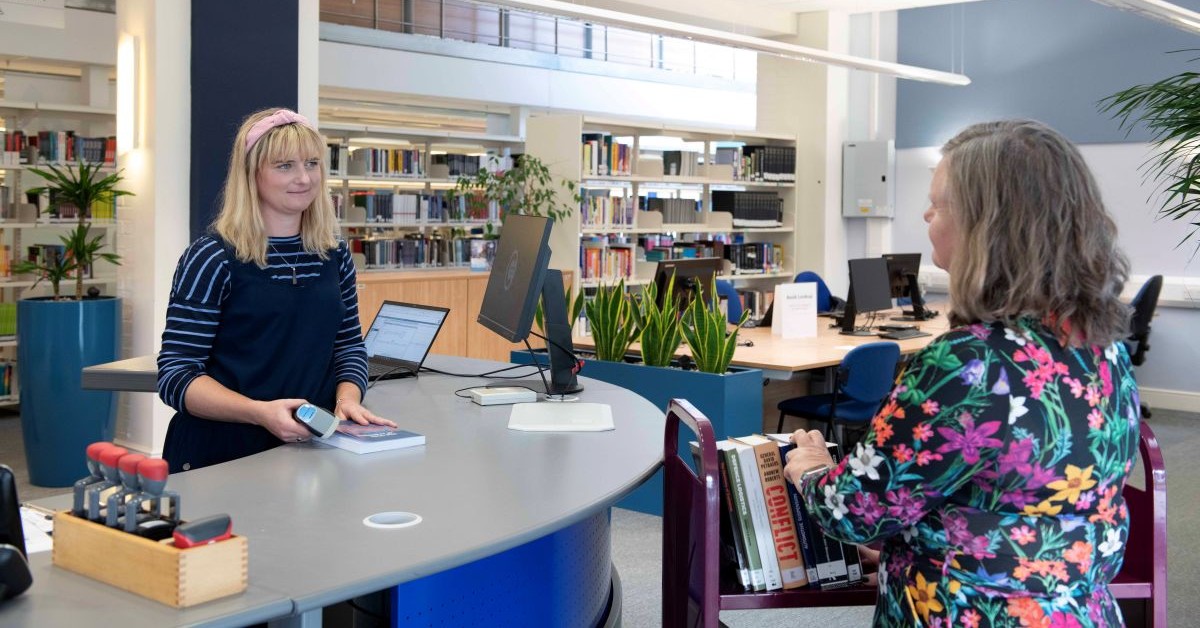
Introducing Barrington Library
Welcome to all our new students! Barrington Library supports all the students and staff at Cranfield Defence and Security on the Shrivenham site. We are looking forward to meeting you all soon, in person or ...
Hello – are you interested in a partnership with us?
Hi Julian, please email Trista.Huang@cranfield.ac.uk with more details if you are interested in a partnership with Cranfield – thanks!