


My aerospace vehicle design journey at Cranfield
18/11/2026
In 2007, I watched the Airbus A380 land in Delhi for the very first time. I was just a kid in India, and it was the biggest passenger plane in the world. I asked myself one question: how does something that big fly?
That question never left me. I studied mechanical engineering to understand how things work, but I always knew I would end up in aerospace.
Why I chose Cranfield
Cranfield has a long history, which began in 1946 as the College of Aeronautics. Knowing that the university has its own airport and aircrafts that I would get to fly on as part of the course, my choice was obvious.
Initially I was scared about going from a mechanical background to aerospace and thought I wouldn’t be able to manage the project work. But I didn’t need to be.
The lecturers and the hands-on teaching helped me catch up quickly. So, if you’re coming from another branch of engineering, don’t let this stop you.
Learning beyond the classroom
At Cranfield, you don’t just learn about aircraft in lectures. You see them up close, and you fly in them.
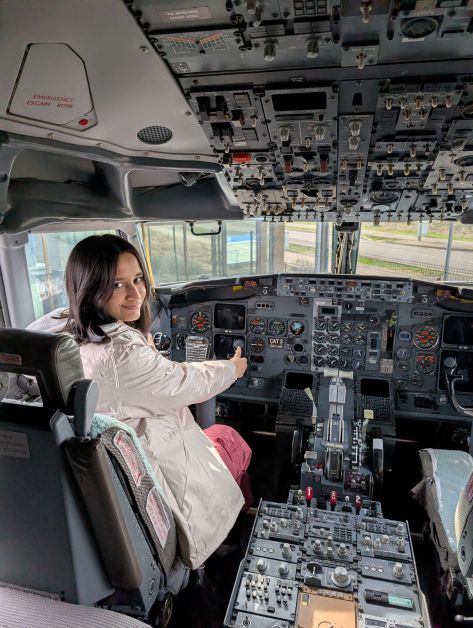
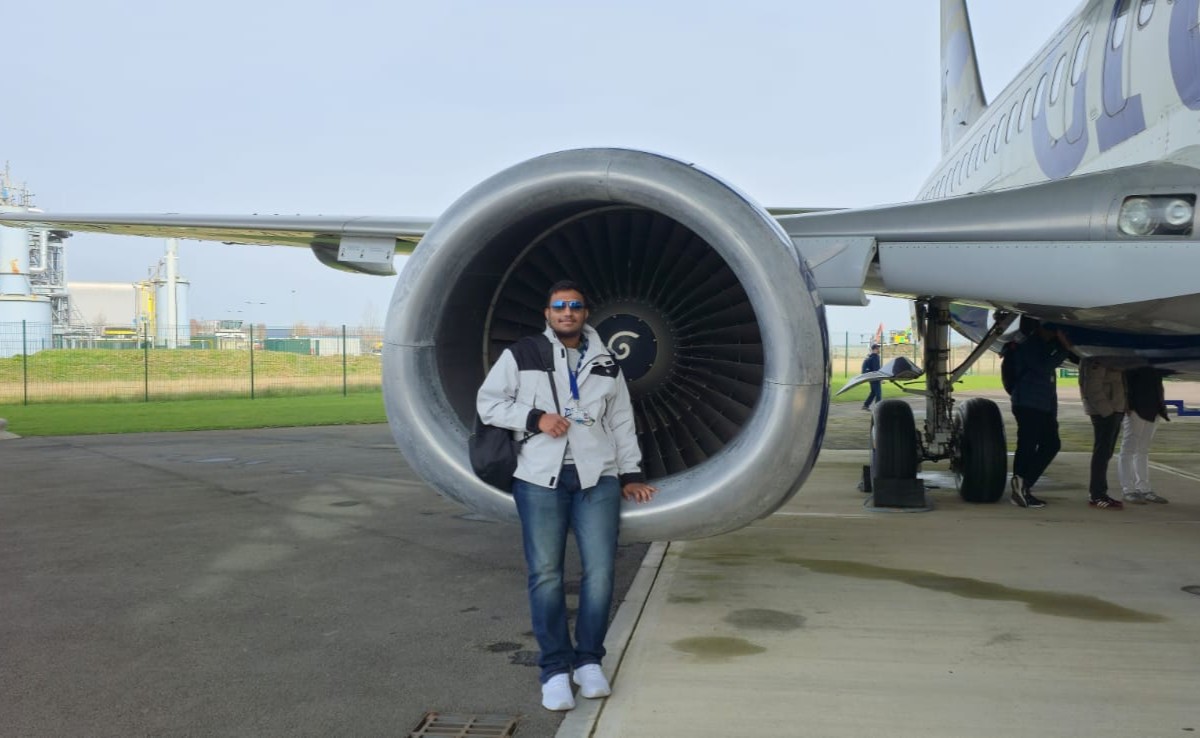
For our fatigue and damage tolerance module, we visited the Boeing 737 on campus to see fatigue on a real aircraft. At the Aerospace Integration Research Centre, we saw DEMON, the unmanned aerial vehicle Cranfield built with BAE Systems.
There, I also got to stand next to a Rolls-Royce Trent 900, an engine that powers the A380, my favourite airliner.
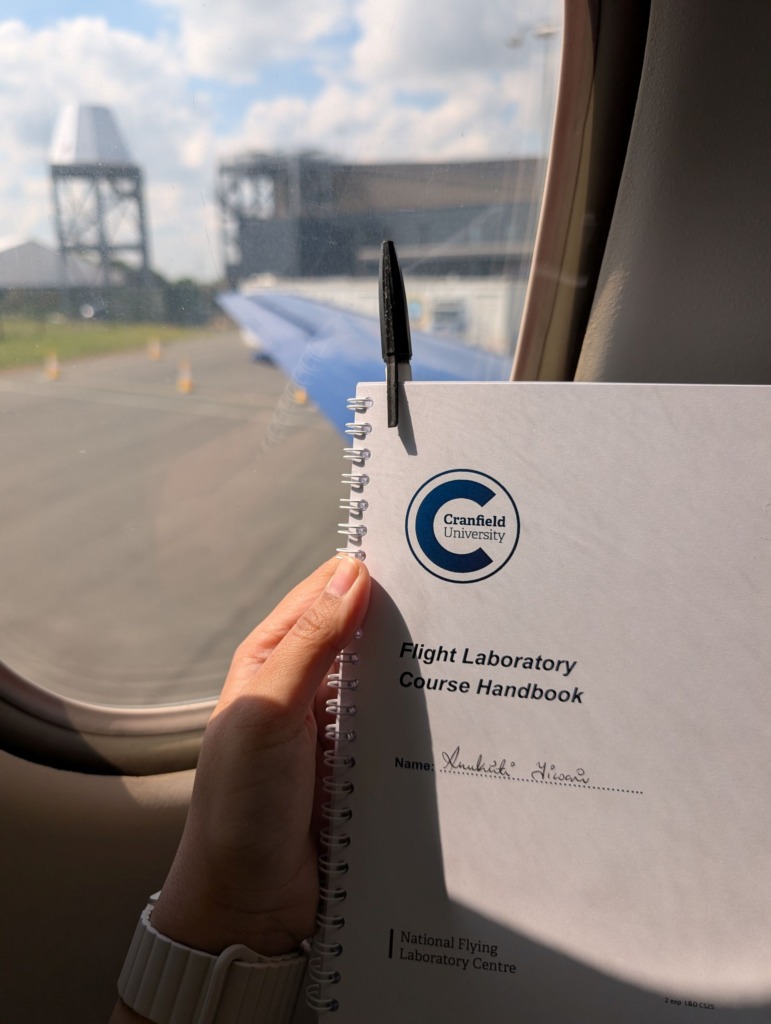
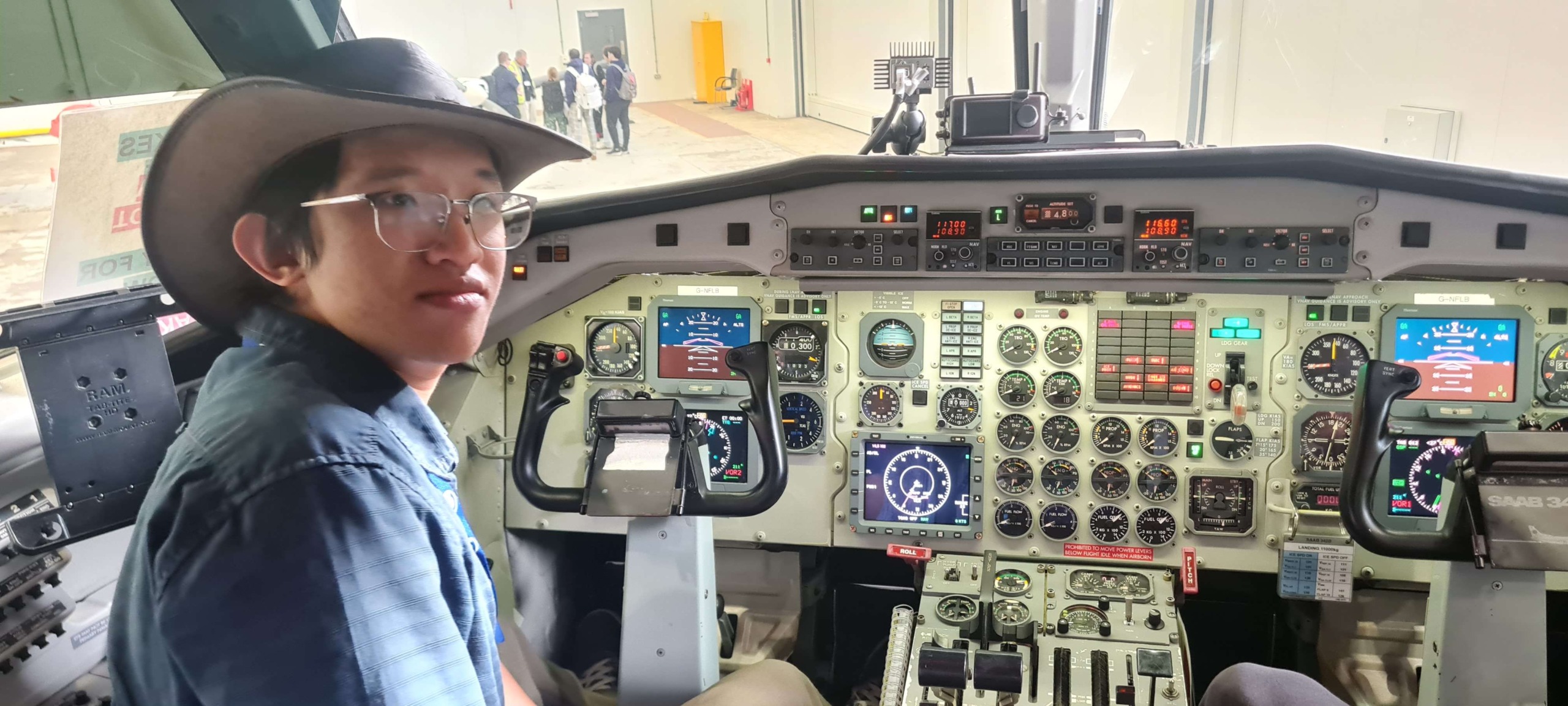
The flying has been the best part. In the Saab 340B flying classroom, we performed manoeuvres like phugoid oscillation, Dutch roll, and spiral roll, and recorded data live during flight. We each were given a logbook, and our demonstrator Dr Simon Place guided us throughout the flight to record the data.
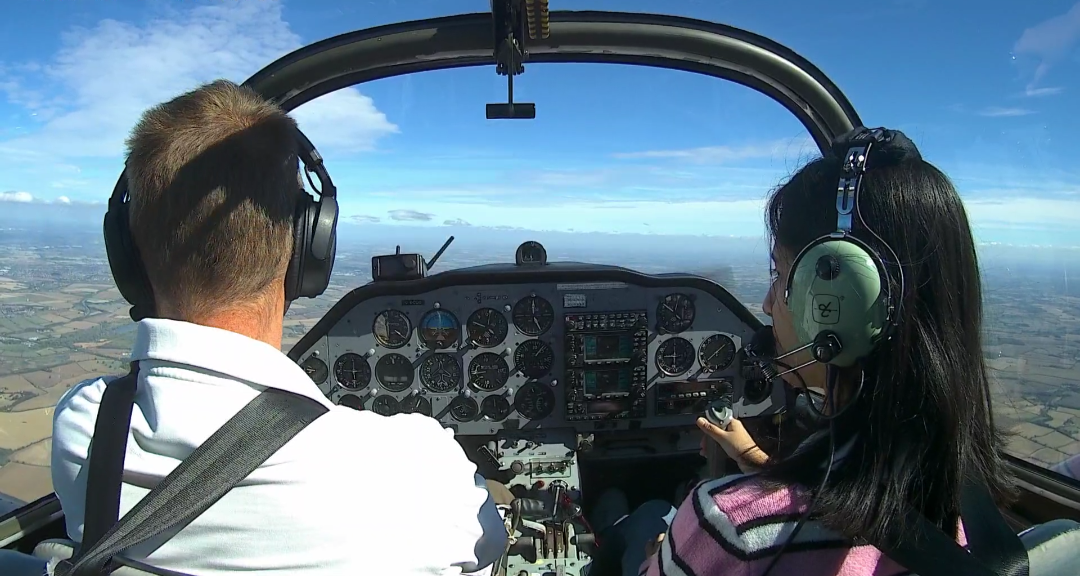
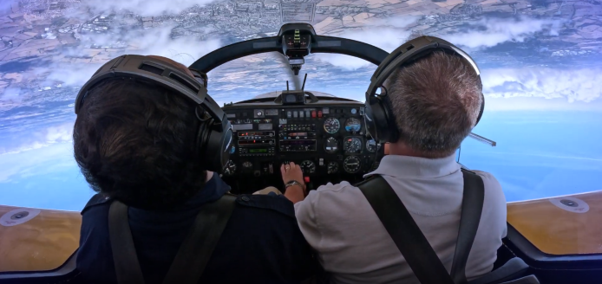
We each also had an individual flying experience on an aerobatic aircraft. Mine was in the Scottish Aviation Bulldog. The pilot during the flight, Robert Harrison, even let me take the controls, and performed different manoeuvres like loop and roll.
I still can’t believe that I got to take control of a plane as part of my MSc!
Designing a hydrogen aircraft
The Group Design Project (GDP) is the heart of the Aerospace Vehicle Design (AVD) course, and it has been the highlight of my journey so far.
The GDP is run almost like a real industrial project. The whole cohort designs one new aircraft together, and each team takes its part from first concept to detailed design. Our aircraft was hydrogen-fuelled, which made the challenge even bigger.
My preference was the structures group, and I was later assigned the design of the inner wing for our aircraft. My task was to work out the loads, the layout and eventually the detailed design of the inner wing. My own numbers were shaping an important part of a real project.
I was also part of the project’s CAD and physical modelling teams. I loved watching the aircraft CAD model progress on screen throughout the six months we spent working on it. We also then 3D printed it into a physical model. That same model now sits in Cranfield’s display cabinet, alongside GDP models going back to 1948.
A small piece of our work will stay at Cranfield forever, and I am really proud of that.
As I was part of the March intake for aerospace vehicle design, our team was small, and everyone carried a lot of responsibility. The work was demanding, but it was great fun.
Alongside our primary and secondary duties, we also edited videos, designed merchandise and created our aircraft’s livery. I got to design the project logo. All of that built up to our Critical Design Review (CDR) where we showcased our work to the AVD staff and guests from the industry.
The GDP showed me what working in industry really feels like. You work to deadlines, you rely on your teammates, and you learn to explain your work coherently.
Life on campus
Living on campus means living with people from all over the world and experiencing their culture. The Cranfield Students’ Association also arranges fun events almost every Friday, from ball night to karaoke to Halloween.
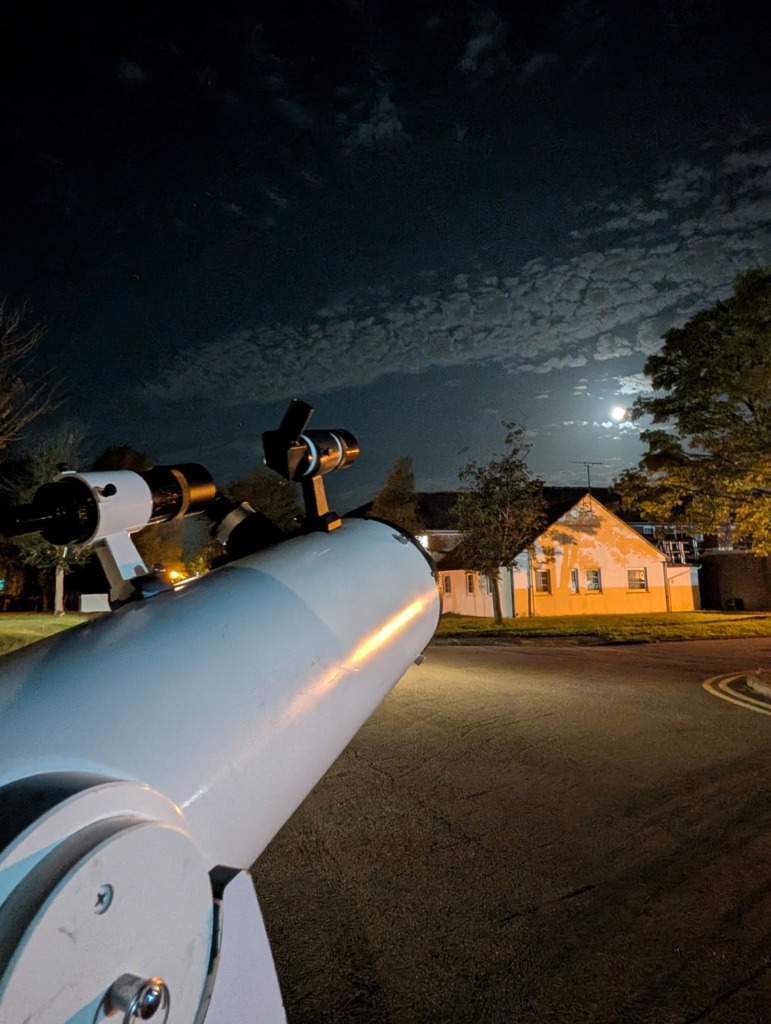
I also joined the astronomy club, where I get to use the telescopes and attend weekly talks on various topics. I’m particularly excited about the winter, as the long nights will give me more time for stargazing and observing sessions.
Moving from India to the UK was easier than I expected, because people here are so supportive. I also got the opportunity to be the course rep, which allowed me to further get along with my peers and be more involved in the programme.
Looking ahead
Working on a hydrogen aircraft shaped how I see my future. The GDP taught me that greener flying depends on smart structural design. That is exactly where I want to work. After my MSc, I want a career in sustainable aerostructures. I want to help make aircraft lighter, more efficient and cleaner.
In 2007, I wondered how the A380 could fly. Today, I know the answer.
Find out more about the Aerospace Vehicle Design MSc at Cranfield University.


Categories & Tags:
Leave a comment on this post:
You might also like…
My aerospace vehicle design journey at Cranfield
In 2007, I watched the Airbus A380 land in Delhi for the very first time. I was just a kid in India, and it was the biggest passenger plane in the world. I asked ...
Solving aerospace challenges at Cranfield University
Solving real world challenges has always been my goal and with the knowledge that I could gain at Cranfield during my master’s, it was not a decision that required a second thought. The interactive ...
Shaping the future of aviation with aerospace vehicle design at Cranfield
When I was three years old, I went on my first plane ride together with my dad; this was on a Boeing 777-200ER and made me very curious about how it all worked. So, ...
From flight control systems to aircraft design
The beauty of aviation has been a big part of my background and the primary driver of my goals and aspirations. My perspective is that it is more than just a method of transportation ...

Search tips for using our online resources effectively
When you begin to search the literature for relevant, good quality academic material, it can feel daunting and, at times, overwhelming. However, it need not be like that. Here are a few ...

Referencing the use of generative AI in your work
We recognise that Artificial Intelligence (AI) has, and will increasingly, become a part of our everyday lives and that we need to adapt to it. Hopefully you will have already seen the guidance for staff ...