


From flight control systems to aircraft design
18/11/2026
The beauty of aviation has been a big part of my background and the primary driver of my goals and aspirations. My perspective is that it is more than just a method of transportation between two points; it brings people together and provides a lifeline where other forms of transport are highly constrained or unavailable.
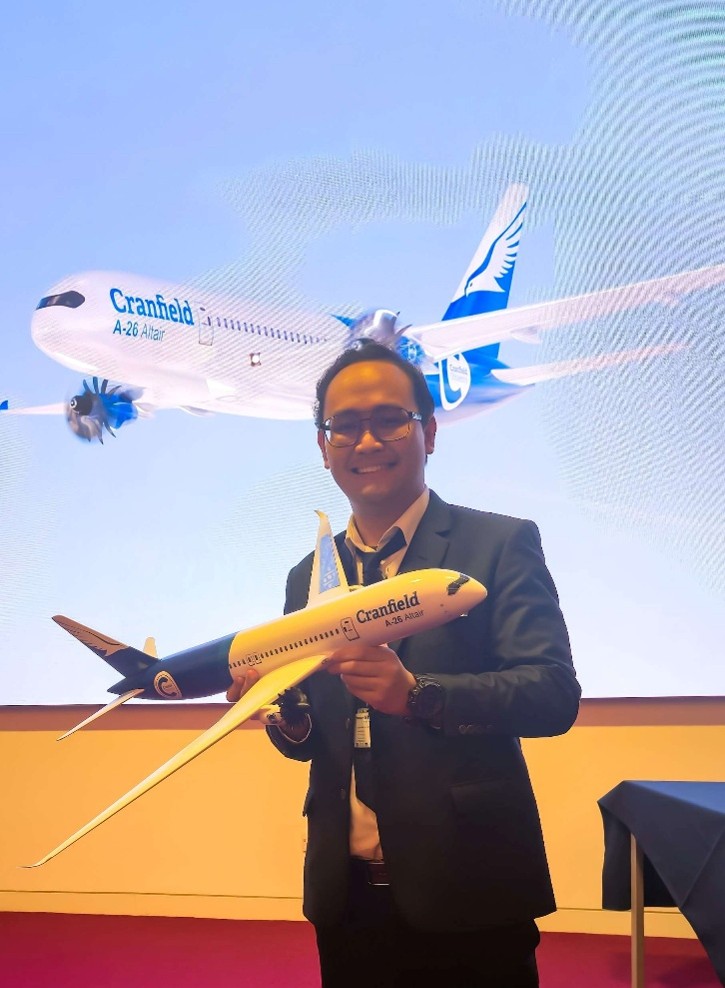
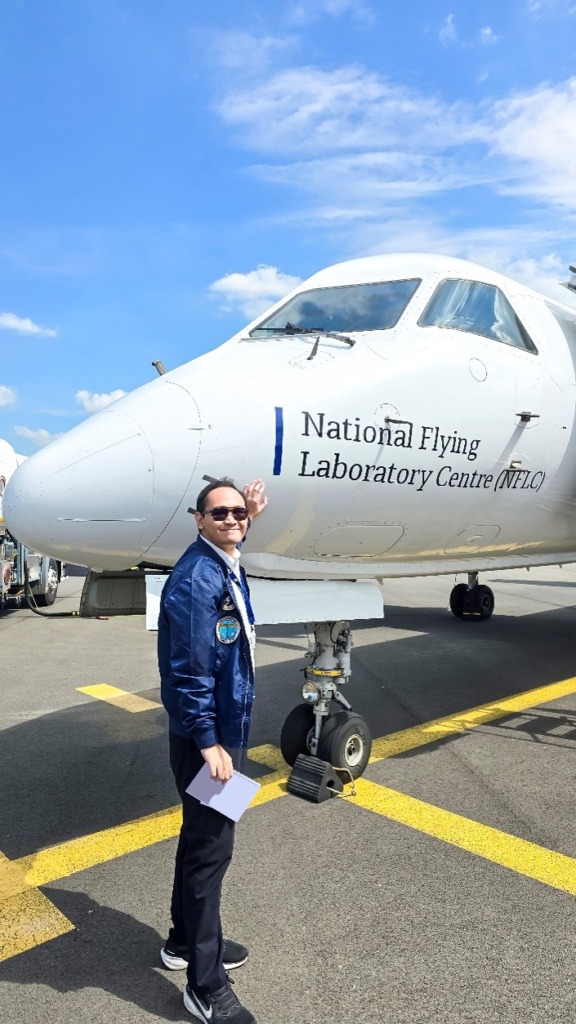
Cranfield stood out most because of its reputation in the global aerospace industry where the institution has educated and trained aircraft designers for almost eight decades, and the cutting-edge specialist facilities such as the National Flying Laboratory Centre (NFLC).
Why did you choose Cranfield?
I previously completed my BSc in Aerospace Engineering at the Bandung Institute of Technology (ITB) in Indonesia, where I also earned a BSc (Hons) in Applied Mechanical Engineering from Coventry University, through a joint degree programme.
I have since had the privilege of working as a Flight Control System Engineer at Indonesian Aerospace, joining their Design Organisation Approval (DOA) team and working on several turboprop aircraft types that the company designs, manufactures, and assembles, before starting my MSc in Aerospace Vehicle Design (Aircraft Design option) in March 2026.
I had been planning to pursue an aerospace engineering master’s degree during my undergraduate studies to deepen my understanding of the industry and open new career opportunities in the field.
Many of my colleagues and senior engineers at work have also completed their master’s or doctoral degrees at Cranfield, and they encouraged me to pursue an MSc before returning to my workplace.
What have been your course highlights so far?
The highlights of the course’s first term have been the Group Design Project and the NFLC flights.
In the Group Design Project, the cohort was tasked with designing an aircraft based upon requirements that had previously been established by university members of staff, with a timeline of approximately six months.
The design requirements themselves were uniquely challenging, as the aircraft itself had to be environmentally benign to meet future net-zero emission targets whilst meeting its projected performance and specifications, and current aerospace safety standards.
The design teams within the cohort had to develop distinctive and original solutions to address the aforementioned challenges, whilst maintaining clear and consistent inter-departmental communication so everyone was designing the same aircraft.
To indirectly quote my course director, the best way to learn to design an aeroplane is to design an aeroplane, which emphasises the practicality and how “hands-on” and collaborative the project is.
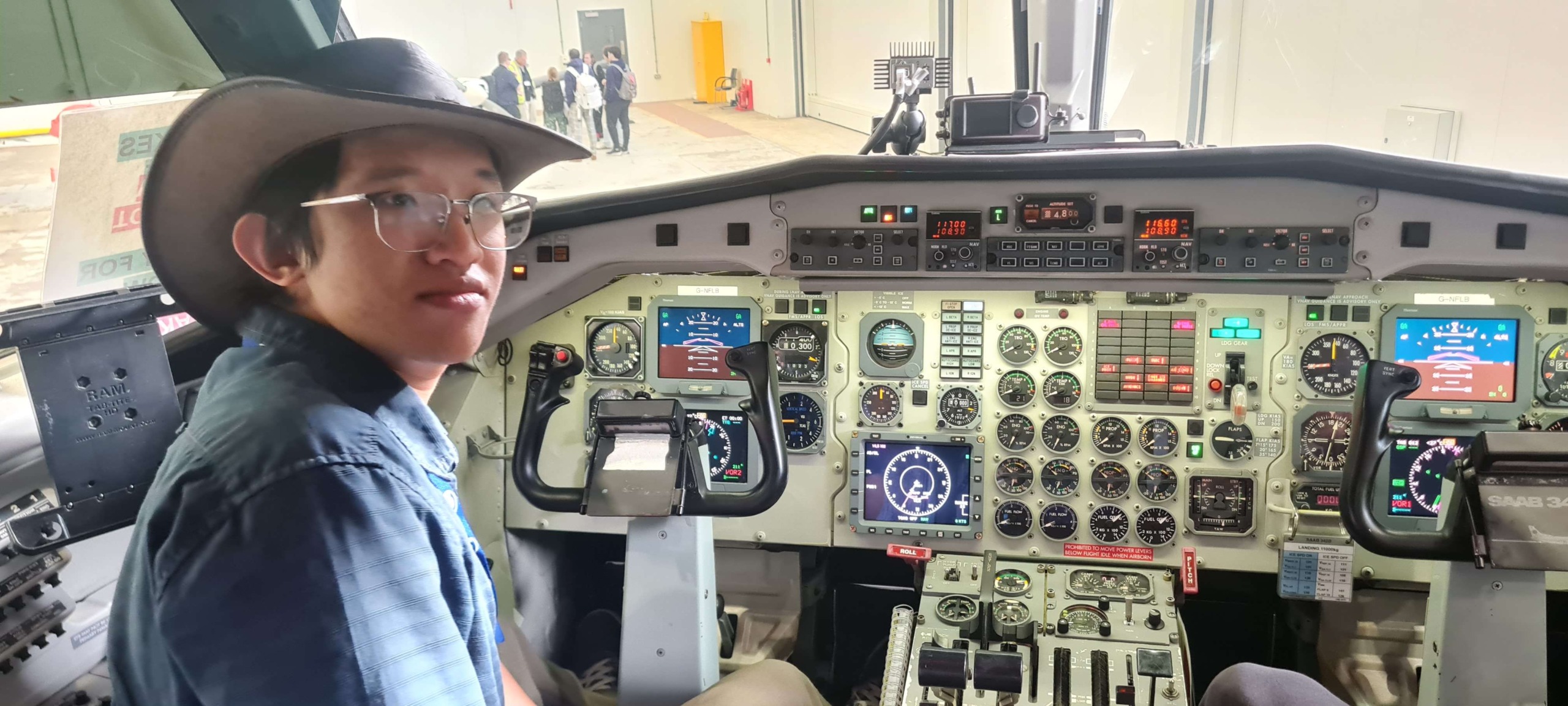
Another key highlight of the first term was the NFLC flights in the Saab 340B+ “Flying Laboratory” and the Slingsby T67 Firefly light aircraft, which served as practical sessions showing how aeroplanes really behave in the sky, rather than through experiments or simulations on the ground that “mimic” flight.
In the Saab, students recorded aerodynamic and flight dynamics parameters in a Flight Test Engineering (FTE) setup as Task Specialists, while taking a test flight around Cranfield and performing multiple manoeuvres a commercial airliner would not normally do, including short-period pitching oscillations, phugoids, and Dutch rolls.
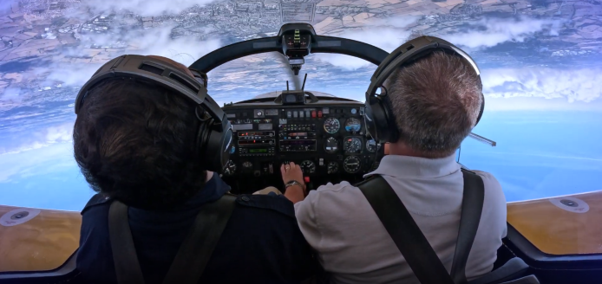
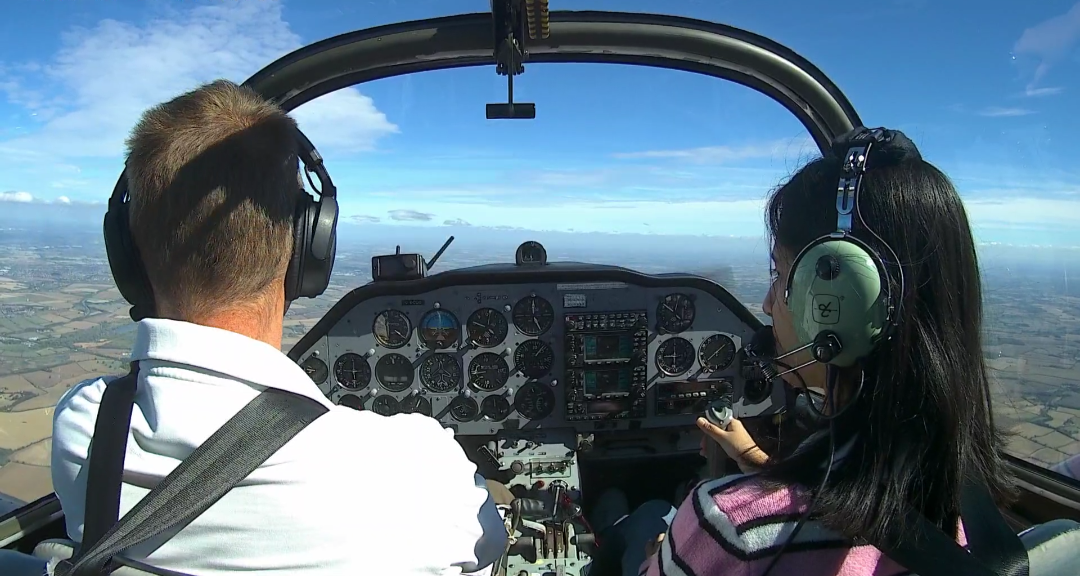
The flight in the Slingsby took things further, where the students flew in the cockpit with an NFLC flight instructor and were guided and shown how pilots manipulate the controls to produce the aforementioned flight characteristics.
The students were also given control of the aircraft during less-demanding phases of the flight, where they were literally flying the aeroplane. The flight in the Slingsby concluded beautifully with several aerobatic manoeuvres, such as barrel rolls, the Hammerhead, and the loop.
What have you found helpful during your MSc?
I found that the Cranfield members of staff and lecturers are very willing to help you to succeed in your studies. As long as you put in the effort to achieve your goals during the course and are willing to ask for help when you need it.
I am also grateful that my colleagues in the cohort are highly supportive of one another, especially around important milestones such as the Critical Design Review of the GDP.
Are there any facilities that have stood out to you?
I am not trying to be hyperbolic, but perhaps the NFLC flights were unrivalled.
I don’t think many aerospace educational institutions in the world, especially public ones, offer as much hands-on experience as Cranfield does.
Not many universities let students touch the controls of an actual aeroplane in flight, let alone have a fleet of aeroplanes consistently flying for research and inspiring the next generation in aviation, plus an airport on site.
What are you looking forward to during the course?
I am looking to complete my Individual Research Project (IRP) in the upcoming three months before completing my studies at Cranfield. I finished all my modules during the first term, as most were designed to support the GDP and IRP.
However, I have heard the university plans to organise corporate visits to several local aerospace companies in the near future, before the course ends, so I’m really looking forward to those.
What are your next steps after completing your MSc?
I am currently on study leave from my employer, which means I will return to work as a Flight Control System Engineer after I complete my studies at Cranfield.
In the near future, I hope to apply my insights and knowledge about aircraft design, particularly airframe systems, that I have studied at Cranfield to what I do at work so that I can help improve current and future aeroplane types that my employer designs and manufactures.
In the long run, I would like to help develop aircraft that enable access to healthcare, education, and economic opportunities, whilst supporting the delivery of essential supplies and emergency assistance in trying times such as during natural disasters.
I hope to combine my Cranfield experience with my professional background to help design and create aircraft whose value is measured not only by their technical achievements, but also by the connections they make possible and the lives they improve.
Find out more about the Aerospace Vehicle Design MSc at Cranfield University.

Categories & Tags:
Leave a comment on this post:
You might also like…
My aerospace vehicle design journey at Cranfield
In 2007, I watched the Airbus A380 land in Delhi for the very first time. I was just a kid in India, and it was the biggest passenger plane in the world. I asked ...
Solving aerospace challenges at Cranfield University
Solving real world challenges has always been my goal and with the knowledge that I could gain at Cranfield during my master’s, it was not a decision that required a second thought. The interactive ...
Shaping the future of aviation with aerospace vehicle design at Cranfield
When I was three years old, I went on my first plane ride together with my dad; this was on a Boeing 777-200ER and made me very curious about how it all worked. So, ...
From flight control systems to aircraft design
The beauty of aviation has been a big part of my background and the primary driver of my goals and aspirations. My perspective is that it is more than just a method of transportation ...

Search tips for using our online resources effectively
When you begin to search the literature for relevant, good quality academic material, it can feel daunting and, at times, overwhelming. However, it need not be like that. Here are a few ...

Referencing the use of generative AI in your work
We recognise that Artificial Intelligence (AI) has, and will increasingly, become a part of our everyday lives and that we need to adapt to it. Hopefully you will have already seen the guidance for staff ...