


On‑campus or off‑campus? How Cranfield students found their home away from home
21/07/2026
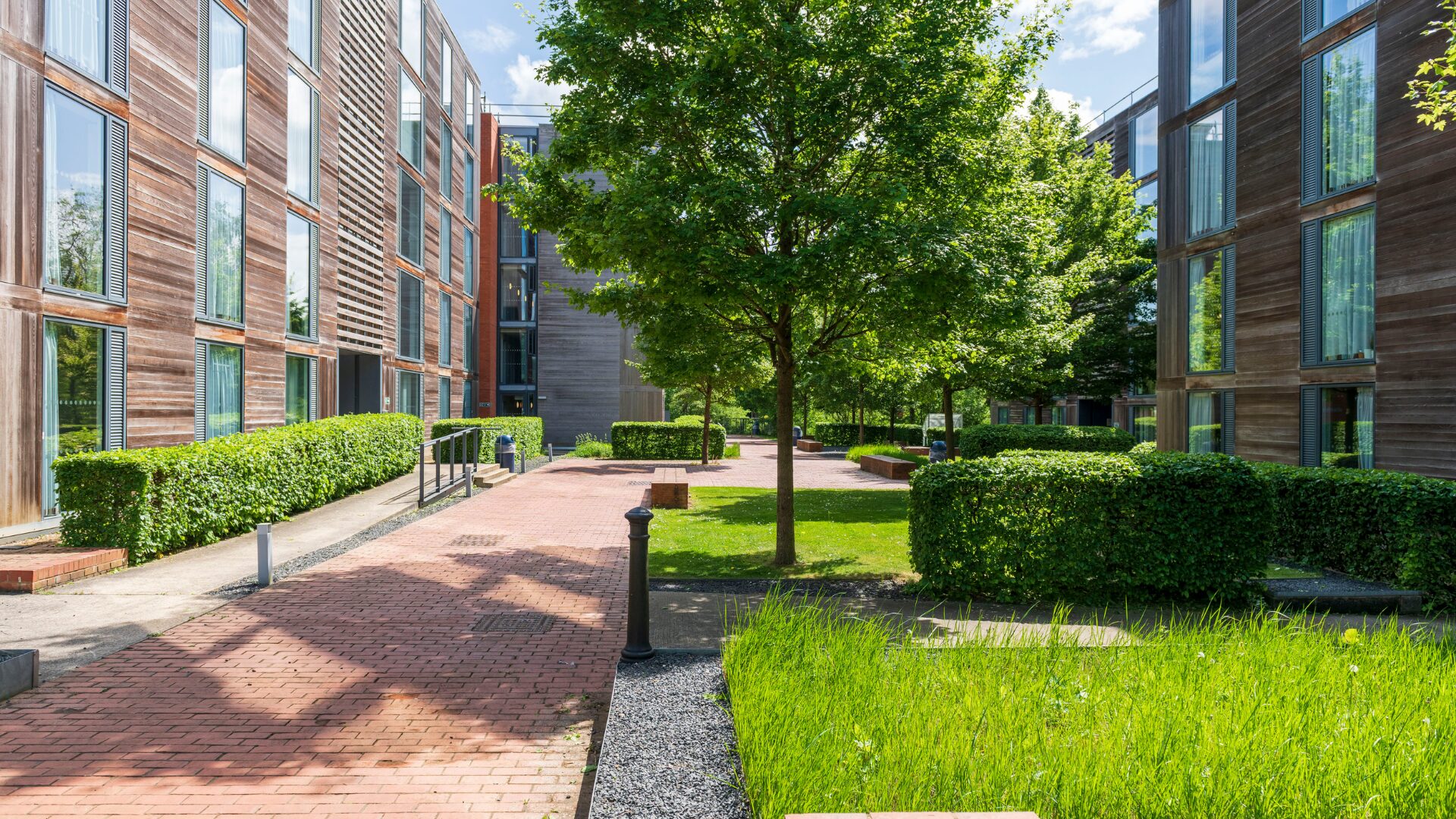
Finding the right place to live is one of the biggest decisions you’ll make as you begin your student journey. Whether you’re looking for the convenience and community of living on-campus or the independence and flexibility of settling in nearby towns and villages, Cranfield offers a range of accommodation options to suit every lifestyle.
To help you make that decision, two of our students share their experiences, Sanya, living on-campus, and Sreshtha living off-campus. Their reflections include how they found their accommodation, what surprised them most, and the advice they wish they’d had before moving in.
Living off-campus: Sreshtha‘s experience in Cranfield Village
My initial plan was to stay in on-campus accommodation because it seemed more convenient and would have made it easier to manage my day-to-day schedule. I started searching about a month before my course began, towards the end of August, as my programme started on 30 September. Unfortunately, I was not able to secure a room on campus, so I had to look for off-campus accommodation at fairly short notice. Ideally, I would recommend starting earlier, but even with a shorter timeline, it was still possible to find a good option through student networks and trusted websites like Rightmove and SpareRoom.
I joined student group chats where I connected with other incoming students. One of the friends I made knew I was looking for accommodation and shared the contact details of his landlord, along with a listing from SpareRoom.
The group chat I was mostly active on was a South Asian chat in WhatsApp. The representatives of that group even held a meet and greet in Mumbai and one online as well. It is a well connected group chat.
Settling into shared accommodation
As this was my first time travelling abroad and living independently, it was reassuring to move into a shared house where I already knew one of the housemates. There were six people living in the house in total. My room was fully furnished, and had everything I needed.
The bus stop was only a two-minute walk from the house, and the commute to campus was straightforward. Depending on traffic, the journey typically takes around 10–15 minutes.
The best part of living off-campus
The best part of living off-campus has been the sense of independence and the opportunity to experience everyday life beyond the university environment. It has allowed me to explore the local area and get a better understanding of what living in the UK is like outside of student accommodation.
Living off-campus has also helped me become more self-reliant and adaptable, which has been a valuable part of my overall student experience.
The biggest adjustment
The biggest adjustment has been sharing a house with other people and adapting to different lifestyles and habits. In a shared house, everyone has their own routines and standards of cleanliness, so it takes communication and flexibility to make things work smoothly.
For me personally, this also meant becoming a bit more outgoing than I normally am, whether that involved discussing kitchen duties or resolving minor issues.
Advice to future students
If I were to do it again, I would start my accommodation search earlier and spend more time comparing different options. Because I was searching at short notice, I relied heavily on a recommendation from a friend, which worked out well overall, but I would have liked more time to explore other properties before committing to a one-year contract. For international students who may not be able to view the property in person, asking detailed questions and requesting additional photos or videos can be especially helpful.
Before you begin searching, think about your budget, the kind of lifestyle you want, and what matters most to you, whether that is proximity to campus, privacy, shared living, or overall quality of accommodation.
It is important to compare properties and make sure the accommodation meets your needs. Also, do not rely solely on photos, read the tenancy agreement carefully before signing.
What questions should students ask landlords or agencies?
Students should ask about:
- The minimum and maximum tenancy period
- Which bills are included in the rent
- What amenities and furnishings are provided
- How maintenance and repairs are handled
- Any rules regarding cleaning or shared responsibilities
- Deposit terms and refund conditions
Living on-campus: Sanya’s experience
Having previously studied abroad in Canada as an international student, I thought I knew what to expect from moving countries. However, every university experience is different, and living on campus at Cranfield made it much easier to build a network and feel at home from the start.
Why on-campus accommodation stood out
Living on campus felt like the best way to immerse myself in university life from day one. As a postgraduate student joining a new community, I wanted to be close to my lectures, University facilities, and social events. It also made it much easier to meet people from different countries and courses, which helped me settle in quickly, and made the transition feel less overwhelming.
Everyone’s priorities are different, so it’s worth considering what matters most to you. Some students may prioritise being close to academic buildings, while others may focus on room type, facilities, cost, or the social atmosphere. Looking at the accommodation options in advance and thinking about your lifestyle can help you make the right choice.
Best thing about living on-campus?
The sense of community. One of the best parts of living on campus is how easy it is to meet people. Whether it’s chatting with neighbours, joining events, or simply running into friends on the way to class, there are always opportunities to connect with others. I’ve met people from all over the world and built friendships that I know will last long after I leave Cranfield.
Walking through accommodation areas, you’ll meet people from a huge range of backgrounds, industries, and countries. Those everyday conversations often become some of the most valuable parts of the Cranfield University experience.
How early should you secure your accommodation?
As soon as you’ve accepted your offer you should apply. With your course offer, you will be sent a login and password for the student web portal (EVE) where you can apply for your preferred accommodation online.
Starting early gives you more options and allows you to make decisions without feeling rushed. It also gives you time to research the different residences and consider what environment would suit you best.
While there are several great options available, applying early gives you the best chance of securing accommodation that matches your preferences, whether that’s location, room type, or budget.
Advice to future students?
I’d recommend thinking about your priorities before you apply. Consider factors such as budget, whether you’d prefer a quieter or more social environment, and how close you’d like to be to teaching facilities. Having any required documents ready and familiarising yourself with the accommodation application process can also make things much smoother.
Cranfield offers shared housing, family homes, apartments for couple, and halls of residence so there really is something for everyone. I’ve been staying in Baroness Young Hall in the studio apartment which I’ve enjoyed and has been most convenient for me when coming back for lunches from my lectures.
For many students, especially international students, travel arrangements don’t always line up perfectly with accommodation move-in dates. If you arrive before your accommodation is available, try not to stress. Temporary accommodation, local hotels, or staying with friends can help bridge the gap for a few days.
My advice is to use that time productively. Explore the campus, attend welcome events, complete any administrative tasks, and start meeting other students. Most people are in the same situation of adjusting to a new environment, so don’t be afraid to start conversations. The first week can feel overwhelming, but everyone is looking to make connections, and you’ll quickly find your place within the Cranfield community.
All of our on-campus accommodation includes utility bills, wi-fi, 24/7 security and ample free parking. With safe communal areas to relax and socialise, plus no travel costs or long commute, living on campus offers comfort, convenience, and a strong sense of community.
For on-campus accommodation queries, please contact: oncampus@cranfield.ac.uk
For off-campus accommodation, you can live in Cranfield village, in the vibrant, modern city of Milton Keynes, or base yourself in the historic, riverside town of Bedford. All locations benefit from transport connections, by UNO bus to campus which is discounted for students, and travel to London takes less than an hour by train.
Please note that rent for private accommodation may not include services such as utility bills and wi-fi. We recommend checking your tenancy agreement for any additional costs.
For off-campus accommodation queries, please contact: offcampus@cranfield.ac.uk


Categories & Tags:
Leave a comment on this post:
You might also like…

5 budgeting mistakes students make (and how to avoid them)
Good financial planning isn't about how much money you have. It's about the habits you build. We asked Dr Lakshmy Subramanian, Course Director for the Banking, Economics and Finance MSc, about the budgeting mistakes ...

Finding your reading materials
Use Library Search Library Search is the first place to start when you are trying to find academic sources for your work. This is the search box on the library website homepage. It allows you ...

Formula 1 was the dream and Cranfield was the conduit
I still remember the exact moment Formula 1 (F1) got its hooks into me. I was in my first year of an aerospace undergraduate engineering degree when I watched a video about the sport ...

Introducing Barrington Library
Welcome to all our new students! Barrington Library supports all the students and staff at Cranfield Defence and Security on the Shrivenham site. We are looking forward to meeting you all soon, in person or ...

About to start your journey at Cranfield? We’re here to help!
Congratulations on accepting your offer to study at Cranfield! If you’re keen to get a head start before your course begins, our Library Services team is here to support you every step of the way. ...

Bank holiday hours for Library Services: Monday 31 August
Library Services staff will be taking a break on Monday 31 August for the bank holiday. You will still be able to access all the resources and help you need via our library website. The 24/7 ...