

How do I reference… a foreign language item in the APA7 style?
21/11/2024
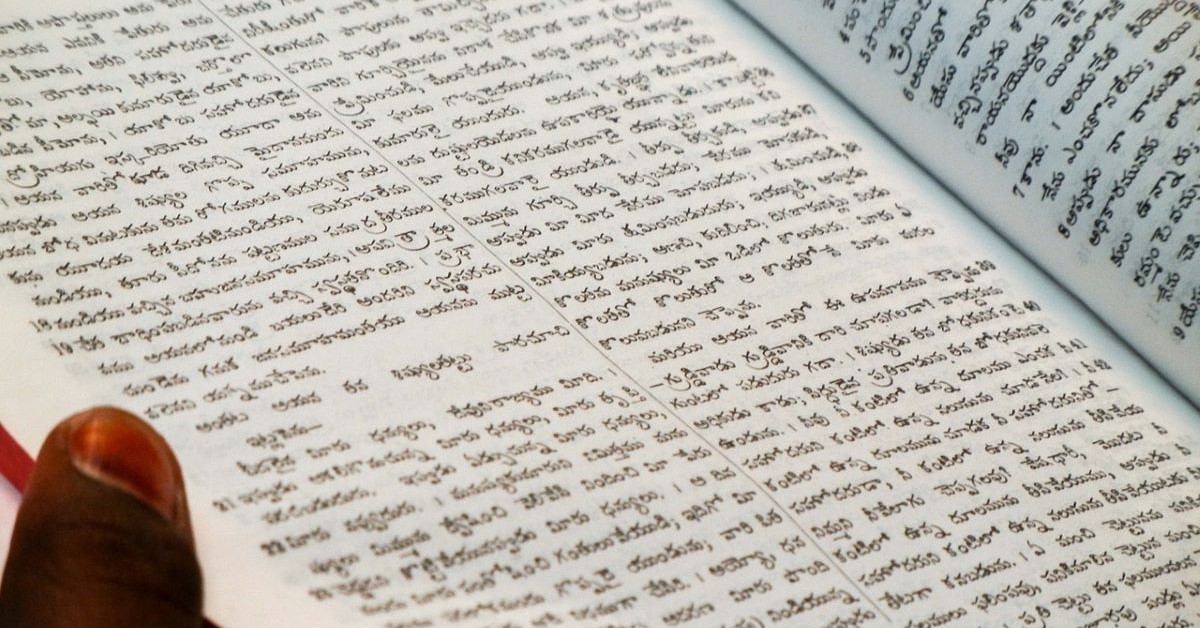
Students sometimes ask if it is permissible to include non-English language items in their work and references. The answer is yes. You can include sources written in a language other than English provided that they are relevant to your work. When you use a non English-language source please take care to ensure that your translation or paraphrase is accurate and conveys the original meaning precisely.
When you use a translation in your own work, be aware that your translation is considered a paraphrase and not a direct quotation. With this in mind, the in-text citation for the translation should simply include the author and date of the original material. If however you want to make life easier for a reader who does speak the language of the work, you can include a page number in the citation. The following APA blog post may give further clarification.
The reference for a source in a language other than English follows the typical APA Style formatting for the source, and presents the original title of the work and the English translation of the title in square brackets.
A journal article requires the following elements to create a bibliographic reference – now with the addition of the translated title inside square brackets.
- Author(s) of the article (Surname, Initials.)
- (Year of publication).
- Title of article [English translation of title of article].
- Title of the journal in full – in italics,
- Volume – in italics(Issue – not in italics)
- Page details.
- DOI or web address – if available
Citing and referencing a journal article in another language:
Here we have an article from a French journal. We cite and reference it as follows:
In-text citation:
Parenthetical citation: (Lebat et al., 2013)
Narrative citation: Lebat et al. (2013) argued that…
Bibliographic reference:
Lebat, H., Farhat, S-L., Andreu, S., Cros, L., Rocher, T., Magnan, A., & Ecalle, J. (2013). Les évaluations des enseignants en grande section de maternelle sont-elles prédictives des difficultés de lecture au cours préparatoire [Assessment of early knowledge predictive of learning to read in the final year of kindergarten]. Revue Française de Pédagogie, 184, 41-54. http://doi.org/10.4000/rfp.4219
Citing and referencing a journal article in a language written in a different alphabet:
If the language of your source document is written using a different alphabet, if possible try to transliterate into the Roman alphabet.
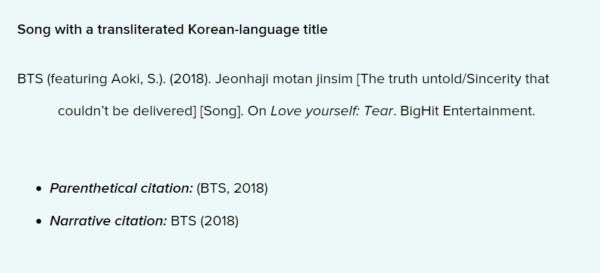
Example from APA blog post, ‘When and how to transliterate titles in references’, August 23 2021.
If transliteration is neither possible nor desirable, you can leave the original alphabet title then simply provide the English translation straight afterwards, as with the French example above.
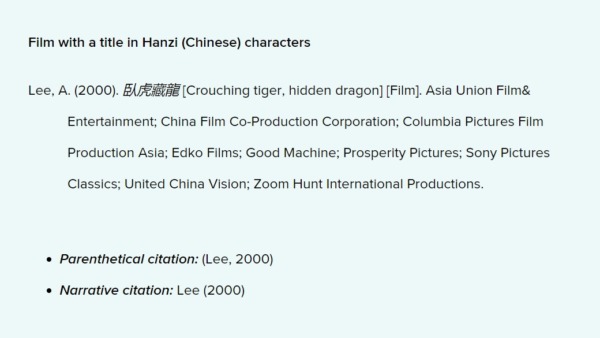
Example from APA blog post, ‘When and how to transliterate titles in references’, August 23 2021.
Further information and more examples on this can be found in the APA blog post When and how to transliterate titles in references from August 23 2021.
Any questions about referencing? Consult our Referencing and Plagiarism pages or drop us an email here.
Please note: Cranfield supports two different referencing styles – APA7 (Author-date) and Numbered (NLM). Please make sure you use the style preferred by your supervisor or lecturer. The advice above relates only to the APA7 style. If you have any questions about referencing, please contact the Library.
Feature image from Pixabay. Available at: https://pixabay.com/photos/asia-india-travel-bible-scriptures-2753733/

Categories & Tags:
Leave a comment on this post:
You might also like…
Introducing Kings Norton Library
Welcome to all our new students! We are looking forward to meeting you soon. You will find Kings Norton Library in the centre of the Cranfield campus, and it is open 24/7 to all staff ...

Setting your research on the right course: Four questions every researcher should ask
Whether you are just beginning your doctoral journey or are already well into your research career, successful research rarely happens by accident. Like any successful mission, it depends on good planning, informed decisions, and getting ...

5 budgeting mistakes students make (and how to avoid them)
Good financial planning isn't about how much money you have. It's about the habits you build. We asked Dr Lakshmy Subramanian, Course Director for the Banking, Economics and Finance MSc, about the budgeting mistakes ...
Finding your reading materials
Use Library Search Library Search is the first place to start when you are trying to find academic sources for your work. This is the search box on the library website homepage. It allows you ...

Formula 1 was the dream and Cranfield was the conduit
I still remember the exact moment Formula 1 (F1) got its hooks into me. I was in my first year of an aerospace undergraduate engineering degree when I watched a video about the sport ...
Introducing Barrington Library
Welcome to all our new students! Barrington Library supports all the students and staff at Cranfield Defence and Security on the Shrivenham site. We are looking forward to meeting you all soon, in person or ...