

Archaeologists at Cranfield make a splash in the world of underwater research
15/12/2023
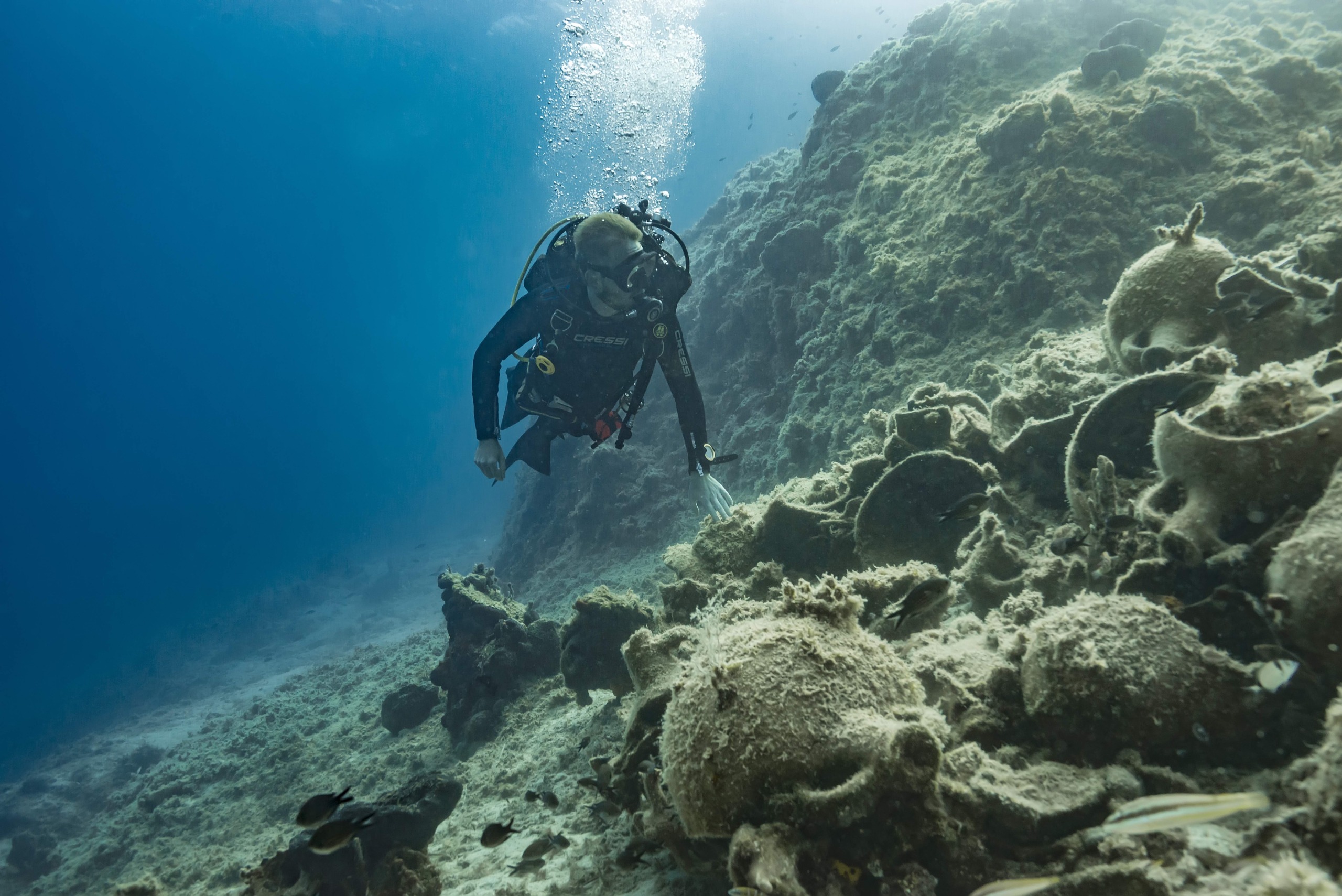
What do shipwrecks, sunken cities, aircraft, submerged landscapes, and underwater caves have in common? They are all part of our submerged past and are being examined by underwater archaeologists all over the world, including our own experts here at Cranfield University.
Over the past few years, we’ve been augmenting our above ground archaeology work by leading major research into underwater sites around the world.
A new article in Archaeological Reports titled Shipwreck archaeology in the past 10 years examines the trends, topics and research directions in shipwreck archaeology over the past decade. In the paper we talk about how the challenges of working underwater have encouraged maritime and underwater archaeologists to embrace technological developments at a rapid pace.
Fieldwork projects
Over the past year, fieldwork projects in Poland and Sicily relied on the expertise of our researchers in underwater survey techniques and created opportunities for Cranfield students to gain experience in the field.
In the summer of 2023, we co-directed the first large-scale maritime archaeology survey using micro-autonomous underwater vehicles (AUVs) in the Strait of Sicily. Two Cranfield Forensic Institute (CFI) students joined the team in Italy for hands-on experience working with these cutting-edge marine robots, as the project scanned the seafloor for ancient shipwrecks and explored how micro-AUVs could be used in underwater forensic investigations.
During a recent US Defense Prisoner of War/Missing in Action Accounting Agency (DPAA) mission in Poland, Cranfield archaeologists searched for WWII aircraft which had crashed into the sea in the 1940s. The team used a variety of geophysical instruments including multi-beam, side scan sonar, and sub-bottom profiler to try to locate aircraft on the seafloor.
Student Opportunities
Micro-AUVs, side-scan sonar, and multi-beam are the future of underwater archaeology, and Cranfield students had the opportunity to gain real-world experience using these methods on professional archaeological projects. From fieldwork projects, scientific studies, and contributing to high-impact publications, students at Cranfield can join ongoing expedition research projects.
Finding answers in science
Underwater archaeology is an exciting growth sector that helps us address big questions about humanity and the planet.
Dr. Campbell’s research examines these topics through field projects and publications. Field projects in Egypt, Italy, Greece, Poland, and Tanzania address issues of environmental change, trade, and migration from the Bronze Age through to the modern era. Earlier this year, I published Contemporary Philosophy for Maritime Archaeology, combining current philosophical advancements centered on climate change with the interpretation of shipwrecks. Recently, Rivers and Waterways in the Roman World was published, which examines the archaeology of rivers within the Roman Empire.
Dr. Briggs’ expertise is on the biomolecules recovered from ancient shipwreck sites and sunken cities, and how they can teach lessons about the past. From extracting ancient DNA from cargo items such as olives stones and grape seeds, to determining the past contents of shipwreck amphorae, my focus is on what the ships were transporting in the past and why.
Students at Cranfield have the opportunity to conduct thesis projects on underwater archaeology and forensics, as well as join field projects. Three recent theses examined survey and documentation methods for best practice in underwater forensics.
Cranfield staff and students are increasingly exploring the watery world of maritime archaeology, delving into shipwrecks, sunken cities and ancient ecosystems.
If you want to find out more about our expertise in this area, or the courses we offer, please visit our website. Let’s dive on in!

Categories & Tags:
Leave a comment on this post:
You might also like…

About to start your journey at Cranfield? We’re here to help!
Congratulations on accepting your offer to study at Cranfield! If you’re keen to get a head start before your course begins, our Library Services team is here to support you every step of the way. ...
Bank holiday hours for Library Services: Monday 31 August
Library Services staff will be taking a break on Monday 31 August for the bank holiday. You will still be able to access all the resources and help you need via our library website. The 24/7 ...

The real cost of studying in the UK – what international students need to budget for
Moving overseas to pursue a postgraduate degree is one of the most exciting investments you can make in your future. It's also one of the most significant financial commitments you and your family will ...
Seven things you should definitely prepare for before studying at Cranfield University
You're thinking about Cranfield. Maybe you've done the virtual tour, read through the course pages, spoken to the course director or attended a webinar. Now, you're trying to figure out what life here is ...

From insurance to aerospace: why I chose to study a PhD with Cranfield
My path to studying for a PhD wasn't exactly a straight line. I had just graduated with an MEng in Aerospace Engineering from the University of Surrey and, like a lot of people, wasn't ...

How to build a business that keeps growing
Ask any business owner about their ambitions and "growth" will almost certainly feature near the top of the list. More customers, higher revenues, larger teams and new markets are often seen as signs of ...