


Researching Deathwatch beetles aboard HMS Victory
22/11/2023
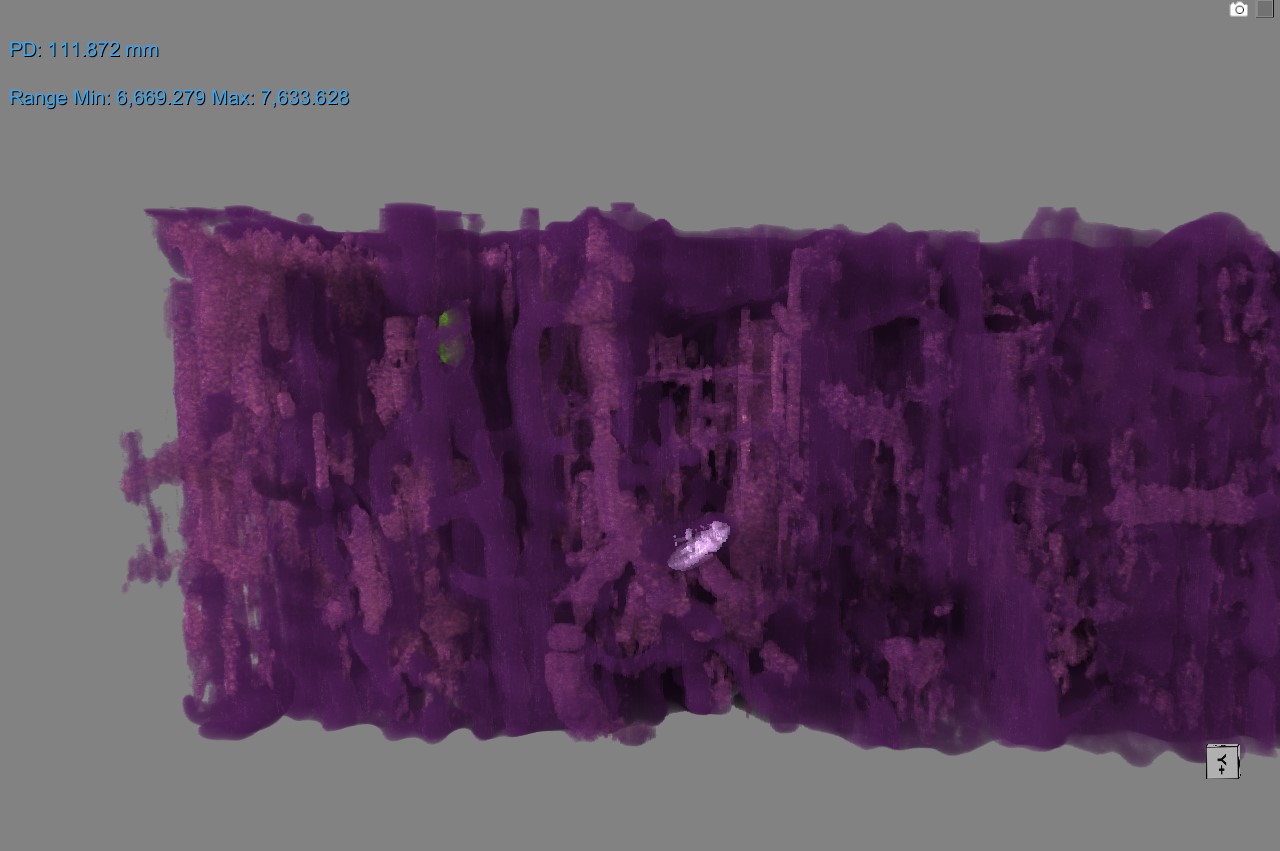
Cathryn Harvey is a current PhD researcher at Cranfield University within the Forensic Institute. She joined a research study project taking place on HMS Victory at the National Museum of the Royal Navy whilst looking for opportunities during the COVID-19 pandemic. Over the coming months she will be sharing with us her story of how, why and where her research will influence studies for decades to come, and how Cranfield University is supporting her.
I’ve long had an interest in history and science, which is what prompted my original decision to study archaeology as an undergraduate. This then matured into a passion for the preservation of heritage, prompted by an excellent lecture by Dr Chris Caple at Durham, and I continued my studies into heritage conservation. I worked at a number of different institutions after graduating, but unfortunately due to the pandemic, I was left unemployed for a year.
During my job hunting, I came across the project advertised on conservation-specific job sites and findaphd.com. Fully funded PhD research topics in heritage conservation are incredibly rare, so I thought I might as well apply for it. Much to my surprise, I was successful, and very excited for the opportunity!
My research title is ‘Investigating the Infestation: Understanding and communicating Deathwatch beetle activity on HMS Victory’. It is jointly funded by Cranfield and the National Museum of the Royal Navy (NMRN), with help from Cardiff University.
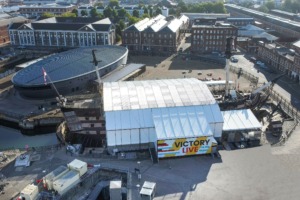
HMS Victory was launched over 250 years ago and is regarded as the most famous ship in Royal Navy history, serving as the flagship in the Battle of Trafalgar (1805) with Vice-Admiral Lord Nelson.
HMS Victory currently sits in Portsmouth dry-dock and is open to museum visitors. The NMRN is taking the ship through a £35 million restoration project to protect her for decades to come. The research being undertaken has been supported and fully-funded with both the Ministry of Defence (MOD) and Gosling Foundation having previously provided £50 million in funding to create the HMS Victory Preservation Trust.
This research is really unique- the last major research into Deathwatch beetles was done in the 1990s and there isn’t much before then either. The previous investigations were largely focused on eradication or behaviours that are easily observed. The tunneling activity hadn’t really been investigated until Cranfield’s partnership with NMRN started (the initial investigations prompted this project).
We’re hoping that we will be able to reveal some really valuable information about Deathwatch beetle tunnelling, which will help inform future conservation plans on HMS Victory. The preliminary investigation into non-invasive detection of the beetles will hopefully instigate further research into the area to develop a more active means of monitoring, allowing for more targeted conservation efforts. The data from the microCT and non-invasive testing was used to develop digital public engagement prototypes that were user tested on visitors to demonstrate to the museum potential means of communicating conservation to the public.
The work we’re doing will be intrinsically linked to how experts, researchers and conservators will analyse future items, artefacts or finds of historical nature. We’re excited to be providing the latest skills and techniques and building on the lessons that were laid out when the original studies took place back in the 1990s.
I hope you follow me with the project and I can tell you how we are developing, how Cranfield is helping me through the process and why some of the best opportunities arrive at the most obscure of times.


Categories & Tags:
Leave a comment on this post:
You might also like…

Moving to the UK to study? How to plan for banking, exchange rates and transfers
Currency and banking are two of the most practical parts of financial planning for international students. They are also often the most overlooked. We asked Dr Lakshmy Subramanian, Course Director for Cranfield University's Banking, ...

Cranfield: an environment where innovation thrives
The latest Knowledge Exchange Framework rankings from UK Research and Innovation (UKRI) gives an insight into the real and meaningful impact that UK universities have. The seven categories that make up KEF6 cover everything ...
How Cranfield accelerated my career in Logistics and Supply Chain Management
After graduating from the MSc in Logistics and Supply Chain Management at Cranfield University, I've been reflecting on the experiences that made my journey so valuable and the impact it has had on my ...

Mendeley: a powerful tool to organise and manage your references
Are you looking for a way to manage your references, create in-text citations and reference lists for your assignments or thesis? If so, you may wish to consider using Mendeley. What is it? Mendeley is ...

Keen to develop your study skills?
Alongside the technical skills and academic knowledge that you will gain on your course, as a Cranfield student you have the opportunity to develop a range of other skills that can enhance your learning experience. ...

The V-conomy: powering the sixth wave of global economic growth
The world could be on the verge of a major surge in economic growth and development, driven by the convergence of AI and clean energy technology. Waiting to ride the K-wave The Russian ...
Comments are closed.