

My student experience on the Safety and Human Factors in Aviation MSc
09/03/2023
In 2021 I suffered from Covid-19. To keep myself busy and avoid such thoughts I avoided reading any news on the pandemic. Which was really hard to do during those times! One day, while I was surfing the internet, I came across an article on the winners of UK Research and Innovation’s (UKRI) Future Flight Challenge. Cranfield University was the winner and it stated how the University aims to “revolutionise aviation and drone usage capable to delivering Covid-19 medical supplies to remote areas.” This sparked an interest into knowing more about the university. I visited their website and ended up browsing the courses they offered. I found one that caught my attention Safety and Human Factors in Aviation MSc.
I applied for the course and was offered a place for 2021/2022 October intake. I was over the moon however; the bubble was burst as my employer informed me that they could not afford to sponsor my tuition fees.
Upon pondering on Thomas A. Edison’s quote, that says, “our greatest weakness lies in giving up. The most certain way to succeed is always to try just one more time.” I wrote an email to the University requesting to defer and be considered for the next year as I would have attained a scholarship which will cover my tuition fees to study in the UK. Please do not ask me which scholarship did I refer to? I did not even know, but I was quite confident that I would study in Cranfield University, I knew I would find someone who will see the fire in me. I deferred for that year and was admitted for 2022/2023 September intake.
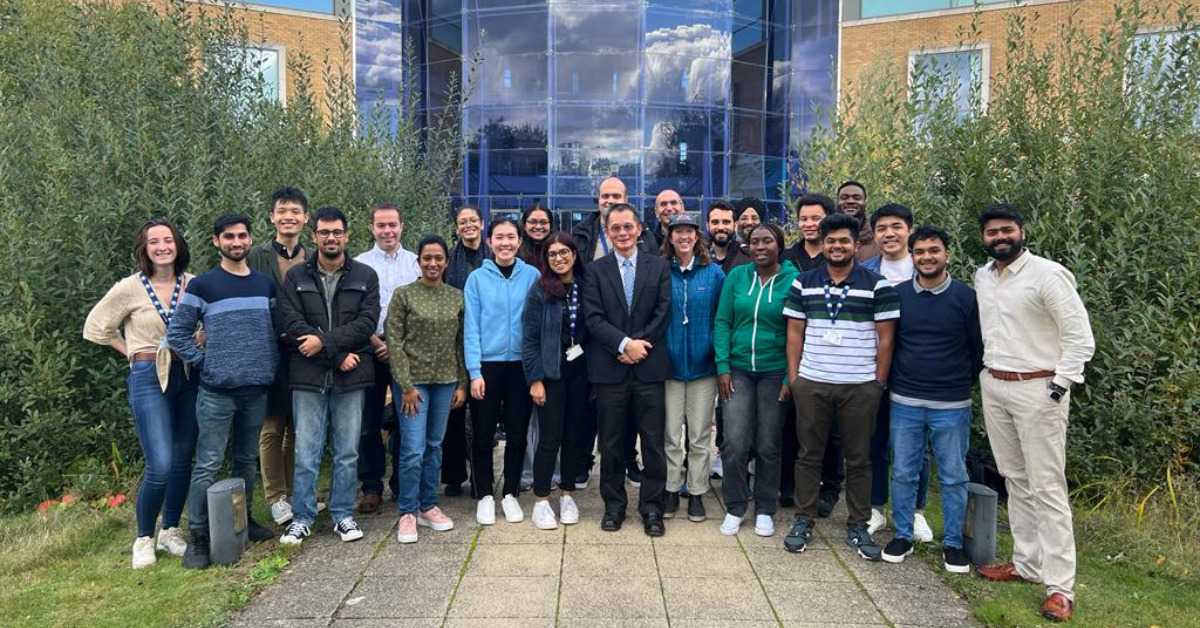
To study Safety and Human Factors in Aviation MSc, Chevening scholarship made it possible. The Chevening scholarship allows outstanding emerging leaders worldwide to pursue a master’s degree in the UK. I was part of the two percent that was awarded the full scholarship out of 58000 applicants in 2022. Having worked for more than six years in military aviation I developed a need to understand cockpit designs’ compatibility with humans, the contributory factors leading to unsafe system conditions and pilot attention allocation pattern. Human Factors in Aviation is not a common area from where I come from. So, I aim to change the narrative back home. Since I already hold a MSc in Psychology, graduating from this MSc course and my experience should help me pursue registration as the first Aviation Psychologist or a Human Factors Specialist in the country!

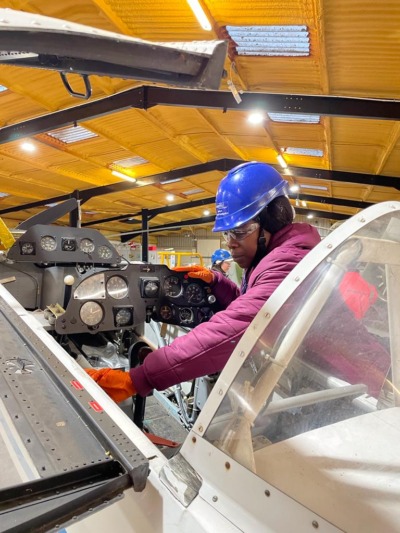
I could not wait to be at a University with its own aircraft and thriving airport to make my dreams come true in the aviation industry. The course has been more than I imagined. Just to mention a few skills I have developed, an understanding of the regulatory background of Safety Assessment of Aircraft Systems, ability to critically assess analysis techniques used in accident investigation and describe the accident investigation process as it applies to aviation.
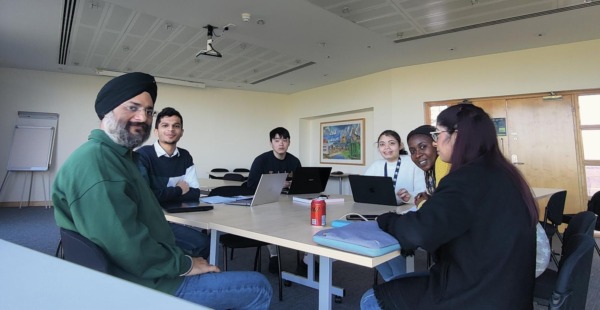
I have met amazing people during the course as we are like a fruit salad. My class is characterised as a multi-cultural group that loves and respects each other and are always eager to learn from one another. I love how we break out into groups for group work. The course is designed in a way that we receive lectures from reputable industry experts. As I am about to complete my taught modules, I have started preparing for my group project. I look forward to the Student Experience Flight in the National Flying Laboratory Centre’s (NFLC) light aircraft. During the flight I will have “controls”, this is aviation lingo meaning I will take control of the aircraft. The flight is approximately 1 hour.
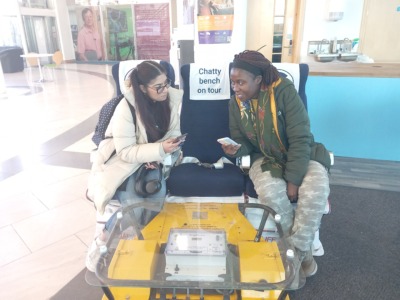
On the social aspect, it has been exhilarating to visit the Whipsnade zoo and Buckingham Palace, capturing every moment.
I hope to be a Human Factors Specialist or an Aviation Psychologist who can bring new ideas and developmental goals in my country as far as Aviation is concerned. Cranfield University just planted the seed and for its growth I need to water it by applying what I have learnt.


Categories & Tags:
Leave a comment on this post:
You might also like…

Keen to develop your study skills?
Alongside the technical skills and academic knowledge that you will gain on your course, as a Cranfield student you have the opportunity to develop a range of other skills that can enhance your learning experience. ...

The V-conomy: powering the sixth wave of global economic growth
The world could be on the verge of a major surge in economic growth and development, driven by the convergence of AI and clean energy technology. Waiting to ride the K-wave The Russian ...

Need help using the Python programming language?
We know some of our students are currently trying to learn Python, so we wanted to make you aware of some great LinkedIn Learning videos that can help. But don't you have to pay for ...

What does it really take to become a Chevening Scholar?
Say “Turkmenistan” to most people and you’ll get a blank look. That was true when I left Ashgabat for the UK to study an MSc in Logistics and Supply Chain Management at Cranfield University ...

Get a head start on referencing and plagiarism
We offer a module on Referencing And Avoiding Plagiarism which you can find on your Canvas dashboard. It explains the role and importance of citing references and how to incorporate the work of other authors ...

How Cranfield shaped my journey as an Aerospace Engineer
If I'm being specific about the moment it clicked, it was reading a paper called "On the Role and Challenges of Computational Fluid Dynamics (CFD) in the Aerospace Industry" by two Boeing engineers, P. ...
Comments are closed.