

New IEEE route to gold open access for UKRI-funded research
23/01/2023

You probably know by now that if you publish a paper that acknowledges funding from UKRI (including Innovate UK) it must be made open access immediately upon publication with a CC-BY licence. To remind you, there are two routes to open access that comply with UKRI’s policy for papers accepted after 1 April 2022:
Route 1 – publish in a gold open access journal with a CC-BY licence. We have many publisher deals which allow all authors to publish gold without incurring a fee, not just those who are acknowledging UKRI. For more information about our deals please check our web pages here. If you wish to publish in an open access journal that isn’t included in one of our deals (such as an IEEE gold journal) visit our page to find out if you qualify for funding, and how to apply for it.
Route 2 – publish your paper in an IEEE subscription journal or conference proceedings. This route allows you to deposit the author accepted manuscript (AAM) in a repository (CERES!) at the time of final publication, with no delay (or ‘embargo’) and with a CC-BY licence.
If your paper is going to appear in one of IEEE’s subscription journals or conferences and it acknowledges UKRI funding, then the IEEE has created a manual workflow that you must follow to achieve Route 2. You need to:
- Send an email to IEEE’s Intellectual Property Rights group at copyrights@ieee.org as soon as you submit your article. Your email should explain that the paper acknowledges UKRI funding and as you are publishing via Route 2 you are requesting that they apply a CC-BY licence to the AAM.
- You must also include this piece of text in the funding acknowledgement section of the manuscript, and any cover note accompanying the submission: “For the purpose of open access, the author(s) has applied a Creative Commons Attribution (CC BY) license to any Accepted Manuscript version arising.” This text is called the Rights Retention Statement, or RRS.
- Let Library staff know – please send a copy of the AAM to researchsupport@cranfield.ac.uk and explain that you have requested a CC-BY licence and included the RRS. We will add the paper to CRIS so that it appears on the web profiles of all the Cranfield authors, and we will also arrange to share the AAM on CERES with the correct licence.
Don’t forget that all papers acknowledging UKRI funding must also include a data availability statement, even where there are no data associated with the article, or the data are inaccessible. Our website contains everything you need to know about writing a data availability statement.
If you have any questions about this process, please contact your Research Support Librarian or our Research Data Manager. We are always very happy to advise you.
Further information:
- IEEE’s web pages explaining how to comply with the policy
- Our UKRI open access policy web pages
- Our Creative Commons web pages
Photo by Finn Hackshaw on Unsplash

Categories & Tags:
Leave a comment on this post:
You might also like…
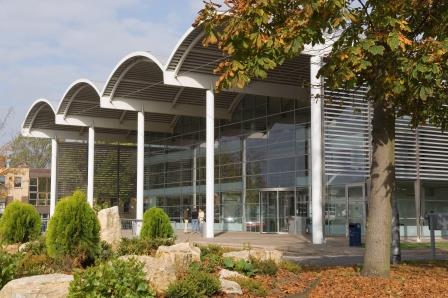
Introducing Kings Norton Library
Welcome to all our new students! We are looking forward to meeting you soon. You will find Kings Norton Library in the centre of the Cranfield campus, and it is open 24/7 to all staff ...

Setting your research on the right course: Four questions every researcher should ask
Whether you are just beginning your doctoral journey or are already well into your research career, successful research rarely happens by accident. Like any successful mission, it depends on good planning, informed decisions, and getting ...

5 budgeting mistakes students make (and how to avoid them)
Good financial planning isn't about how much money you have. It's about the habits you build. We asked Dr Lakshmy Subramanian, Course Director for the Banking, Economics and Finance MSc, about the budgeting mistakes ...

Finding your reading materials
Use Library Search Library Search is the first place to start when you are trying to find academic sources for your work. This is the search box on the library website homepage. It allows you ...

Formula 1 was the dream and Cranfield was the conduit
I still remember the exact moment Formula 1 (F1) got its hooks into me. I was in my first year of an aerospace undergraduate engineering degree when I watched a video about the sport ...

Introducing Barrington Library
Welcome to all our new students! Barrington Library supports all the students and staff at Cranfield Defence and Security on the Shrivenham site. We are looking forward to meeting you all soon, in person or ...
Comments are closed.