

Graduating from Cranfield University
27/07/2022
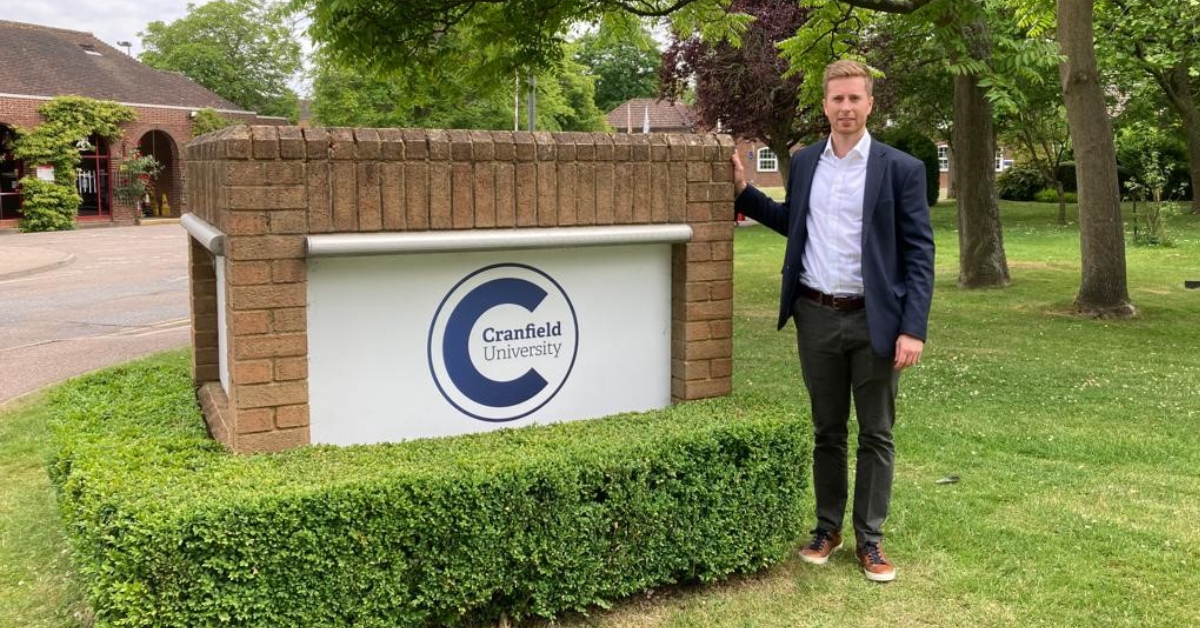
How did you hear about Cranfield University?
I work for an aerospace company, and Cranfield University has an outstanding reputation within the aerospace industry. I had recently joined the Additive Manufacturing technology department at the company, and some colleagues heard that Cranfield had launched a Metal AM MSc course and encouraged me to take a look at the course description online.
Why did you choose Metal Additive Manufacturing MSc?
Additive Manufacturing is a growing field with many industries looking to exploit AM processes. I joined my company’s AM technology department without any prior AM knowledge. I was gaining heaps of practical experience, but it also identified gaps in my theoretical knowledge. I read the course details and was pleased to see many modules that covered some of the challenges the team and I faced with AM technology development.
Cranfield’s reputation in the industry and world-leading research in Additive Manufacturing, in particular WAAM, and the fact that I could do the course part-time alongside my job, made it a perfect fit for me.
What skills did you acquire during your MSc?
Where to start! The module subjects cover all the fundamental and technical aspects of Additive Manufacturing. It has deepened my knowledge of the science behind AM processes and metallurgy or materials, all the way through to the post-processing needed to achieve target requirements and ensure quality. Although this is a technical course, I have been surprised by how many other skills I have developed. For example, I have used methods taught in the General Management module to improve the quality of our company’s project cost analysis and business case assessments. In addition, I was impressed by Cranfield’s support during my thesis. The courses on IT, report writing and how to research subjects were brilliant, along with the regular contact with my supervisor. All this has helped improve my written and verbal communication skills immensely.

Would you have the career you have now without an MSc?
I was already working with Additive Manufacturing. However, the course has significantly increased my knowledge of metal Additive Manufacturing and has given me the confidence to take on leadership roles in projects with more responsibilities. In addition, now having an MSc level education under my belt is a great enabler to pursuing more senior positions.
What are you doing now in your career?
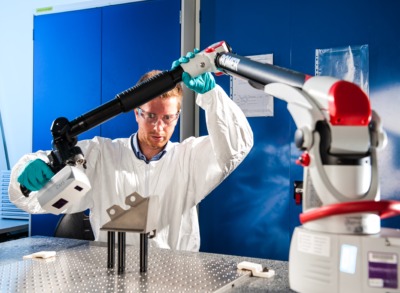
I have been part of an R&D team at GKN Aerospace developing the Laser Powder Bed Fusion (L-PBF) Additive Manufacturing for Aero-Engine components. The Aerospace industry has a high bar for demonstrating quality before new materials and manufacturing processes can be put onto flying aircraft. Therefore, we must prove that the process is robust, capable, and reliable. We do this through many process investigations and material and component testing, following the TRL (Technology Readiness Level) framework. More recently, I have started in a project lead role to utilise the L-PBF process to manufacture parts for an exciting open rotor demonstrator engine. I feel proud to be involved in projects helping achieve the industry’s sustainability and environmental goals.
Do you have any advice to those considering the Metal Additive Manufacturing MSc?
Having been involved in Additive Manufacturing for the last couple of years, I have seen the hype surrounding additive technologies and the reality. Metal Additive Manufacturing is still in its relative infancy, with many challenges to overcome before it can live up to the hype. However, this makes it such an exciting subject to study. There is still so much to learn, develop and invent, and being at Cranfield, surrounded by their expertise and cutting-edge additive technologies, is a great place to start.


Categories & Tags:
Leave a comment on this post:
You might also like…

Introducing Kings Norton Library
Welcome to all our new students! We are looking forward to meeting you soon. You will find Kings Norton Library in the centre of the Cranfield campus, and it is open 24/7 to all staff ...

Setting your research on the right course: Four questions every researcher should ask
Whether you are just beginning your doctoral journey or are already well into your research career, successful research rarely happens by accident. Like any successful mission, it depends on good planning, informed decisions, and getting ...

5 budgeting mistakes students make (and how to avoid them)
Good financial planning isn't about how much money you have. It's about the habits you build. We asked Dr Lakshmy Subramanian, Course Director for the Banking, Economics and Finance MSc, about the budgeting mistakes ...

Finding your reading materials
Use Library Search Library Search is the first place to start when you are trying to find academic sources for your work. This is the search box on the library website homepage. It allows you ...

Formula 1 was the dream and Cranfield was the conduit
I still remember the exact moment Formula 1 (F1) got its hooks into me. I was in my first year of an aerospace undergraduate engineering degree when I watched a video about the sport ...

Introducing Barrington Library
Welcome to all our new students! Barrington Library supports all the students and staff at Cranfield Defence and Security on the Shrivenham site. We are looking forward to meeting you all soon, in person or ...
Comments are closed.