


Finding your reading materials
13/10/2025

Use Library Search
Library Search is the first place to start when you are trying to find academic sources for your work. This is the search box on the library website homepage. It allows you to do a very quick search of our Library Catalogue (for our printed stock) and a selection of our databases.
If you want to do a more in-depth search, we recommend you go directly to the full Library Search system where you can find more advanced search features. You can find a handy link to it on the library website, under the Search resources heading in the blue bar at the top of the page.
Read our quick guide to using Library Search
Note: A large number of our databases are not included in Library Search. If you want to perform a comprehensive search, we recommend you search the individual databases listed in your subject guide. You can find the link to all our subject guides on your library homepage.
Find your course reading list
We manage the reading lists for all Master’s courses online, so you can find them easily and so we can keep them up to date for you. You can find the link to your reading list on Canvas.
Borrow print items
You are welcome to visit either of our libraries to browse the shelves and borrow items. If the item you want to borrow is on loan to someone else, you can reserve it on Library Search and it will be recalled for you. You will receive an email when it is ready for you to collect.
Beyond our collection
Once you start searching for items on Library Search and our databases to widen your reading, you may find things that we don’t have access to either in print or online. And we can help with that too! You can use our interlibrary loans service and we will try to get a copy for you from another library.
Need help?
If you have any problems finding what you need, please just get in touch with us or pop in and speak to a member of staff for help!

Categories & Tags:
Leave a comment on this post:
You might also like…

Formula 1 was the dream and Cranfield was the conduit
I still remember the exact moment Formula 1 (F1) got its hooks into me. I was in my first year of an aerospace undergraduate engineering degree when I watched a video about the sport ...
Introducing Barrington Library
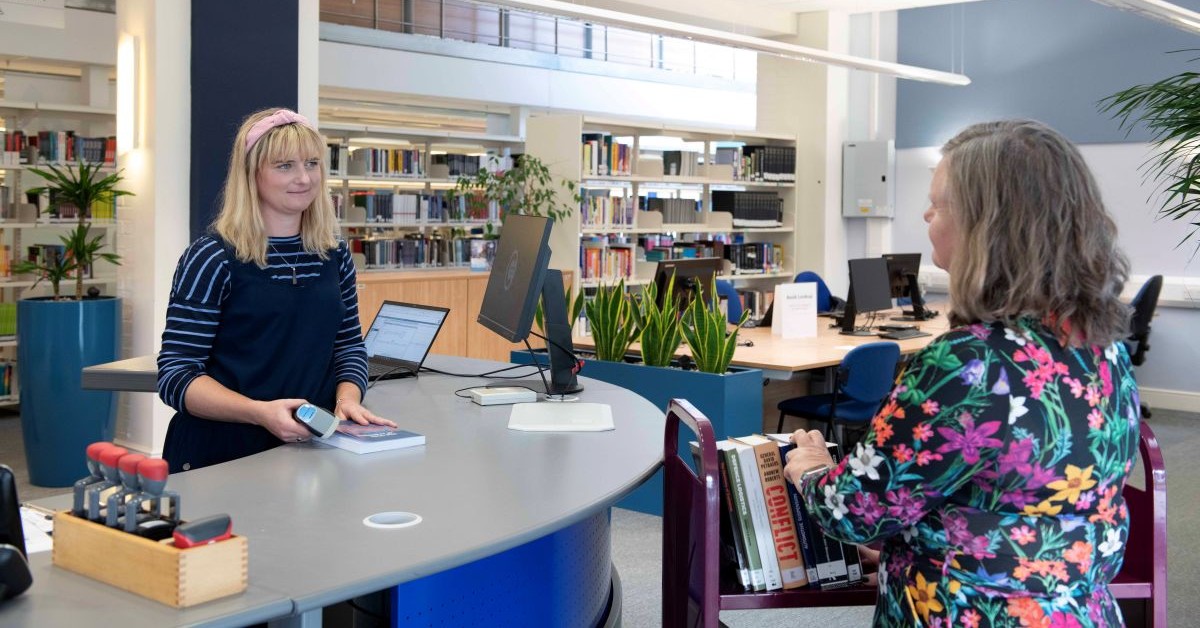
Welcome to all our new students! Barrington Library supports all the students and staff at Cranfield Defence and Security on the Shrivenham site. We are looking forward to meeting you all soon, in person or ...

About to start your journey at Cranfield? We’re here to help!
Congratulations on accepting your offer to study at Cranfield! If you’re keen to get a head start before your course begins, our Library Services team is here to support you every step of the way. ...

Bank holiday hours for Library Services: Monday 31 August
Library Services staff will be taking a break on Monday 31 August for the bank holiday. You will still be able to access all the resources and help you need via our library website. The 24/7 ...

The real cost of studying in the UK – what international students need to budget for
Moving overseas to pursue a postgraduate degree is one of the most exciting investments you can make in your future. It's also one of the most significant financial commitments you and your family will ...

Seven things you should definitely prepare for before studying at Cranfield University
You're thinking about Cranfield. Maybe you've done the virtual tour, read through the course pages, spoken to the course director or attended a webinar. Now, you're trying to figure out what life here is ...
Comments are closed.