


AI marries CFD – My Cranfield MSc
28/06/2021
Welcome back to my latest blog post where I will take you through the in’s and out’s of the 40 credit group project for students taking the Computational and Software Techniques in Engineering MSc.
We started the group project on 1 March, where the introductory briefing was held virtually over Zoom. All students were responsible for organising themselves within teams, allowing us to form teams based on our strengths and skills identified through an online personality test.
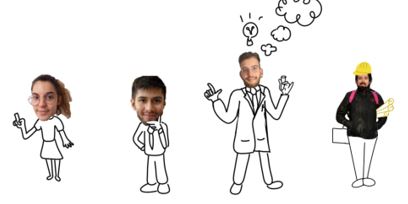
I partnered up with Thomas, Clément and Charlotte, we hit it off immediately as a team! Based on the personality test, all team members covered the essential skill set required to collectively face the project’s challenges. We had Charlotte, who excelled in leadership and management skills, Clément, who was very enterprising and methodological, Thomas, who was filled with creative ideas and finally, me, who has a strong technical and teaching background.
Moreover, all members were assigned so that we all specialised in different options of the same MSc programme and could provide insights from different perspectives. Charlotte and Thomas specialised in the Software Engineering for Technical Computing (SETC) option, Clément in the Computational Engineering Design (CED) option and I was part of the Computational Intelligence for Data Analytics (CIDA) option.
The first week of the project formed our induction week, where we were briefed about the task at hand, which was to try and address the shortcomings of traditional Computational Fluid Dynamics (CFD) by using Artificial Intelligence (AI). All supervisors wanted to make this a very open-ended project to promote creativity within the teams, and therefore, there was no hard fixed aim or target each team was supposed to achieve. Lots of tutorials and initial guidelines were provided during the first week to provide us all with an initial foundation of both CFD and AI methods.

One of the first tasks we completed as a team was to come up with our company name and logo (all groups were meant to function like a start-up company bringing their innovative product to market), and we all agreed on a name we were very proud of: LaminA.I. Charlotte also put her creative skills to work and designed our team logo (as seen above).
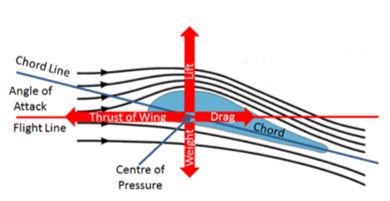
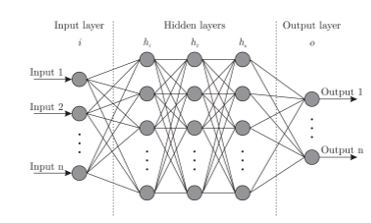
A key attribute that helped our team right from the beginning was that we all shared a common vision of our final goal. This really helped minimise conflicts within the team allowed us to channel all our abilities to achieve the target. We wanted to create an optimisation algorithm to find a set of coefficients that a deep learning neural network can use to predict the lift and drag for a 2D airfoil. Predicting the lift and drag for 2D and 3D geometries is one of the most complex problems for scientists to solve. We, therefore, wanted to think outside the box and adopt an approach that had never been used before in the industry.
We were allowed to safely meet face-to-face and work together in person straight after the induction week. The university had provided group study spaces that we could reserve and use for our meetings. After using the university resources for our daily meetings for the first two weeks, we found it more manageable as a team to meet at each other’s houses since we lived reasonably close to each other and could be more flexible with our meeting times.
Throughout the project, weekly supervisor meetings were also organised to allow all groups to share their progress and discuss any issues they may be facing. The University ensured everyone remained safe during these meetings by requiring all students and staff to get tested for COVID-19 twice a week. Free LFT test kits were provided by the University to all students and staff throughout the teaching and holiday period.
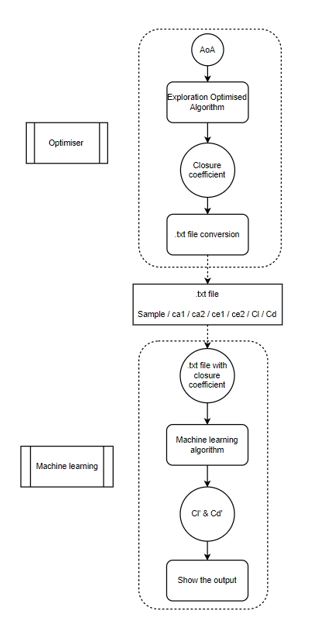
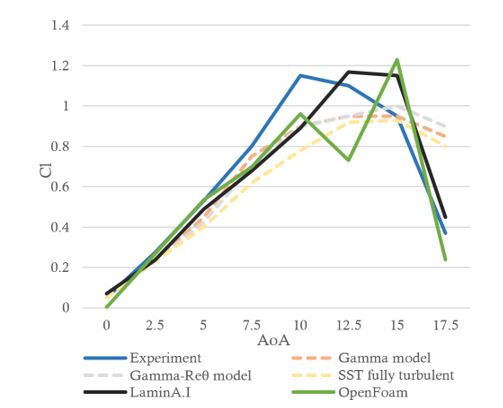
For the project, we used a number of different tools and technologies. We used the University supercomputer Crescent to generate almost 4000 training data samples for the deep neural network, we used Google Colab to train the neural network and we used Python to design a bespoke genetic algorithm for optimising the coefficients for the neural network. After over 1000 hours of combined work, the processing pipeline of the final solution we devised can be seen in the image below. The performance we saw from our product was very impressive, and in many cases, the results were even better than some commercially used tools.
We had our final Powerpoint and poster presentations on the 28 of April, where we got the opportunity to present our work to the supervisors and also to see what creative solutions the other teams had envisaged. It was exhilarating to see how everyone else had approached this problem and to end the year on a high with our entire cohort under one roof for the first and sadly last time this year. Since the only remaining part of this MSc is now the dissertation, many students will be travelling out of Cranfield to do their internships. Finally, we worked together on our group portfolio, which was over 190 pages (!!!) in the end after we added all appendices to encapsulate all the work we did over the span of eight weeks.
This group project was one of the most enjoyable experiences so far during this course, not only from an academic standpoint but also an interpersonal one. Meeting with the group at each other’s homes allowed us to become comfortable as a team very quickly and also develop a strong friendship along the way. Moreover, I think I may have forgotten to mention this earlier, but everyone in the group, bar me, was French. So we all took this opportunity to get to know a bit more about our different cultures and backgrounds. I also made the most of my opportunities and tried to sharpen my skills in spoken French with the team.
As I mentioned earlier, the only part of this MSc that now remains is the dissertation, and in my next blog I will share with you my experience undertaking the final 60 credit dissertation of my MSc. As I write this blog, I am already starting to think ahead to my dissertation project, which involves predicting oil spill patterns in oceans using machine learning techniques. I am already very excited about it and cannot wait to get started!

Categories & Tags:
Leave a comment on this post:
You might also like…
Introducing Kings Norton Library
Welcome to all our new students! We are looking forward to meeting you soon. You will find Kings Norton Library in the centre of the Cranfield campus, and it is open 24/7 to all staff ...

Setting your research on the right course: Four questions every researcher should ask
Whether you are just beginning your doctoral journey or are already well into your research career, successful research rarely happens by accident. Like any successful mission, it depends on good planning, informed decisions, and getting ...
5 budgeting mistakes students make (and how to avoid them)
Good financial planning isn't about how much money you have. It's about the habits you build. We asked Dr Lakshmy Subramanian, Course Director for the Banking, Economics and Finance MSc, about the budgeting mistakes ...
Finding your reading materials
Use Library Search Library Search is the first place to start when you are trying to find academic sources for your work. This is the search box on the library website homepage. It allows you ...
Formula 1 was the dream and Cranfield was the conduit
I still remember the exact moment Formula 1 (F1) got its hooks into me. I was in my first year of an aerospace undergraduate engineering degree when I watched a video about the sport ...
Introducing Barrington Library
Welcome to all our new students! Barrington Library supports all the students and staff at Cranfield Defence and Security on the Shrivenham site. We are looking forward to meeting you all soon, in person or ...