


My Cranfield MSc: Autonomous Vehicle Dynamics and Control
22/03/2021
Hi, my name is Aleksandra and I am from Poland. Since October 2020 I have been an MSc student at Cranfield University on the Autonomous Vehicle Dynamics and Control MSc.
“What is it like to study abroad during the pandemic?”, “Was it difficult to become a student in the UK after Brexit happened?”, “Is it worth choosing a university in the countryside?” – These are all questions I am used to hearing since the beginning of my Cranfield adventure.
But even during the application process, when both Brexit and the pandemic occurred, I had no doubts that this was the place where I wanted to study. In this post, I will try to explain why and tell you a bit about my Cranfield experience after the first semester.
I graduated with a Bachelor’s degree in Automatic Control and Robotics from Warsaw University of Technology in 2020. Immediately after graduating, I started a master’s studies in the same field and I also got accepted to Cranfield University. Thanks to the great support of the Cranfield staff I am now living and studying here, but at the same time, I am continuing my second degree in Poland.
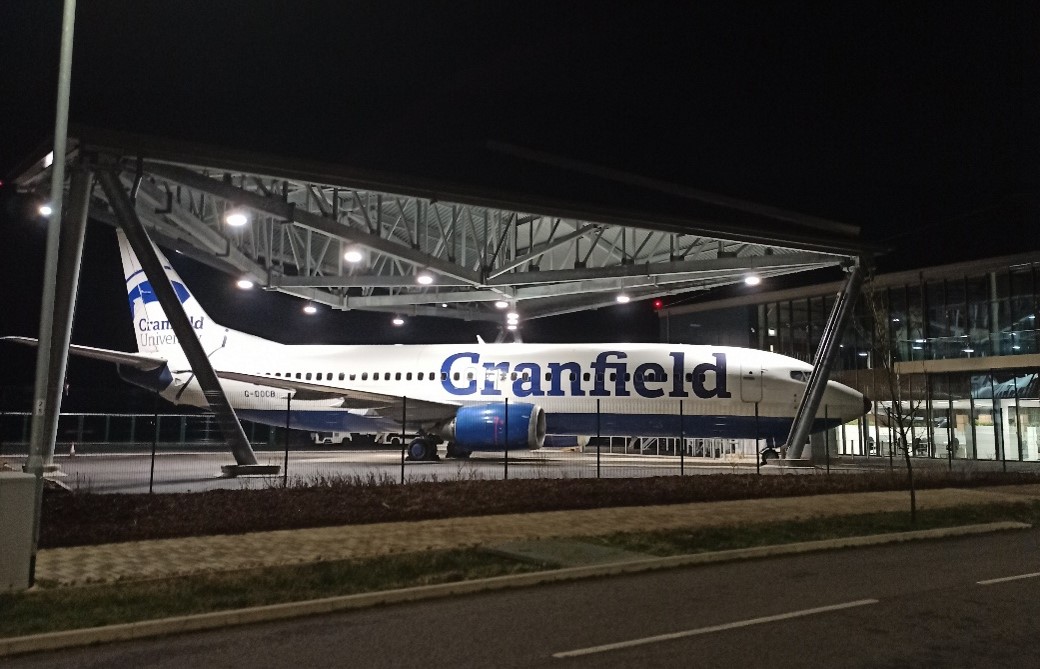
I chose Cranfield University since I wanted to apply the acquired automation knowledge to aerospace. My interest was cultivated greatly during several internships in this field. I knew that Cranfield offered the real-world relevance of topics along with industry-led education. This practical approach to the material covered is the distinguishing factor of Cranfield University. During the AVDC MSc course, we also experienced such, through a series of seminars organised apart from regular lectures. There are also additional opportunities for development via Cranfield’s student associations groups. To make the most of my time here, I joined CranSEDS (Cranfield Students for the Exploration and Development of Space) where I am working as a Control Engineer on the Hybrid Rocket Motor project.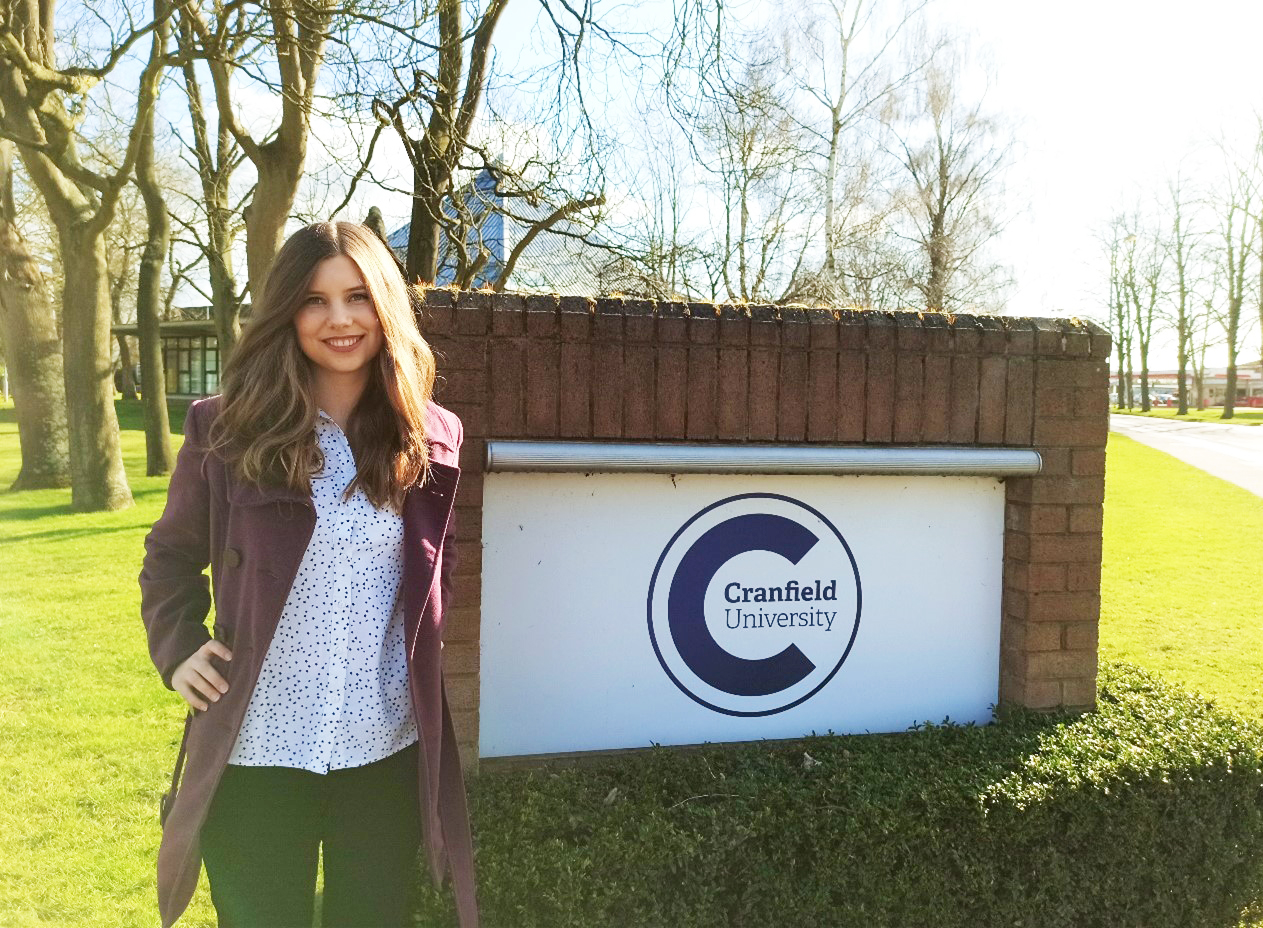
In the AVDC MSc course there are a mix of students with different backgrounds; from mathematics, electrical, industrial or mechanical engineering through to aerospace engineering. This is because the course is interdisciplinary with many areas of interest, thus everyone can find something relevant here, and we are all learning from each other.
What does the AVDC MSc course look like? I am not surprised that you are interested in it! It is truly unique with the combination of subjects and projects offered.
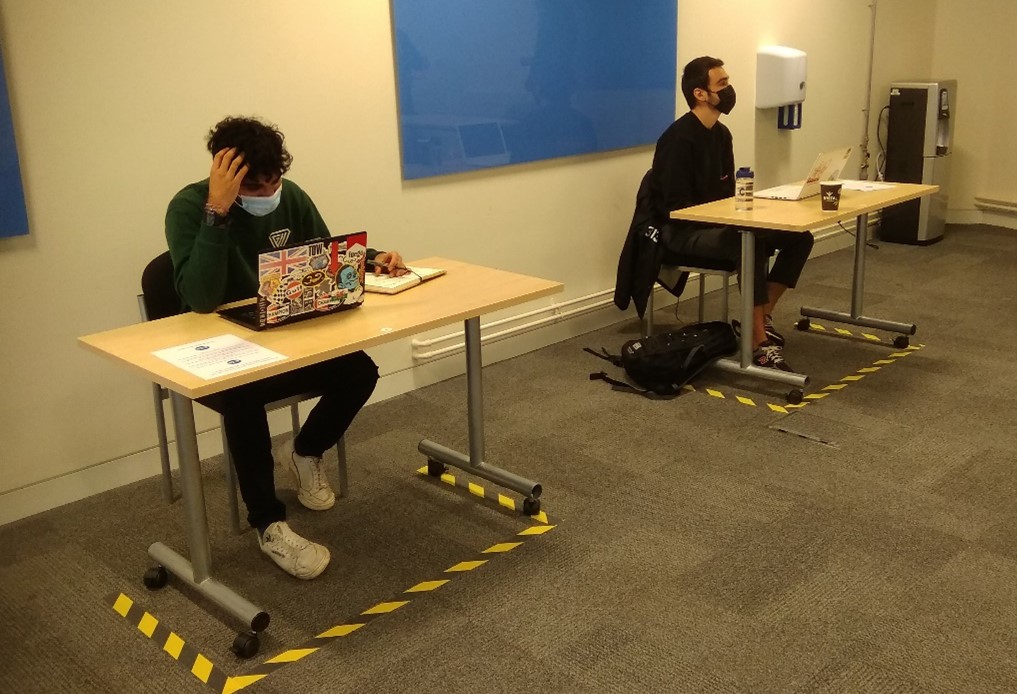
The first semester was focused on eight taught, interconnected, modules sought after in the autonomous vehicle industry. Each of them lasted for two weeks, ending in an assignment. From my perspective, assignments were a good way to summarise the knowledge. They demanded practical implementations of presented methods and usually delved deeper into the content. Although we have been fortunate to have face-to-face lectures in safely organised spaces as long as it was allowed by the government, some of the classes have had to be held online at some point. Yet the lectures were recorded and we still have access to them, which is also helpful whilst working on the Group Design Project (GDP).
Within the GDP, our cohort is divided into two teams working on an innovative topic to create a swarm solution to counter threats imposed by another swarm of UAVs. The project was due to be done on hardware, using real drones defending their territory and attacking the other zone. However, due to the pandemic, only the mission simulations are being prepared – yet this is no less challenging. We are using software that is new to everyone, and we have to implement what we have learned on taught modules, and then go beyond that.
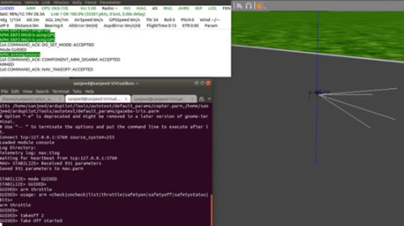
The work for the GDP started during taught modules, and we have been fully focusing on it for the past four weeks. As it is coming to the end, we are now moving towards the Individual Research Project – the last and one of the most exciting parts of the course!
All the projects are sponsored by companies, which strengthens the linkage of the course with industry; everyone has supervisors both from the University and the partner company. Personally for me, this is a great opportunity to have a broader insight into the industry, making a step towards a professional career.
Needless to say that this year is very special. Pandemic has changed it a lot, especially students having a weaker connection with each other as we do not spend time together on a regular basis. We have been unlucky to not experience the practical work with hardware. Yet we are still developing knowledge in a precise, innovative direction, pursuing new competencies. Fingers crossed that the second semester will bring a bit more normality to life, and we will be able to take full advantage of what Cranfield has to offer!
Find out more about the Autonomous Vehicle Dynamics and Control MSc.

Categories & Tags:
Leave a comment on this post:
You might also like…

Keen to develop your study skills?
Alongside the technical skills and academic knowledge that you will gain on your course, as a Cranfield student you have the opportunity to develop a range of other skills that can enhance your learning experience. ...

The V-conomy: powering the sixth wave of global economic growth
The world could be on the verge of a major surge in economic growth and development, driven by the convergence of AI and clean energy technology. Waiting to ride the K-wave The Russian ...

Need help using the Python programming language?
We know some of our students are currently trying to learn Python, so we wanted to make you aware of some great LinkedIn Learning videos that can help. But don't you have to pay for ...
What does it really take to become a Chevening Scholar?
Say “Turkmenistan” to most people and you’ll get a blank look. That was true when I left Ashgabat for the UK to study an MSc in Logistics and Supply Chain Management at Cranfield University ...

Get a head start on referencing and plagiarism
We offer a module on Referencing And Avoiding Plagiarism which you can find on your Canvas dashboard. It explains the role and importance of citing references and how to incorporate the work of other authors ...
How Cranfield shaped my journey as an Aerospace Engineer
If I'm being specific about the moment it clicked, it was reading a paper called "On the Role and Challenges of Computational Fluid Dynamics (CFD) in the Aerospace Industry" by two Boeing engineers, P. ...