


Keeping you updated on my thesis experience!
21/07/2020
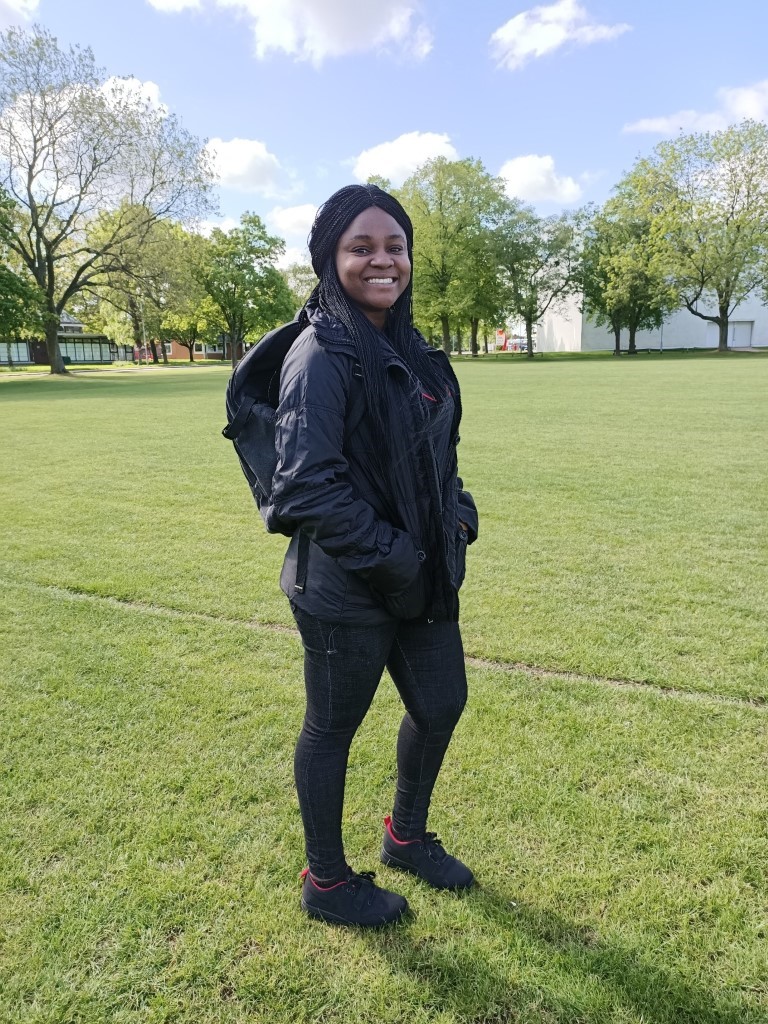
Nice to have you all back on my blog! Well, I am happy that you would be joining me on the last phase of my master’s degree programme here at Cranfield University. I am so excited knowing that this journey which I started last year October is gradually winding up. It has been an awe-mazing experience so far!
Come on in guys, let me give you a little insight into my thesis.
I am working on an international company sponsored project with the aim of applying bio-stimulants and surfactants formulation to improve plant health. I am focusing on the turfgrass which is a beautiful sports and amenity grass and can be found almost everywhere in lawns and golf courses. I find this topic interesting as I am an environmental engineer. I dream of a clean and green environment, so if bio-stimulants and surfactants application would reduce the use of chemical fertilisers in improving plant health and nutrient cycling processes, then it would have been one problem solved for the environment. Although chemical fertilisers have their role to play in soils, the enormous rate at which they are applied makes them unfit for the environment because they are either leached down into groundwater and out of the nutrient cycle or they are washed out of the soil into rivers and other aquatic bodies where they cause non-point source pollution. The interesting part of this project is the wider areas it cuts across. Apart from helping hydrophobic soils, surfactants are also utilised in remediation of lands contaminated with hydrocarbons. They increase the availability of these pollutants in soils and make them accessible for microorganisms to consume and out of the soil. It is worthy to note that bio-stimulants and surfactants come from natural sources hence, they are eco-friendly. Analysis of the cost-benefit it offers has also been done and it is worthy to note that surfactants also improve irrigation water use efficiency, which is one of the major costs of production in Agriculture. Bio-stimulants also encourage a nutrient cycling process where unused nutrients are returned into the soil and improve nutrient use efficiency.
Before the thesis began, I had mixed feelings about the laboratory aspect, I didn’t have adequate laboratory experience, but I was also eager and open to acquiring these skills. The current pandemic has made it impossible to gain this experience due to lockdown of laboratories. I am currently reviewing literatures and statistically analysing a secondary plant health and microbial data, but I still hope that I may gain the laboratory experience in the future. In all the anxiety and mixed feeling that came with the pandemic, I am immensely grateful to my very wonderful supervisor, Dr. Mark Pawlett, who has been helpful and encouraging throughout this thesis period. I must commend his efforts in making this thesis successful and worth-while. His teaching and assisting spirit are top-notch and I couldn’t have asked for a better supervisor. In addition to his support, I have been keeping in touch with housemates, taking walks, and exercising with close friends while observing social distancing. I am happy to say that I am about to learn how to cycle as a way of relaxing and cooling off from the pandemic anxiety and stress while also observing nature and imagining how a clean, quiet and green environment would look like.
On completion of my master’s degree, I intend to continue to further my studies at the Doctorate level, I intend to research more on bioremediation of contaminated lands, and I am open to opportunities related to this area. Completing my studies in this field is a high jump into actualising my career goals of becoming an environmental consultant because I now know and have acquired more than the basics skills and requirements on how to protect and preserve the environment. I am proud to have gained this knowledge from the prestigious and UK’s only post-graduate school, Cranfield University. And I am excited to soon say, it is my Alma mater.
See you all on my thesis presentation sometime in September. I will be more than happy to share with you all, results from my findings.

Categories & Tags:
Leave a comment on this post:
Comments are closed.
You might also like…

Get a head start on referencing and plagiarism
We offer a module on Referencing And Avoiding Plagiarism which you can find on your Canvas dashboard. It explains the role and importance of citing references and how to incorporate the work of other authors ...
How Cranfield shaped my journey as an Aerospace Engineer
If I'm being specific about the moment it clicked, it was reading a paper called "On the Role and Challenges of Computational Fluid Dynamics (CFD) in the Aerospace Industry" by two Boeing engineers, P. ...
Introducing Kings Norton Library
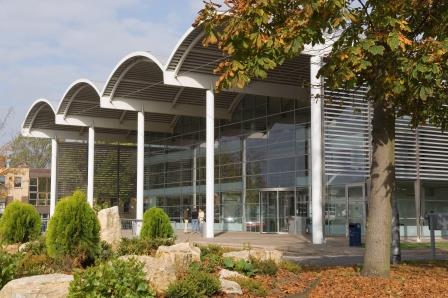
Welcome to all our new students! We are looking forward to meeting you soon. You will find Kings Norton Library in the centre of the Cranfield campus, and it is open 24/7 to all staff ...

Setting your research on the right course: Four questions every researcher should ask
Whether you are just beginning your doctoral journey or are already well into your research career, successful research rarely happens by accident. Like any successful mission, it depends on good planning, informed decisions, and getting ...

5 budgeting mistakes students make (and how to avoid them)
Good financial planning isn't about how much money you have. It's about the habits you build. We asked Dr Lakshmy Subramanian, Course Director for the Banking, Economics and Finance MSc, about the budgeting mistakes ...

Finding your reading materials
Use Library Search Library Search is the first place to start when you are trying to find academic sources for your work. This is the search box on the library website homepage. It allows you ...
Awesome..I look forward to seeing your thesis presentation.