

STEM: What lies underneath everyday technology?
16/10/2019
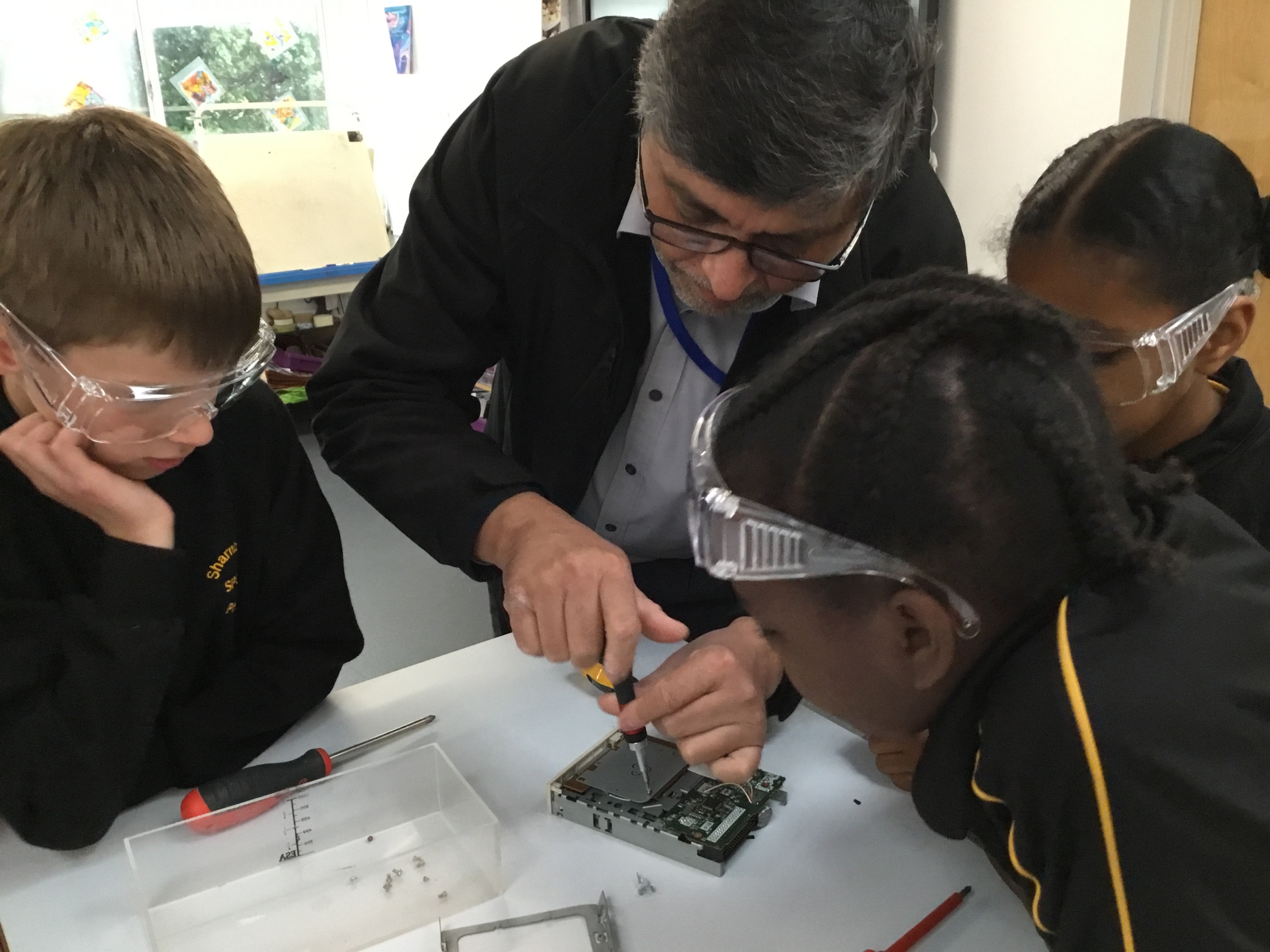
Dr. Ata Khalid (Lecturer in Sensors and Sensor Systems, CDS) and Dr. Sandra Messenger (Knowledge Exchange Manager; Research and Innovation Office) went to Sharnbrook Primary School to give two classes, the opportunity to use screwdrivers, allen keys and pliers to have a look at and understand what lies inside everyday technology.
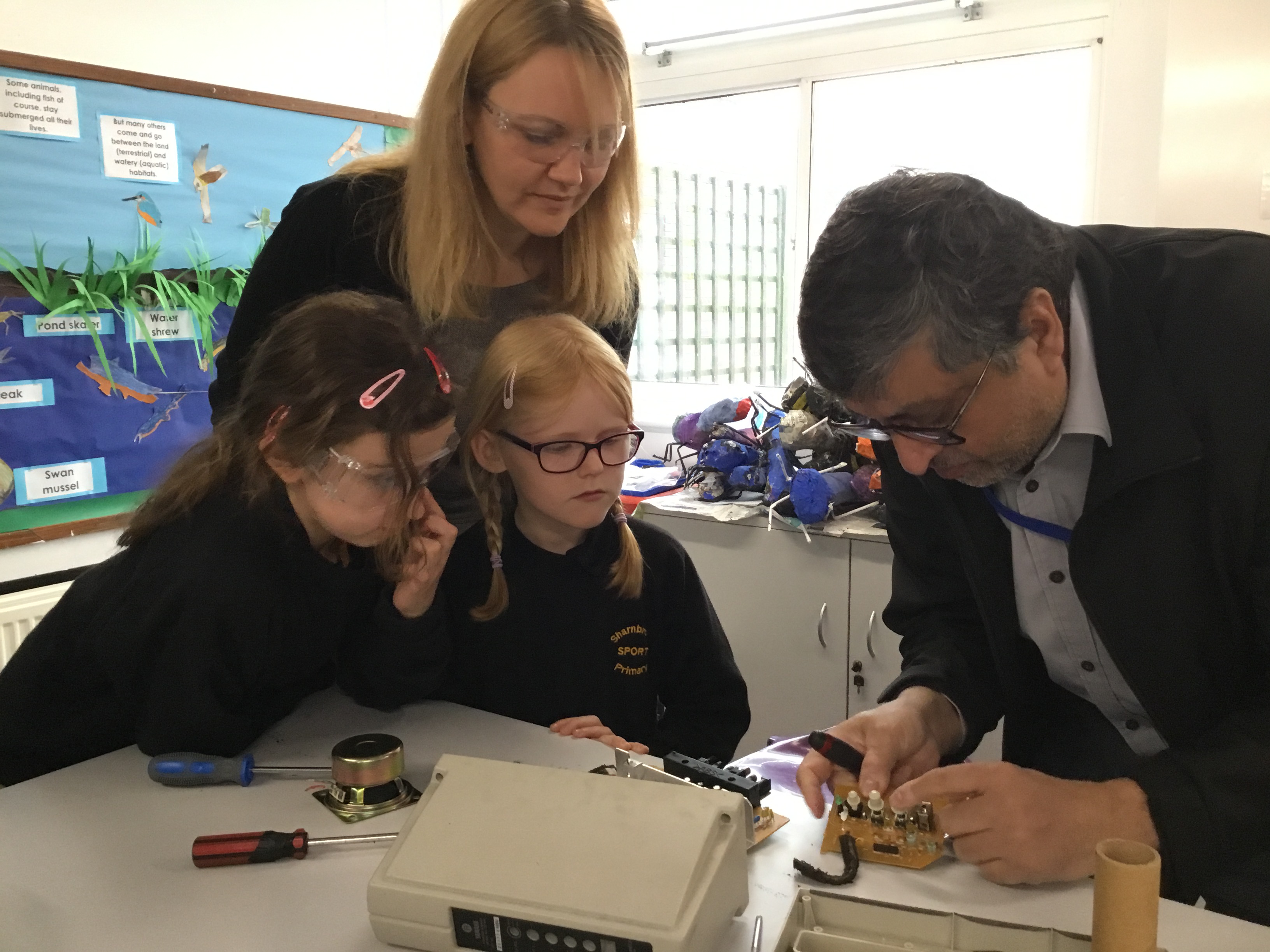
Sandra liaised with different Cranfield departments including Information Services and Facilities who were exceptionally helpful and invaluable in providing equipment that was destined for recycling and tools such as: speakers, keyboards, disc drives and printers.
In the STEM workshops we, as representatives of Cranfield University, have the opportunity to showcase the exciting work we do and explain the advances in Science, Technology, Engineering and Maths that we are trying to achieve. Exploring this through a fun practical class and giving the children the chance to explore and ask questions means that they learn without even realising it. This is the ultimate way for children to learn and a chance for us to inspire future generations.
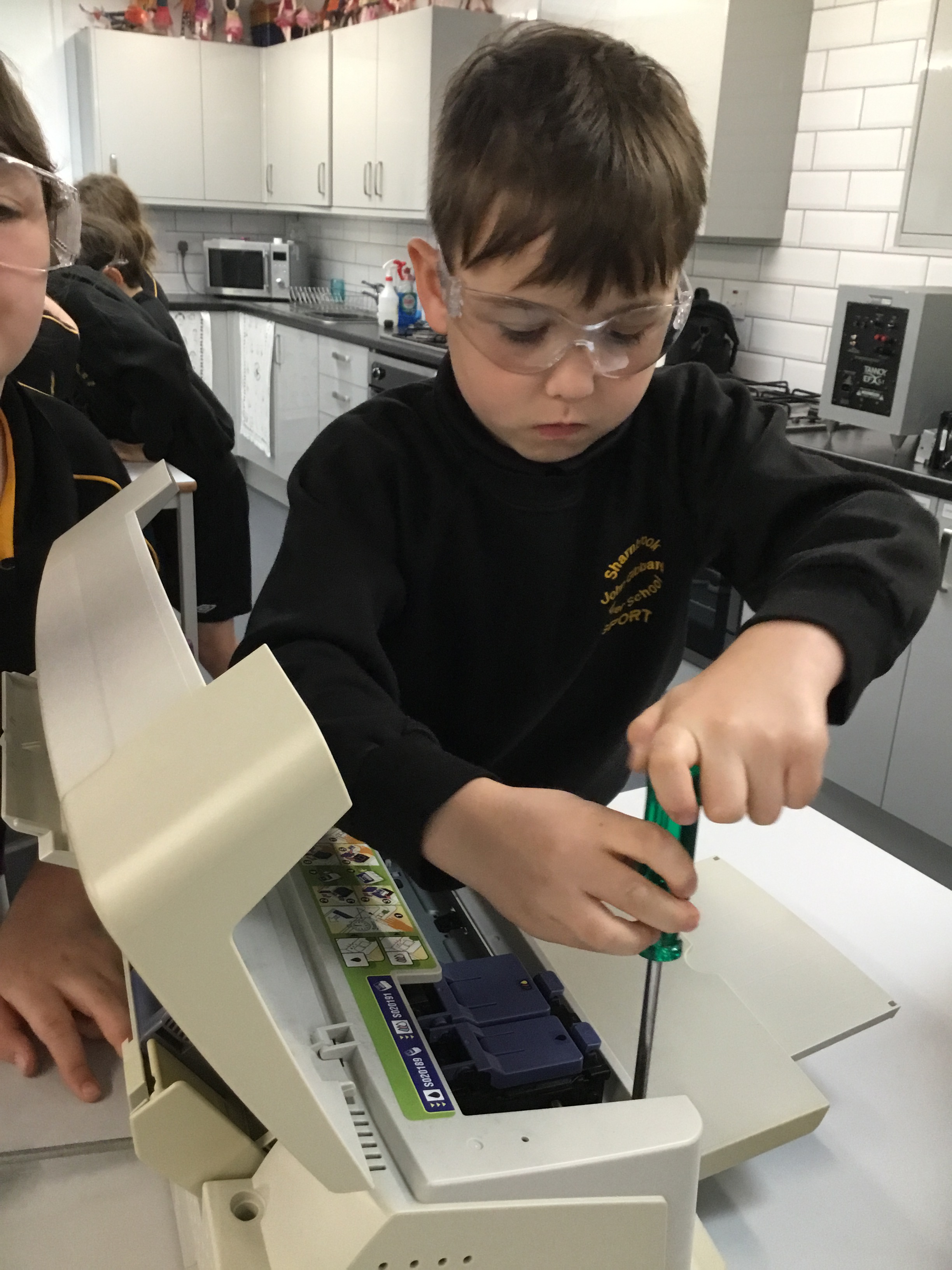
The schoolchildren were enthusiastic and had a fantastic time taking the equipment apart and asked Ata great questions that related to what was found on the inside of the items. One of the children was overheard saying, “I wish this practical would never end!”
Both Ata and Sandra had to curb some of the children’s enthusiasm by making sure they knew they weren’t to try what they done at home without permission from a grown up!

Categories & Tags:
Leave a comment on this post:
Comments are closed.
You might also like…

5 budgeting mistakes students make (and how to avoid them)
Good financial planning isn't about how much money you have. It's about the habits you build. We asked Dr Lakshmy Subramanian, Course Director for the Banking, Economics and Finance MSc, about the budgeting mistakes ...
Finding your reading materials
Use Library Search Library Search is the first place to start when you are trying to find academic sources for your work. This is the search box on the library website homepage. It allows you ...

Formula 1 was the dream and Cranfield was the conduit
I still remember the exact moment Formula 1 (F1) got its hooks into me. I was in my first year of an aerospace undergraduate engineering degree when I watched a video about the sport ...
Introducing Barrington Library
Welcome to all our new students! Barrington Library supports all the students and staff at Cranfield Defence and Security on the Shrivenham site. We are looking forward to meeting you all soon, in person or ...

About to start your journey at Cranfield? We’re here to help!
Congratulations on accepting your offer to study at Cranfield! If you’re keen to get a head start before your course begins, our Library Services team is here to support you every step of the way. ...

Bank holiday hours for Library Services: Monday 31 August
Library Services staff will be taking a break on Monday 31 August for the bank holiday. You will still be able to access all the resources and help you need via our library website. The 24/7 ...
Great post! Thanks for sharing this with us.